
Labour Party (UK): history, ideology and organisation
The Labour Party is a principal centre-left, social democratic party in the United Kingdom. Founded from trade union and socialist movements, it has alternated between government and opposition since the early 20th century.
The Labour Party is one of the main political parties in the United Kingdom, generally positioned on the centre-left of the political spectrum. It describes itself as a social democratic party and has been one of the two dominant national parties since the early 1900s. Labour typically competes with the Conservative Party for control of the UK government and, when not in office, serves as the Official Opposition in the House of Commons. The party's current leader is Sir Keir Starmer, who succeeded Jeremy Corbyn in 2020.
Image gallery
10 Images


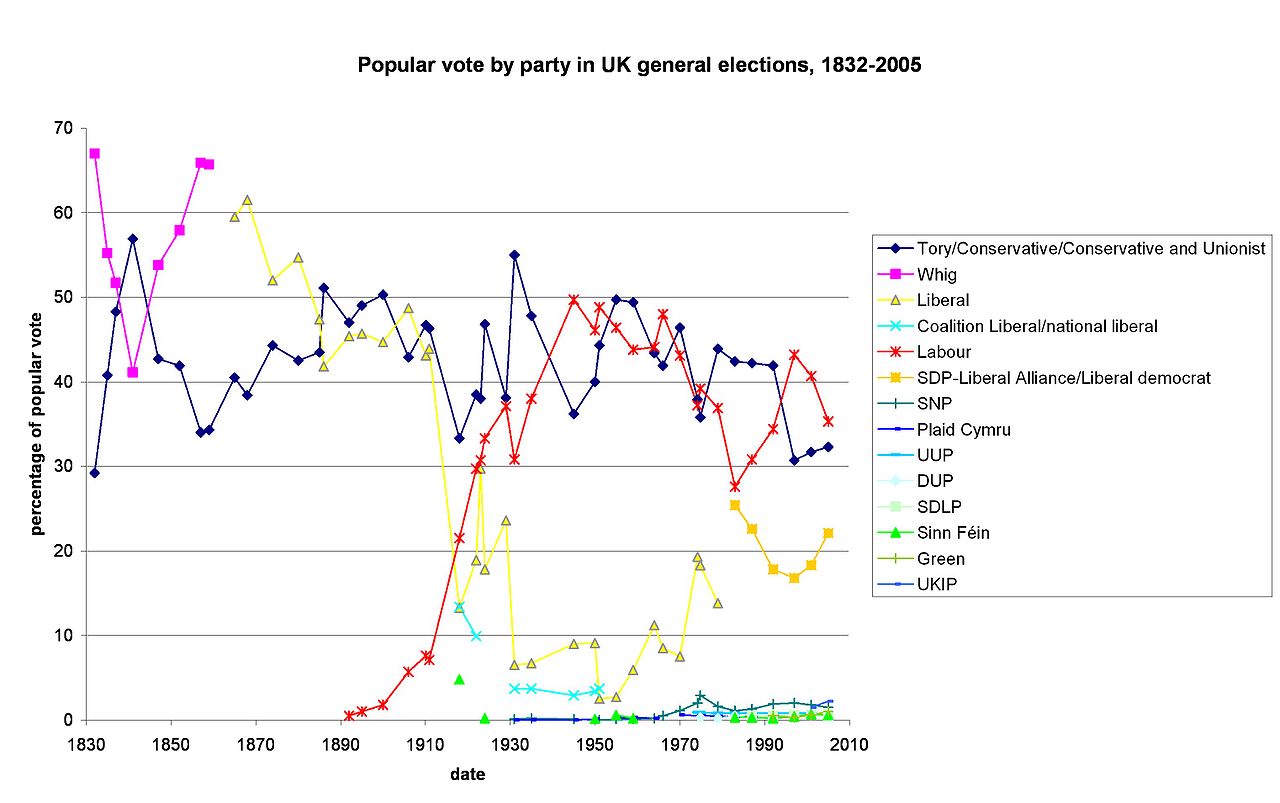
Origins and historical development
Labour grew from late 19th- and early 20th-century trade unions and socialist organisations that sought parliamentary representation for working-class interests. Its first government was a minority administration in the 1920s; a landmark period followed after World War II with a Labour government that created parts of the modern welfare state. Later twentieth-century Labour administrations took different approaches — from nationalisation and strong welfare provision to more market-friendly reforms — and the party underwent significant modernisation and realignment in the 1990s and 2000s.
Ideology, policies and factions
At its core Labour supports public services, progressive taxation, workers' rights and policies intended to reduce economic inequality. Within the party there are a range of currents: social democrats, democratic socialists, and more centrist or pragmatic wings. Debates over policy direction, electoral strategy and the balance between state and market have been a recurring feature of Labour politics.
Typical policy themes include:
- Investment in public services, especially health and education.
- Protection of workers and promotion of collective bargaining.
- Progressive taxation and welfare provision to reduce poverty.
- Support for regulated markets alongside strategic state intervention.
Organisation and institutions
The party is organised at national, regional and local levels. Key components include the Parliamentary Labour Party, the National Executive Committee, and thousands of constituency Labour parties. Trade unions remain important affiliates, providing funding and links to organised labour. In devolved contexts Labour also competes for power: it has been an important force in the Scottish Parliament, sometimes governing alone or in coalition with parties such as the Scottish Liberal Democrats at various times. Labour is also a major presence in the London Assembly and in local government.
Electoral fortunes have varied: Labour governed nationally from 1997 to 2010 under leaders who pursued centre-left modernisation, and more recently it has alternated between opposition and renewed efforts to broaden its appeal. Labour has contested metropolitan areas strongly and traditionally drew support from working-class and trade-union communities, while also seeking new constituencies among public-sector workers, professionals and younger voters.
Notable facts and distinctions
- Labour has been one of the two main UK parties for over a century, frequently alternating with the Conservatives for government.
- Internal factions and periodic leadership contests have shaped policy direction; notable leaders include early prime ministers and post-war figures as well as recent leaders such as Jeremy Corbyn and Keir Starmer.
- Labour's relationship with other parties has varied: it has formed coalitions or agreements in devolved institutions and competes with parties across the political spectrum, including the Conservative party nationally and other regional parties.
- In London, the party often holds a large share of seats in the assembly even when the Mayor of London belongs to a rival party.
For readers seeking further detail on Labour's policies, structure and history, official party materials and reputable political histories provide in-depth coverage and current documents are available through parliamentary and party channels. Centre-left, United Kingdom, social democratic and other linked terms above can be followed for specific topics and sources.
Additional references: general overviews of Labour’s role in government, its changing coalitions and its impact on public institutions are widely available from historical surveys and political analysis platforms. See also materials on party organisation and local government ties for details on how Labour operates at different levels of the UK political system. House of Commons, Official Opposition, Keir Starmer, Jeremy Corbyn, Scottish Parliament, coalition, Scottish Liberal Democrats, London Assembly, Mayor of London, Conservative party, local government.
Questions and answers
Q: What type of political party is the Labour Party in the UK?
A: The Labour Party is a social democratic party.
Q: How long has the Labour Party been one of the UK's main political parties?
A: The Labour Party has been one of the UK's two main political parties from the early 20th century to the present day.
Q: How many seats does the Labour Party have in the British House of Commons?
A: The Labour Party has 202 out of 650 seats, making it the second largest party in the British House of Commons.
Q: Who is the current leader of the Labour Party?
A: The current leader of the Labour Party is Sir Keir Starmer, who took over in April 2020 from Jeremy Corbyn.
Q: When was the Labour Party in power in the UK government?
A: The Labour Party was in power in the UK government from 1997 to 2010.
Q: Is the Labour Party currently in power or in opposition in the UK?
A: The Labour Party is currently in opposition in the UK.
Q: Is the Labour Party the largest group in the London Assembly?
A: Yes, the Labour Party is the largest group in the London Assembly.
Related articles
Author
AlegsaOnline.com Labour Party (UK): history, ideology and organisation Leandro Alegsa
URL: https://en.alegsaonline.com/art/55230