
Jeremy Corbyn: British politician and former Labour leader
Profile of Jeremy Corbyn, long-serving MP and Leader of the UK Labour Party (2015–2020), summarizing his background, political positions, leadership record, controversies and public influence.
Overview
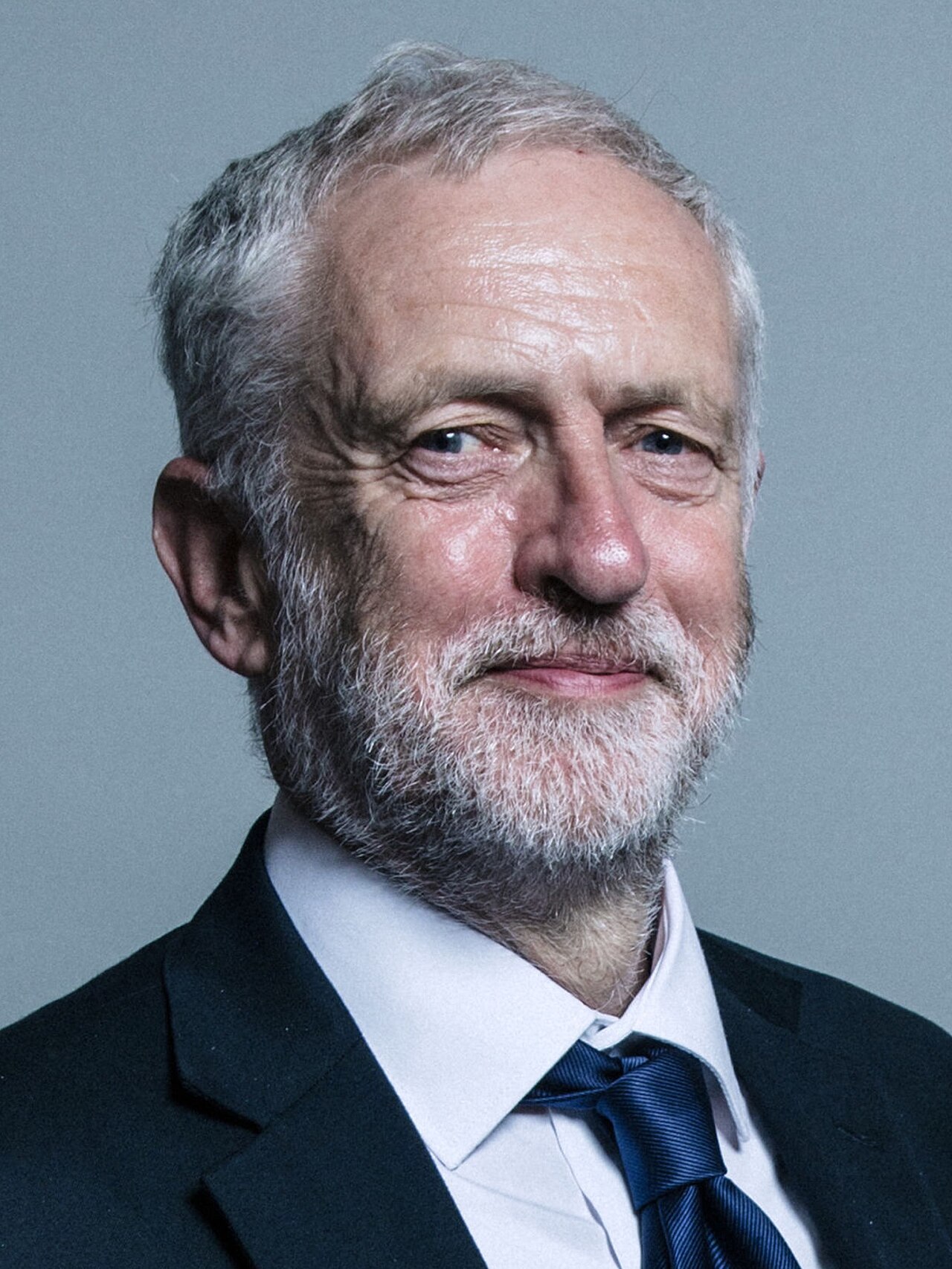
Jeremy Bernard Corbyn (born 26 May 1949) is a British politician who served as Leader of the Labour Party and Leader of the Opposition from 2015 to 2020 and has been the Member of Parliament for Islington North since 1983. Often self-described as a democratic socialist, Corbyn rose to national prominence after a grass-roots campaign won him the party leadership in 2015. His tenure reshaped debates within British politics on public spending, foreign policy and the role of organised labour, while also provoking intense public scrutiny and internal party disputes.
Image gallery
10 Images



Background and early career
Corbyn was born in Chippenham in Wiltshire and was active in local politics from a young age. Before entering Parliament he worked as a trade union representative and in community advocacy, serving on Haringey Council in the 1970s. He later became secretary of the Islington Constituency Labour Party and won the parliamentary seat of Islington North in 1983. Throughout his career as an MP he maintained a profile as a campaigner on human rights, international development and local welfare issues, which earned him recognition from a range of civil society organisations.
Political positions and priorities
Corbyn’s politics emphasise greater public investment and opposition to austerity measures introduced after 2010, with calls to protect public services and social security. He has supported measures to tackle tax avoidance by large corporations and wealthy individuals, and advocated for renationalisation or increased public ownership in sectors such as rail and utilities as a means of ensuring affordable services. On foreign policy, Corbyn has been associated with anti-war activism, opposition to military intervention, and membership in groups campaigning for nuclear disarmament. Those positions reflect a broader platform that prioritises diplomacy, human rights, and multilateral approaches over the use of force.
Labour leadership, elections and parliamentary record
Corbyn entered the Labour leadership contest in 2015 following Ed Miliband’s resignation. Unexpectedly strong support from trade unions and new party members helped secure him the leadership in September 2015. His leadership faced immediate internal challenges: after the 2016 referendum on EU membership, a large number of Labour MPs expressed no confidence in his leadership and many members of his shadow cabinet resigned, precipitating a second leadership election in which he was re-elected with an increased mandate. Under his leadership, Labour performed better than many expected in the 2017 general election, gaining seats and producing a hung parliament, but the party suffered a significant defeat in 2019. Corbyn announced he would not lead Labour into the next general election and was succeeded by Sir Keir Starmer in April 2020.
Controversies and assessments
Corbyn’s leadership provoked strong reactions both inside and outside the Labour Party. Supporters praised his emphasis on inequality, public services and grassroots participation, crediting him with energising many new voters and reinvigorating left-of-centre politics. Critics argued that his leadership was marred by organisational weaknesses and that his stance on certain foreign policy issues and his handling of allegations of antisemitism within the party damaged Labour’s public standing. These concerns culminated in investigations and disciplinary actions; Corbyn was suspended from the party in October 2020 after commenting on the findings of an external inquiry, a suspension that affected his parliamentary party status even after his membership was later restored. Commentators continue to debate his long-term influence on the Labour movement and on British politics more broadly.
Legacy, influence and distinctions
Corbyn’s period as Labour leader marked a clear pivot in proposals and rhetoric for parts of the party, with renewed emphasis on public ownership, redistribution, and participatory politics. He remains a divisive figure: to some he represents a principled and consistent activist-politician who broadened debate about economic inequality and foreign policy; to others he is associated with a period of electoral decline and internal turmoil. After stepping down as leader, he continued to sit in Parliament and to engage in political campaigns and public debates on domestic and international issues.
Further reading and links
- Labour Party — official party information
- Leader of the Opposition — role and responsibilities
- Islington North constituency profile
- Democratic socialism — overview of the political tradition
- Chippenham — local history and context
- Wiltshire — regional background
- Trade union representation — role and examples
- Haringey Council — municipal governance
- Islington local government and community groups
- Constituency Labour Party (CLP) structures
- House of Commons — membership and functions
- Human rights activism — organisations and awards
- Parliamentary activism and backbench influence
- Party whip — explanation and significance
- New Labour era — policy background under Blair and Brown
- Tony Blair — tenure and reforms
- Gordon Brown — leadership and economic policy
- Anti-austerity campaigns — movements and demands
- Austerity cuts — impacts on public services
- Tax avoidance and corporate transparency
- Anti-war activism — major campaigns and coalitions
- Anti-nuclear movements and disarmament efforts
- Non-interventionism in foreign policy — principles and debates
- Unilateral policies — concept and controversies
- Nuclear disarmament — international frameworks
- Socialist Campaign Group — parliamentary caucus
- Palestine Solidarity Campaign — aims and activities
- Amnesty International — human rights work
- Campaign for Nuclear Disarmament (CND) — history and campaigns
- Stop the War Coalition — formation and campaigns
- Ed Miliband — Labour leader before 2015
- Resignation — procedures and consequences
- Shadow cabinet — role in opposition politics
- Leadership contests — rules and voting
- Angela Eagle — leadership challenger
- Owen Smith — leadership challenger
- No-deal Brexit — parliamentary strategies to prevent it
- Antisemitism in politics — investigations and responses
- 2019 general election — results and analysis
- Keir Starmer — succeeding Labour leader
For readers seeking primary documents, parliamentary speeches, manifestos and formal inquiry reports can provide direct evidence of policy positions and organisational responses. Where controversies have involved formal investigations, independent reports and official statements are useful starting points for understanding the facts established by institutional processes. This article is intended as a concise, balanced synthesis of widely reported information about Jeremy Corbyn's public life up to his period as Labour leader and the immediate aftermath; evolving assessments and additional details are available through the links listed above and through official parliamentary records.
Questions and answers
Q: Who is Jeremy Bernard Corbyn?
A: Jeremy Bernard Corbyn is a British politician who was the Leader of the Labour Party and Leader of the Opposition from 2015 to 2020. He has been the Member of Parliament (MP) for Islington North since 1983.
Q: What type of socialist is Corbyn?
A: Corbyn calls himself a democratic socialist.
Q: Where was Corbyn born?
A: Corbyn was born in Chippenham in Wiltshire.
Q: What did he do before becoming a politician?
A: Before becoming a politician, he worked as a representative for many trade unions. He was elected to Haringey Council in 1974 and later became secretary of the Islington Constituency Labour Party (CLP).
Q: What awards has he won during his career?
A: During his career, Jeremy Bernard Corbyn has won many awards for his work as an international human rights activist.
Q: What are some causes that he supports?
A: As an MP, Jeremy Bernard Corbyn works in support of the anti-austerity movement and stopping austerity cuts to public sector and welfare funding made since 2010. He also works to stop big businesses and very rich people avoiding tax, is an anti-war and anti-nuclear activist, and supports a foreign policy of military non-interventionism and unilateral nuclear disarmament. He is also part of organizations such as Socialist Campaign Group, Palestine Solidarity Campaign, Amnesty International and Campaign for Nuclear Disarmament (CND).
Q: When did he become leader of the Labour Party?
A: Jeremy Bernard Corby became leader of the Labour Party on 12 September 2015 after winning 59.5% votes in first round ballot
Related articles
Author
AlegsaOnline.com Jeremy Corbyn: British politician and former Labour leader Leandro Alegsa
URL: https://en.alegsaonline.com/art/121837
Sources
- parliament.uk : ""Government and Opposition roles""
- parliament.uk : "Jeremy Corbyn MP"
- telegraph.co.uk : "Jeremy Corbyn's first speech as Labour leader was 'six form' of Socialism"
- telegraph.co.uk : "Jeremy Corbyn, the boy to the manor born"
- theguardian.com : "Jeremy Corbyn profile: 'He talks like a human being, about things that are real'"
- labourlist.org : "Jeremy Corbyn: The last defender of Human Rights?"
- bbc.com : "Jeremy Corbyn's Labour rebellion: A sign of things to come?"
- telegraph.co.uk : "What does Jeremy Corbyn stand for?"
- politico.eu : "The bizarre world of Jeremy Corbyn and Stop the War"
- theguardian.com : "Labour leadership: all eyes on Jeremy Corbyn as voting ends"
- theguardian.com : "Labour leadership: Yvette Cooper rejects poll predicting Jeremy Corbyn victory"
- ft.com : "Jeremy Corbyn: Labour leadership hopeful"
- bbc.co.uk : "Jeremy Corbyn elected Labour leader: How did he win?"
- bbc.co.uk : "Reaction to Corbyn victory"
- bbc.co.uk : ""Labour MPs pass Corbyn no-confidence motion""