
William Bradford Bishop Jr.
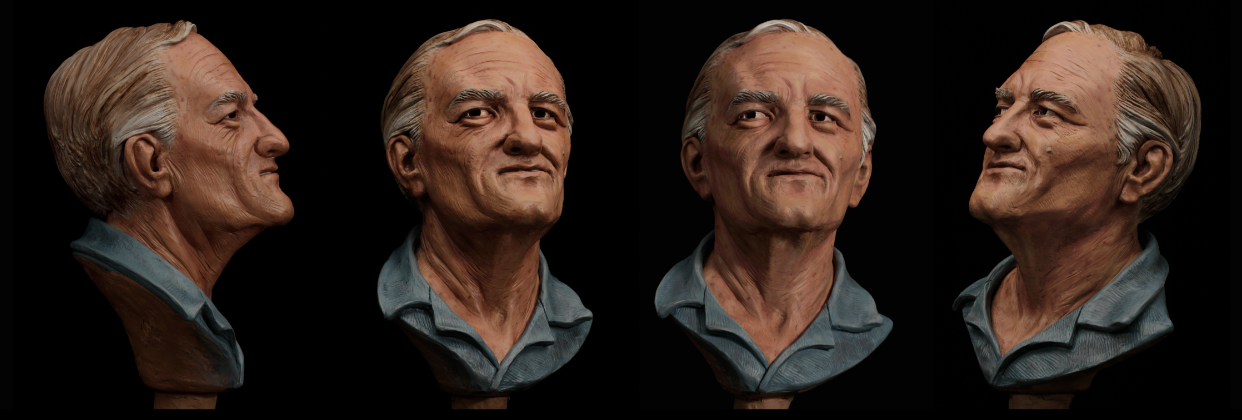
William Bradford Bishop Jr., a former U.S. Foreign Service officer, is wanted for the alleged 1976 murders of five family members and has been a fugitive since; the FBI added him to its Ten Most Wanted in 2014.
Overview
William Bradford Bishop Jr. (born August 1, 1936) is a former United States Foreign Service officer who has been a fugitive since 1976 after being accused of killing five members of his family. The case attracted national attention for the brutality of the crime, the subsequent cross-country disposal of the bodies, and the length and persistence of the search. In April 2014 the FBI placed Bishop on its Ten Most Wanted Fugitives list.
Image gallery
5 Images


Background and career
Bishop was born in Pasadena and attended university before joining the Foreign Service. His early life and education included studies at Pasadena-area institutions and later enrollment at prominent universities including UCLA and Yale. By the early 1970s he had risen through the State Department ranks. His final posting before the incident began in 1974 at State Department headquarters in Washington, D.C., where he served as an assistant chief in a division that handled special activities and commercial treaties, according to reports.
The alleged crime and disappearance
In July 1976 Bishop is accused of murdering his wife and three children while they slept in the family home in Bethesda, Maryland. Reports say the murders followed personal and professional stress, including disappointment over career advancement. Investigators found evidence suggesting the use of blunt instruments such as a sledgehammer and a shovel prior to the removal of the bodies. After the killings, the bodies were loaded into the family station wagon and driven a long distance to a remote wooded area.
- July 1976: Alleged murders in Bethesda and immediate disappearance of Bishop.
- Shortly after: Bodies disposed of in a swampy area off a highway in eastern North Carolina; subsequent burning and burial were reported by investigators.
- Following years: Multiple reported sightings and tips across the United States and overseas.
Investigation, sightings and international leads
Search efforts have extended well beyond Maryland and North Carolina. Investigators and former colleagues have reported possible sightings of Bishop in parts of Europe and Asia. Former State Department employees and others reported potential sightings in countries such as Italy, Sweden and Switzerland, and occasional leads suggested locations like Hong Kong and France. Over the decades law enforcement agencies have investigated these tips and followed up on reported travel and residency patterns.
- Reported travel or sightings in Europe: Europe, including Italy, Stockholm and Switzerland.
- Reported possible sightings or investigations in Asia and elsewhere: Hong Kong, France.
- Forensic and documentary follow-up: several exhumations and DNA inquiries have been carried out when remains or records were thought to be connected to Bishop; one notable exhumation occurred after investigators considered that a man killed in an Alabama traffic accident might have been Bishop.
In one high-profile follow-up, authorities exhumed the body of an Alabama man who died in a 1981 road accident and submitted samples for testing to resolve whether the remains belonged to Bishop; DNA results showed that those remains were not Bishop. Forensic testing and documentary checks have been a recurring component of the inquiry as investigators address new tips and revisit old leads.
Legal status, public interest and notable facts
Bishop remains wanted on murder charges and is presumed by authorities to be a fugitive from justice. The case is often cited in discussions of cold-case investigations, cross-jurisdictional searches, and the challenges of locating fugitives who may assume new identities. The FBI made his addition to the Ten Most Wanted list in 2014 to solicit public assistance and increase awareness; law enforcement agencies continue to accept tips and to evaluate evidence submitted by members of the public.
Notable aspects of the case include the combination of a high-ranking government career and a sudden, violent disappearance; the interstate and international scope of investigation; and the use of both traditional investigative techniques and modern forensic methods such as DNA testing. Contemporary reporting and public interest remain focused on any credible information that could resolve Bishop's whereabouts or confirm his death.
For ongoing official information or to submit tips, law enforcement agencies publish updates periodically and encourage anyone with knowledge to contact the appropriate authorities. Background material and archived reporting can be found through historical press coverage and public records, as well as through official releases by investigative agencies. Additional context about his State Department service and the 1976 investigation appears in several records and retrospective accounts of the case.
References and further reading touch on his last known assignments at the State Department (State Department), the instruments and items reported at the crime scene (implements), details about the vehicle used to transport the victims (station wagon), the location where the remains were discovered (wooded swamp near Columbia, North Carolina), and routine updates about forensic leads such as exhumation (exhumation), the Alabama connection (Alabama) and DNA testing (DNA).
Related articles
Author
AlegsaOnline.com William Bradford Bishop Jr. Leandro Alegsa
URL: https://en.alegsaonline.com/art/115504
Sources
- newsobserver.com : "Bishop still wanted in family's death"
- time.com : "The Bishop Murders"
- washingtonpost.com : "Where Is Brad Bishop?" · web.archive.org
- fbi.gov : fbi.gov/news/stories/2014/april/william-bradford-bishop-added-to-fbi-top-ten-list/william…
- bethesdamagazine.com : "The Man Who Got Away"
- nbcwashington.com : "Inside the Evidence Room in the Hunt for William Bradford Bishop"
- articles.baltimoresun.com : "Getting away with murder Manhunt: The 21-year-old search continues for a Bethesda man who murdered his family but kept the dog"
- readersdigest.ca : "William Bradford Bishop Jr"
- wusa9.com : "William Bradford Bishop Wanted In 1976 Bethesda Murder"
- nbcwashington.com : "FBI: Body Exhumed in Alabama Not That of William Bradford Bishop" · web.archive.org