
Ben Chifley — Australian Labor Prime Minister and post‑war reformer
Joseph Benedict (Ben) Chifley (1885–1951) led Australia as Labor prime minister from 1945–1949, overseeing post‑war reconstruction, social policy expansion and a controversial attempt to nationalize banks.
Overview
Joseph Benedict Chifley, commonly known as Ben Chifley, served as the 16th Prime Minister of Australia from 1945 to 1949. Born in 1885 and dying in 1951, he led the Australian Labor Party during a pivotal post‑war period when governments reshaped economies and social policy across the world. Chifley is remembered for advocating full employment, expanding social services and guiding reconstruction after World War II.
Image gallery
10 Images


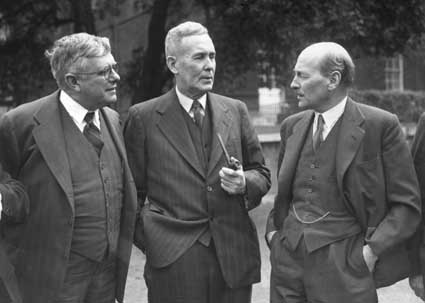
Early life and political rise
Chifley came from a working‑class background and worked in the New South Wales railways before entering federal politics. He became the Member for Macquarie and rose through the Labor ranks to take national leadership after the death of John Curtin. His practical experience and modest manner contrasted with more patrician politicians of the era.
Policies and government program
Chifley’s government prioritized reconstruction, social welfare and economic stability. Key aims included expanding housing, supporting returned service members, and promoting infrastructure projects. He spoke about Labor’s broader purpose in language that later became emblematic of the party’s idealism and social mission.
- Commitment to full employment and economic management
- Investment in public housing and industry
- Support for large infrastructure schemes and post‑war development
Bank nationalization and legal challenge
One of the most controversial actions of Chifley’s administration was a proposal to bring private banks under common control. The attempt at nationalization met strong political opposition and a series of court rulings that limited federal power in this area. The legal and political battles over banking attracted sustained public attention and helped shape the government’s fortunes.
Defeat, opposition and final years
Critics—including the opposition leader Robert Menzies—attacked Chifley on issues such as anti‑communism and economic policy, arguing Labor was insufficiently tough on emerging Cold War threats. Those themes were influential in the 1949 election, which brought Menzies to power. Chifley remained Labor leader and led the party into the 1951 election as well before his death later that year.
Legacy and notable facts
Chifley’s legacy is mixed: he is respected for his commitment to social reform and national reconstruction but also remembered for a high‑profile policy defeat over the banks. He remains a prominent figure in Australian political history, often cited in discussions of post‑war governance, economic management and Labor’s identity. For further reading on his life and government see archival material and biographies available through national resources such as national collections and political histories at academic sources. Other useful starting points include party histories and contemporary accounts preserved at public records and library collections (libraries, archives, parliamentary records). For chronological context, consult election summaries and constitutional law discussions on the banking dispute (legal analyses) and Cold War politics in Australia (political studies, historical surveys).
Related articles
Author
AlegsaOnline.com Ben Chifley — Australian Labor Prime Minister and post‑war reformer Leandro Alegsa
URL: https://en.alegsaonline.com/art/114999