
Ben Hall (1837–1865) — Australian bushranger and folk figure
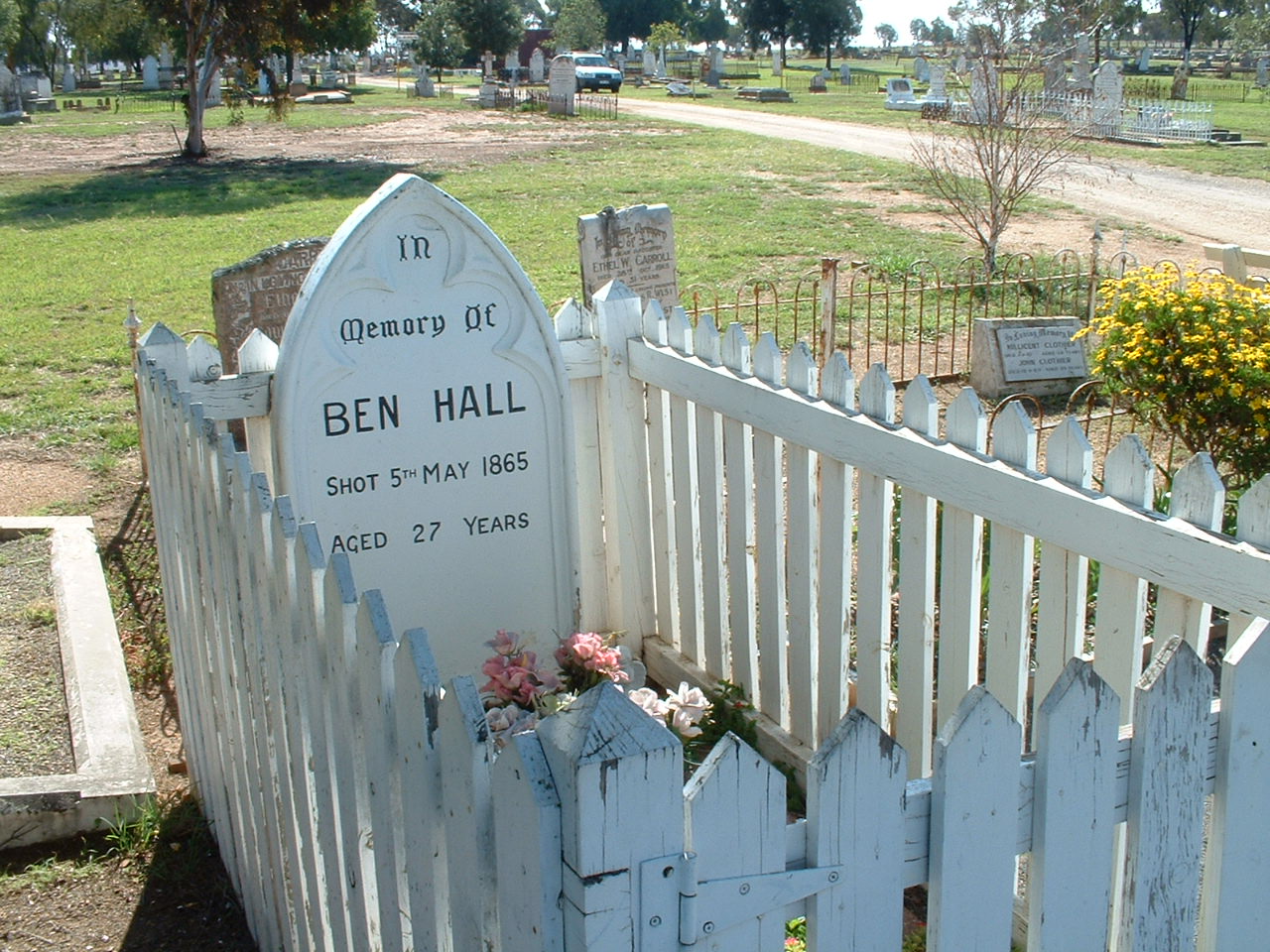
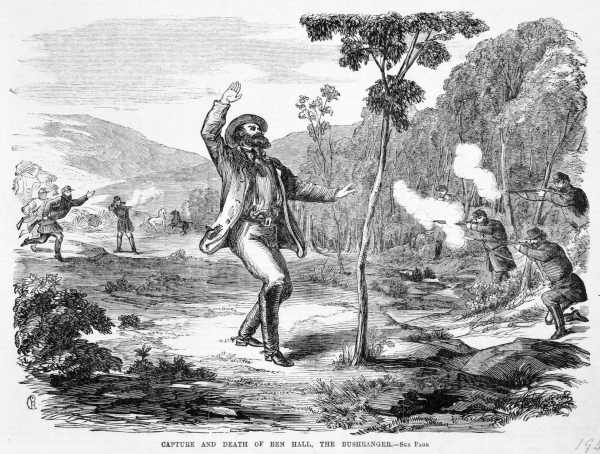
Ben Hall was a prominent Australian bushranger of the 1860s. Active during the gold rush, his gang robbed coaches and gold escorts; his life and death influenced law enforcement and popular culture in colonial New South Wales.
Overview
Ben Hall (1837–1865) was one of the better-known Australian bushrangers of the mid‑19th century. Bushrangers were outlaws who operated in rural Australia, often on horseback and frequently attacking travellers, mail coaches and gold transports; they are sometimes compared to the English highwayman tradition. Hall led a small gang that became notorious across parts of the colony and has been remembered in both criminal records and popular songs as a controversial figure: outlaw to officials, romanticised character to some locals and later storytellers.
Image gallery
10 Images




Context and activities
Hall’s career unfolded during the gold rush era, when sudden wealth and rapid population movement made isolated roads and coach services attractive targets. The discovery of gold in colonies such as New South Wales and Victoria created regular shipments of bullion and cash that bushrangers could intercept. Hall and his associates typically robbed stagecoaches, mail coaches and small escorted parties carrying proceeds from the diggings. Like many bushrangers, they depended on horses, local knowledge and occasional shelter provided by sympathisers.
Gang, associates and methods
Ben Hall’s group included men widely named in contemporary reports and later histories. Commonly mentioned companions are John Gilbert and John Dunn, among others. Their operations combined armed robbery with swift retreats into bushland; they avoided prolonged sieges and relied on speed and local networks. Public accounts of Hall’s behaviour vary: some describe him as preferring minimal bloodshed, while police and some witnesses recorded violent confrontations. The nature of bushranging meant that law enforcement and outlaws often clashed in isolated locations.
Law enforcement and legal response
Authorities reacted to the perceived threat of bushrangers with stronger police patrols, rewards for capture and special legislation. At times Hall managed to elude capture because of local support and the difficulties police faced in vast rural districts. Reports note that friends and relatives sometimes assisted suspects with shelter or information, complicating efforts to have them arrested. Eventually the government adopted measures intended to break gang networks and reduce popular backing.
Legacy, reputation and cultural role
Ben Hall’s image in history and folklore is mixed. Like other figures such as Ned Kelly, Hall has been cast by some traditions as an outlaw hero who defied authority in a frontier society, while official records emphasise his criminal offences. Songs, ballads and local stories contributed to his reputation after his death; these portrayals reflect a broader cultural fascination with rebellion, social inequality and the lawless spaces of colonial Australia.
- Origin: raised and active in rural areas of colonial New South Wales.
- Targets: stagecoaches, mail services and gold transports linked to the goldfields.
- Support: benefited at times from assistance by neighbours and kin; contemporaries describe how friends and relatives complicated policing efforts.
- Aftermath: his career contributed to changes in policing and legal tools used by authorities.
Ben Hall’s story sits at the intersection of crime, colonial expansion and popular memory. His actions were shaped by the economic and social disruptions of the gold rushes and the limits of 19th‑century law enforcement. Researchers and readers interested in the period can follow threads about colonial justice, frontier violence and folklore to see how Hall’s life has been interpreted in different ways over time. For further general context on the phenomenon of the bushranger, the era’s social background and the contemporary response to highway crime, see related summaries and collections of primary accounts and early newspapers. For an accessible cultural comparison, consult materials that discuss contemporaries and contrasts to figures labelled outlaw heroes during the same decades.
Suggested entry points for additional reading include overviews of policing in colonial Australia, accounts of goldfields society and compilations of folk songs and ballads that reference bushrangers; these resources help explain why individuals like Hall continue to attract attention in Australian history and popular culture. For specifics on the regional backdrop and movements of people during the gold rush, see materials linked to colonial administrations in New South Wales and Victoria, and to general studies of crime and punishment in that period (law enforcement). Additional archival and printed sources usefully chart encounters with named figures and the evolving legal measures taken to address their activities (comparative examples).
Questions and answers
Q: Who was Ben Hall?
A: Ben Hall was an Australian bushranger, a thief who roamed the countryside and country towns of Australia, usually escaping on horseback. He is one of the few bushrangers thought of as outlaw heroes.
Q: What did people do at the time when Ben Hall lived?
A: At the time when Ben Hall lived, gold had been discovered in New South Wales and Victoria. Thousands of people went out to these places to "seek their fortunes" and hoping to get rich.
Q: How did Ben Hall make money?
A: Like many bushrangers, Ben Hall and his gang robbed coaches that were carrying gold from the goldfields. This is how they made money.
Q: How did Ben Hall avoid being arrested by police for so long?
A: Ben Hall was able to avoid being arrested by police for many years because he had many friends and relatives to help him hide or escape capture.
Q: What type of criminal was Ben Hall?
A: Ben Hall was a thief who roamed the countryside and country towns of Australia, usually escaping on horseback like a highwayman - most bushrangers were simply criminals and thieves.
Q: Where did people go in search for wealth during this time period?
A: People went out to places where gold had been discovered in New South Wales and Victoria in search for wealth during this time period.
Q: What happened after people found gold?
A: After people found gold, thousands of them went out to these places with hopes of getting rich by "seeking their fortunes".
Related articles
Author
AlegsaOnline.com Ben Hall (1837–1865) — Australian bushranger and folk figure Leandro Alegsa
URL: https://en.alegsaonline.com/art/115007
Sources
- bdm.nsw.gov.au : "Ben Hall"
- scs.une.edu.au : "Ben Hall"
- theage.com.au : "Guide to Murrindi in NSW"
- gold-net.com.au : "Ben Hall – Bushranger Part 1"
- gold-net.com.au : "Ben Hall – Bushranger Part 2"
- warrenfahey.com : "Bushrangers"
- bookworm.com.au : "Frank Gardiner: Bushranger to Businessman"
- abc.net.au : "Biography questions bushranger's record"
- nla.gov.au : "News and Notes by a Sydney Man, Brisbane Courier, April 6, 1863"
- australianhistory.org : "Ben Hall"
- adb.online.anu.edu.au : "Hall, Benjamin"
- eurekacouncil.com.au : "Wild Colonial Boys – Frank Gardiner, Ben Hall, and John Gilbert"
- gold-net.com.au : "Ben Hall – Bushranger Part 3"
- gold-net.com.au : "Ben Hall – Bushranger Part 4"