
Prime Minister of Australia
Head of government in the Australian federal system, leader of the Cabinet and chief minister responsible for national policy, appointed through parliamentary convention and formal vice-regal appointment.
The prime minister of Australia is the head of government in the country's federal system. The officeholder leads the federal Cabinet and coordinates the executive activities of ministers across portfolios. The role is a political and constitutional one: the prime minister is by convention the leader of the party or coalition that controls a majority in the House of Representatives and is formally sworn into office by the governor-general, the monarch's representative.
Image gallery
10 Images





Selection and tenure
There is no direct popular election for prime minister. Instead, the prime minister is the leader of the majority in the lower house and holds office while they retain the confidence of that chamber and of their party. The governor-general performs the formal appointment and dismissal powers under the Constitution and established practice. Terms are not fixed: a prime minister may leave office after electoral defeat, loss of party leadership, resignation, or dismissal.
Functions and responsibilities
The role combines political leadership with administrative coordination. Typical responsibilities include setting government priorities, chairing Cabinet meetings, assigning ministerial responsibilities, representing Australia internationally, and advising the governor-general on appointments and public service matters. Many functions depend on convention and political authority rather than explicit written powers.
- Policy leadership: steers legislative agenda and national programs.
- Cabinet management: allocates portfolios and resolves interdepartmental disputes.
- Representation: acts as the principal public face of the government domestically and abroad.
- Constitutional role: recommends appointments to the governor-general and upholds responsible government.
History and conventions
The office evolved from British responsible government in the 19th and early 20th centuries, growing into the central leadership position of the federal executive after federation in 1901. Over time, political parties, media, and parliamentary practices have shaped the modern prime ministership, increasing the office's visibility and informal powers. The prime minister is distinct from the head of state, who is the monarch and is represented domestically by the governor-general.
Notable facts
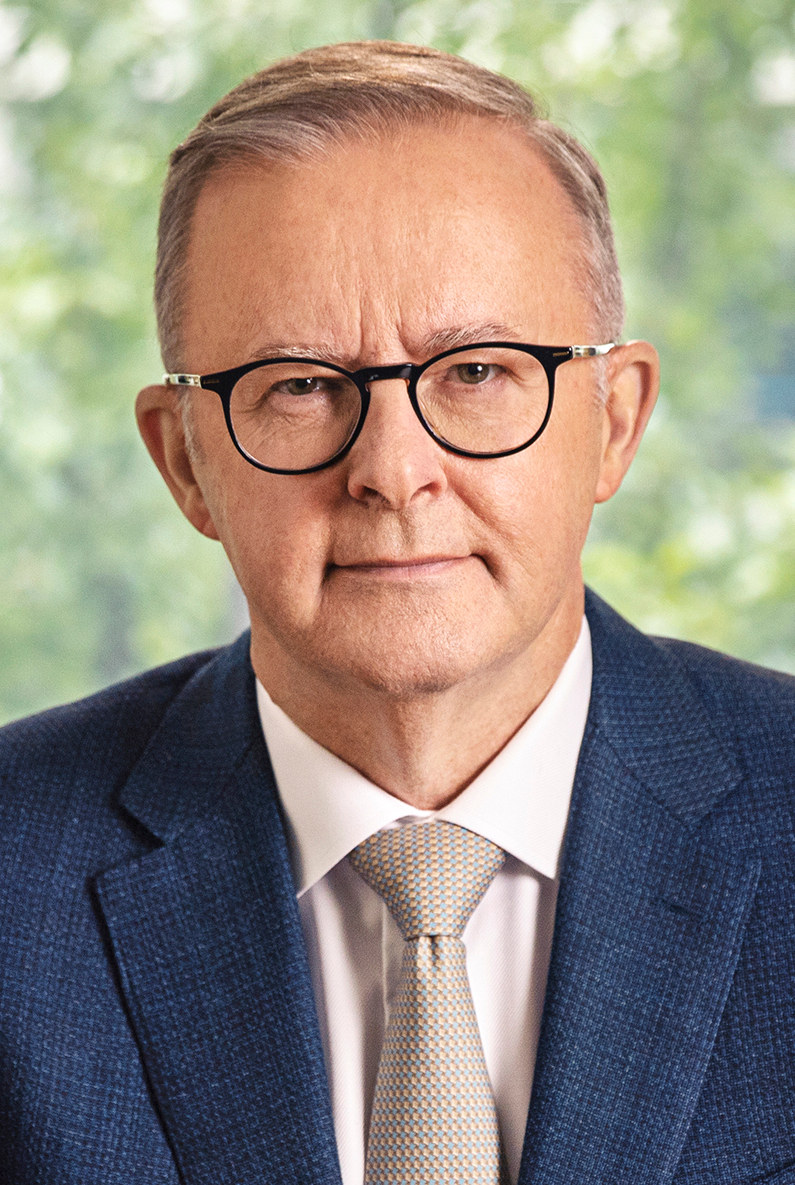
Prime ministers normally have an official Canberra residence and a secondary Sydney residence for state visits and hosting. The office is often supported by a prime ministerial staff and the Department of the Prime Minister and Cabinet. The current prime minister, since May 2022, is Anthony Albanese. For more on the executive framework and historical background, see resources on the executive branch and the government of Australia.
Related articles
Author
AlegsaOnline.com Prime Minister of Australia Leandro Alegsa
URL: https://en.alegsaonline.com/art/79043