
Anaximander: Early Greek Natural Philosopher of Miletus
Anaximander (c.610–c.546 BCE) was a Pre-Socratic thinker from Miletus who proposed the apeiron as the originating principle, made early cosmological and biological hypotheses, and influenced later natural philosophy.
Overview
Anaximander of Miletus is one of the earliest figures in the Western philosophical and scientific tradition. Active in the late 7th and early 6th centuries BCE, he is usually placed in the Milesian line of thinkers who sought natural explanations for the cosmos. His Greek name appears in ancient sources as Ἀναξίμανδρος, and he is classed with other Pre-Socratic philosophers from Ionia. He lived and worked in the coastal city of Miletus, then a major Ionian center in Ionia.
Image gallery
9 Images





Life and historical context
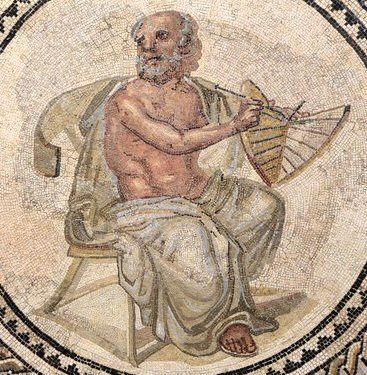
Concrete biographical details about Anaximander are scarce and come mostly from later writers. Tradition identifies him as a successor of Thales in the Milesian school and as a teacher of Anaximenes; some ancient reports also connect him indirectly to figures such as Pythagoras, though such links are debated by modern scholars. He is often credited with being the first Greek philosopher to compose a prose work—commonly called On Nature—though only a single terse fragment and secondhand testimonies of his views survive.
Key ideas and contributions
- Arche and the apeiron: Anaximander proposed that the originating principle (archê) of all things was not a familiar element such as water or air but an indefinite, boundless substance he called the apeiron (often translated as "the boundless" or "the indefinite"). This was conceived as eternal and ageless, the source from which opposites emerge and to which they return.
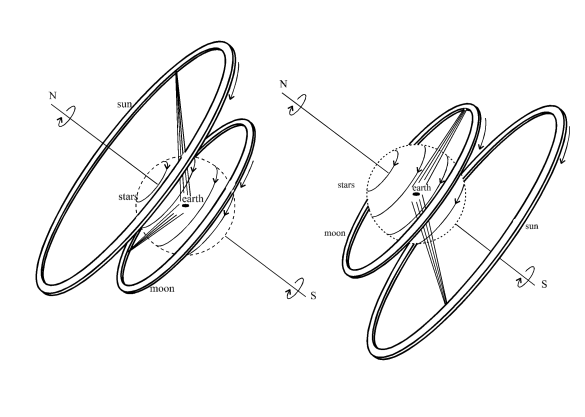
- Cosmology: He advanced an early model of the cosmos in which the earth stands free, unsupported by anything, at the center of the universe, balanced in equilibrium. He suggested celestial bodies occupy rings or wheels of fire with visible apertures and offered mechanical rather than mythic explanations for eclipses and meteorological events.
- Biological and anthropological speculation: According to later reports, Anaximander suggested that life arose from moist masses and that the first animals were covered with spiny bark-like coverings; humans, he is said to have proposed, developed inside other animals and emerged later—an idea sometimes cited as an early precursor to evolutionary thinking, though it survives only in derivative accounts.
- Cartography and practical science: Ancient sources credit him with producing one of the earliest maps of the known world for Miletus and with applying observation and measurement to questions about seasons, winds, and astronomical phenomena.
Sources and interpretation
All that remains of Anaximander's own writings is a brief fragment preserved by later authors; the rest of his doctrine is reconstructed from testimonies recorded by writers such as Aristotle, Theophrastus and later commentators. Because these accounts were written centuries after his life and sometimes blend interpretation with ancient tradition, scholars approach specific attributions cautiously. Nevertheless, the surviving material consistently shows an attempt to explain natural processes by general principles rather than by myth or direct reference to the gods.
Legacy and significance
Anaximander's most lasting contribution is methodological as much as doctrinal: he exemplified a shift toward abstract principles (like the apeiron) and sought rational, nonmythical explanations for natural phenomena. His ideas influenced subsequent Milesian thinkers and the broader development of Greek natural philosophy. In later intellectual history he is often portrayed as an originator of cosmological and early scientific thought—an important transitional figure between mythic accounts of the world and more systematic philosophical inquiry.
Notable facts and further reading
- He is traditionally listed as a pupil of Thales and a teacher of Anaximenes.
- Some ancient sources attribute a world map to him and credit him with technical knowledge used by sailors and statesmen in Miletus.
- Later authors occasionally link him with broader Ionian intellectuals and figures such as Pythagoras, though such connections are not firmly established.
For concise introductions and translations of the fragmentary evidence, see standard collections and commentaries on early Greek philosophy and Ionian thinkers. Additional background on the historical setting and Milesian school can be explored via resources identified as Milesian school overviews and general treatments of Ionia and its coastal cities. Ancient-language forms and textual traditions are catalogued in lexica and histories of Greek philosophy (Greek spelling), and comparative summaries of Pre-Socratic thought provide broader context (Pre-Socratic studies). For biographical notes and later testimonia consult collections that gather fragments and ancient reports (Miletus, Pythagorean links).
Related articles
Author
AlegsaOnline.com Anaximander: Early Greek Natural Philosopher of Miletus Leandro Alegsa
URL: https://en.alegsaonline.com/art/114023
Sources
- britannica.com : "Anaximander"