
Pythagoras: Life, Teachings, and Mathematical Legacy
Overview of Pythagoras of Samos, his mathematical and musical contributions, the Pythagorean community and beliefs, historical uncertainties, and his lasting influence on Western thought.
Overview
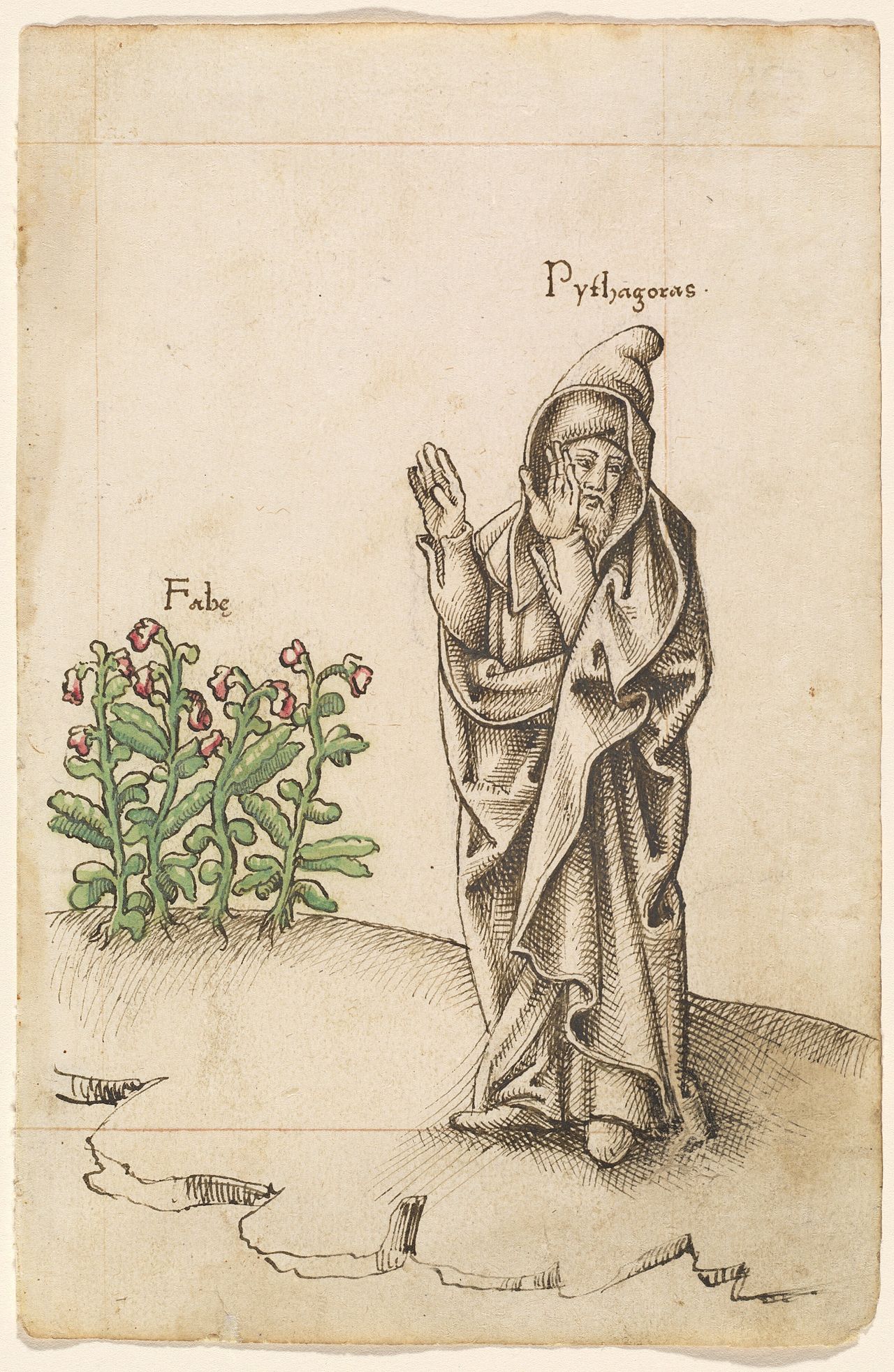
Pythagoras of Samos (c. 570 – c. 495 BC) is an early Greek thinker best known today for the mathematical principle named after him, the Pythagorean theorem. Ancient accounts describe him as both a philosopher and a mathematician who founded a circle of followers whose activities combined study, ritual, and communal living. Biographical details come mainly from later writers and are mixed with legend, so modern historians treat many specific claims about his life with caution. Traditions place his birth on the island of Samos and his later activity in southern Italy, in the city of Crotone, where a Pythagorean community developed.
Image gallery
10 Images




Contributions to mathematics, music and astronomy
Pythagorean thought emphasized numerical relationships. The theorem that bears Pythagoras’s name states that in a right-angled triangle the sum of the squares on the two legs equals the square on the hypotenuse; later generations produced many different proofs of this geometric fact. Pythagoreans also studied integer solutions now called Pythagorean triples (for example 3, 4, 5) and explored proportional relationships that underpin musical intervals: ratios such as 2:1 (octave) and 3:2 (fifth) were connected to harmonious sounds. This application of number to physical phenomena influenced early Greek ideas about the cosmos and contributed to the development of mathematical astronomy.
Pythagorean community and doctrines
The Pythagorean group combined ethical, religious and scientific practices. Members are traditionally said to have observed rules of conduct including communal property, dietary restrictions (often described as vegetarianism), secrecy, and ritual observances. Central to their symbolic system was the tetractys (the sequence 1+2+3+4 = 10), revered as a harmony-generating figure. The school taught doctrines such as the immortality and transmigration of the soul (metempsychosis) and the belief that number provided a key to understanding reality. Because teaching was often oral and bound by secrecy, it is difficult to distinguish doctrines originating with Pythagoras himself from ideas developed later by his followers.
Sources, historicity and influence
Reports about Pythagoras come from writers centuries after his lifetime, including philosophers and biographers who interwove facts, anecdotes and symbolic reports. Ancient claims that he traveled to Egypt and Mesopotamia are often presented as part of a broader tradition explaining Greek learning; such journeys remain plausible but not conclusively documented. Despite uncertainties, the Pythagorean emphasis on mathematical order played a formative role in later Greek philosophy, notably influencing Plato, and through him the Western philosophical tradition. Their numerical approach also fed into later developments in mathematics, music theory and cosmology.
Notable concepts and examples
- Pythagorean theorem — relation between the sides of a right triangle and the basis for many geometric proofs and constructions.
- Pythagorean triples — integer solutions illustrating the theorem (3, 4, 5 is the simplest example).
- Musical ratios — simple numerical ratios associated with consonant intervals; a foundational idea in ancient acoustics.
- Tetractys — symbolic arrangement of the first four integers (1,2,3,4) that summed to 10 and held ritual importance.
- Ethical and religious practices — communal living, ritual oaths, and beliefs about the soul and purification.
Further reading and resources
- Pythagoras: general biography and context
- Ancient accounts and sources on Pythagoras
- Exposition of the Pythagorean theorem and classical proofs
- Mathematical development of the theorem through history
- Numerical mysticism and the role of numbers
- Daily life and communal rules of Pythagorean groups
- Pythagorean influence on Plato and later philosophy
- Pythagorean contributions to music theory
- Samos and Pythagoras’s early context
- Geography and historical setting in the Aegean
- Pythagorean communities in Magna Graecia
- Origins of the term "philosophy" and early usage
- Religious aspects of Pythagorean teaching
- Beliefs about the soul and transmigration
- Accounts of dietary practices and ethics
- Modern scholarship and critical studies
Questions and answers
Q: Who was Pythagoras?
A: Pythagoras of Samos was a famous Greek mathematician and philosopher who lived from c. 570 to c. 495 BC.
Q: What is the Pythagorean theorem?
A: The Pythagorean theorem is a mathematical proof about right angle triangles.
Q: What group did Pythagoras start?
A: Pythagoras started a group of mathematicians called the Pythagoreans, who worshiped numbers and lived like monks.
Q: How did he influence Plato?
A: He had an influence on Plato's theories and philosophy.
Q: What are some of his theories still used today?
A: His theories are still used in mathematics, theory of music, and astronomy today.
Q: Where was he born?
A: He was born in Samos, a little island off the western coast of Asia Minor.
Q: What beliefs were important to the Pythagoreans? A: Religion was important to the Pythagoreans; they swore their oaths by "1+2+3+4" (which equals 10) and believed that souls were immortal and went through cycles of rebirth until they could become pure, existing in both animal and plant life.
Related articles
Author
AlegsaOnline.com Pythagoras: Life, Teachings, and Mathematical Legacy Leandro Alegsa
URL: https://en.alegsaonline.com/art/80254
Sources
- www-groups.dcs.st-and.ac.uk : www-groups.dcs.st-and.ac.uk