
Zoom lens (variable focal-length photographic lens)
A zoom lens is an optical camera lens whose focal length can be changed without swapping lenses. It offers framing flexibility and is widely used in stills and motion picture work.
Overview
A zoom lens is a type of camera lens that allows continuous adjustment of its focal length so the photographer or cinematographer can change magnification and field of view without changing lenses. This contrasts with a prime lens, which has a fixed focal length. Zoom lenses are valued for convenience and compositional flexibility in a single optical unit.
Image gallery
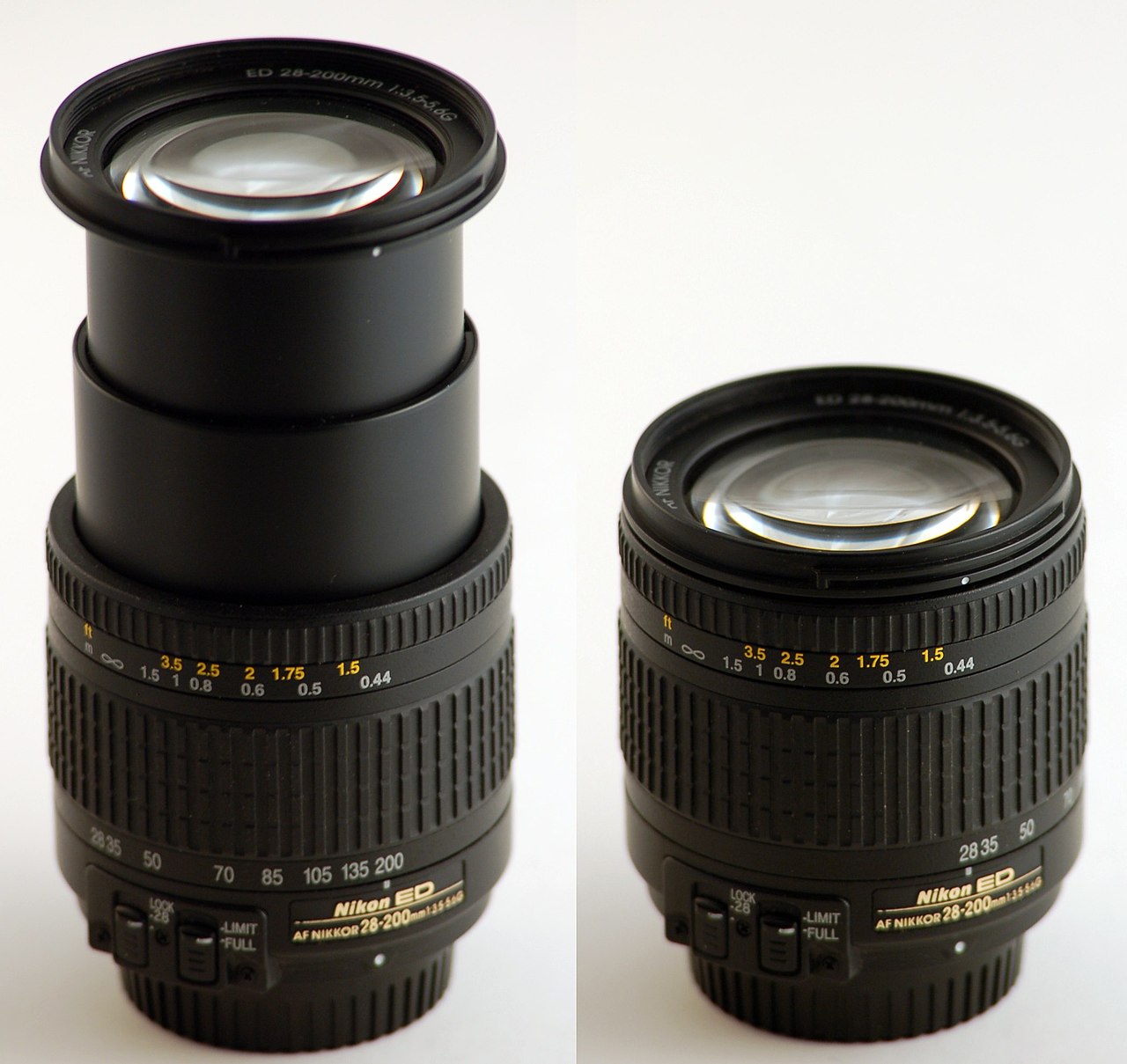
10 Images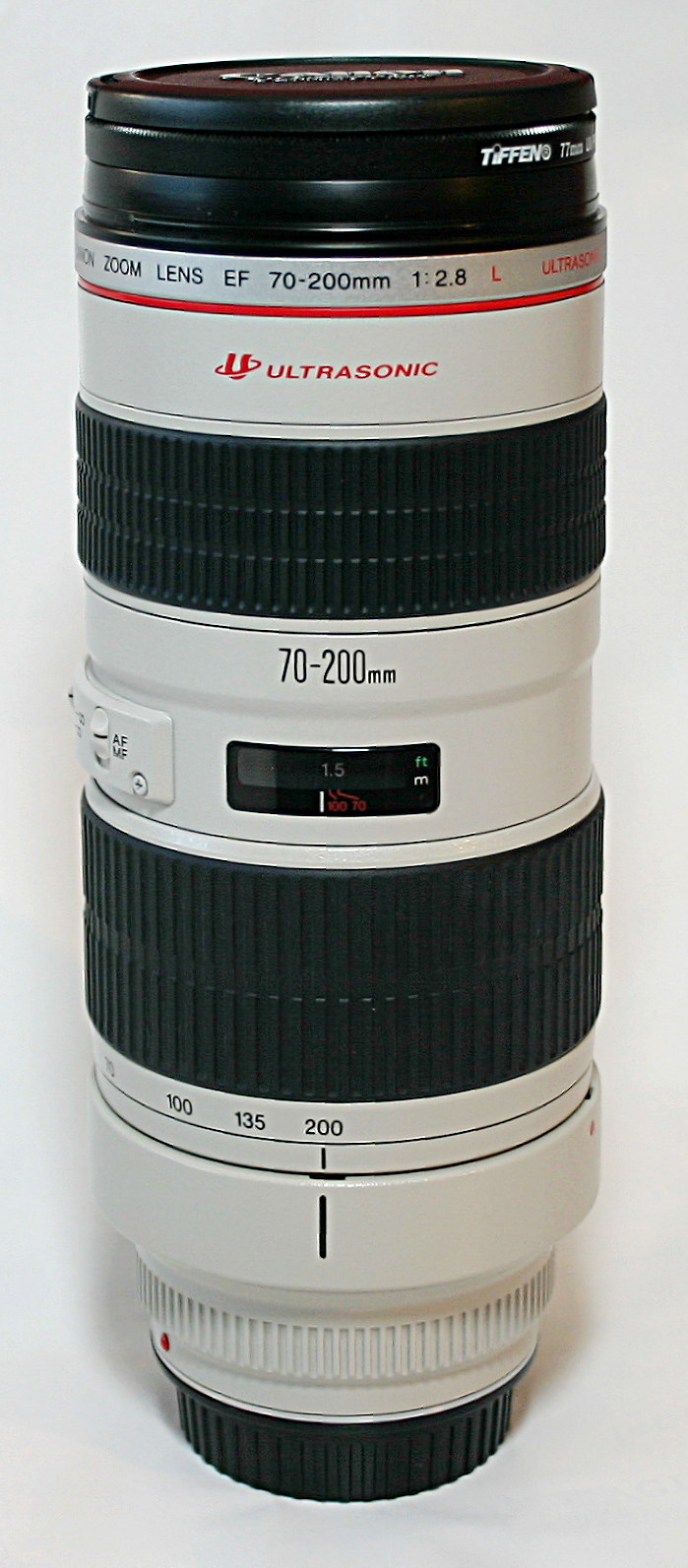






Design and characteristics
Optically, a zoom lens contains multiple moving groups of lens elements designed to alter the distance between optical planes and the image sensor or film. These movements change effective focal length and can also shift focus slightly, so many consumer zooms are varifocal (requiring slight refocus after zooming) while higher-end designs are parfocal (maintain focus across the range). Zooms may be described by their zoom ratio — for example, 3× or 10× — indicating how many times longer the maximum focal length is versus the minimum.
A key specification is whether the lens has a constant maximum aperture (e.g., f/2.8 throughout the zoom range) or a variable maximum aperture (e.g., f/3.5–5.6). Constant-aperture zooms generally perform better in low light and maintain depth-of-field characteristics but tend to be larger, heavier, and more expensive. Variable-aperture zooms trade size and cost for convenience and are common on consumer cameras.
Types and common ranges
- Wide-angle zooms — capture broad scenes from short focal lengths.
- Standard zooms — cover ranges near normal perspective used for general photography.
- Telephoto zooms — provide reach for distant subjects like wildlife or sports.
- Superzooms (all-in-one) — very large zoom ratios designed for travel convenience.
History and development
Zoom lens concepts date to the early 20th century and became practically important for motion picture cameras in the mid-20th century. Advances in optical glass, aspherical elements, low-dispersion glass, and computer-aided design during the late 20th and early 21st centuries improved sharpness, reduced aberrations, and enabled more compact high-performance zooms. Film and digital camera formats influence design choices and trade-offs between size, cost, and image quality.
Uses, advantages and trade-offs
Zoom lenses are widely used in journalism, event photography, wildlife, sports, and video production because they let operators reframe quickly without changing position. The convenience comes with compromises: many zooms show more geometric distortion, reduced edge sharpness at extreme focal lengths, and greater chromatic aberration than comparable prime lenses. Modern corrective coatings, stabilization systems, and in-camera or post-processing software can mitigate many of these issues.
Notable features and considerations
Contemporary zooms may include optical image stabilization, weather sealing, fast autofocus motors, and mechanical features such as zoom locks to prevent "zoom creep." Cinema zooms are often parfocal and designed with consistent focus and aperture performance for motion work; stills zooms prioritize size, cost, and autofocus speed. When choosing between prime and zoom, photographers weigh flexibility against ultimate optical performance and aperture needs.
Related articles
Author
AlegsaOnline.com Zoom lens (variable focal-length photographic lens) Leandro Alegsa
URL: https://en.alegsaonline.com/art/110714