
32-bit computing
Overview of 32-bit computing: data width, address space, historical development, common limits and practical uses, and how it differs from other architectures.
32-bit computing refers to processors, data paths, registers or memory addresses that are 32 binary digits wide. In general computing terms this width shapes the largest integer values natively handled, the size of pointers to memory, and the granularity of many low-level operations. For technical context see computer architecture.
Image gallery
1 Image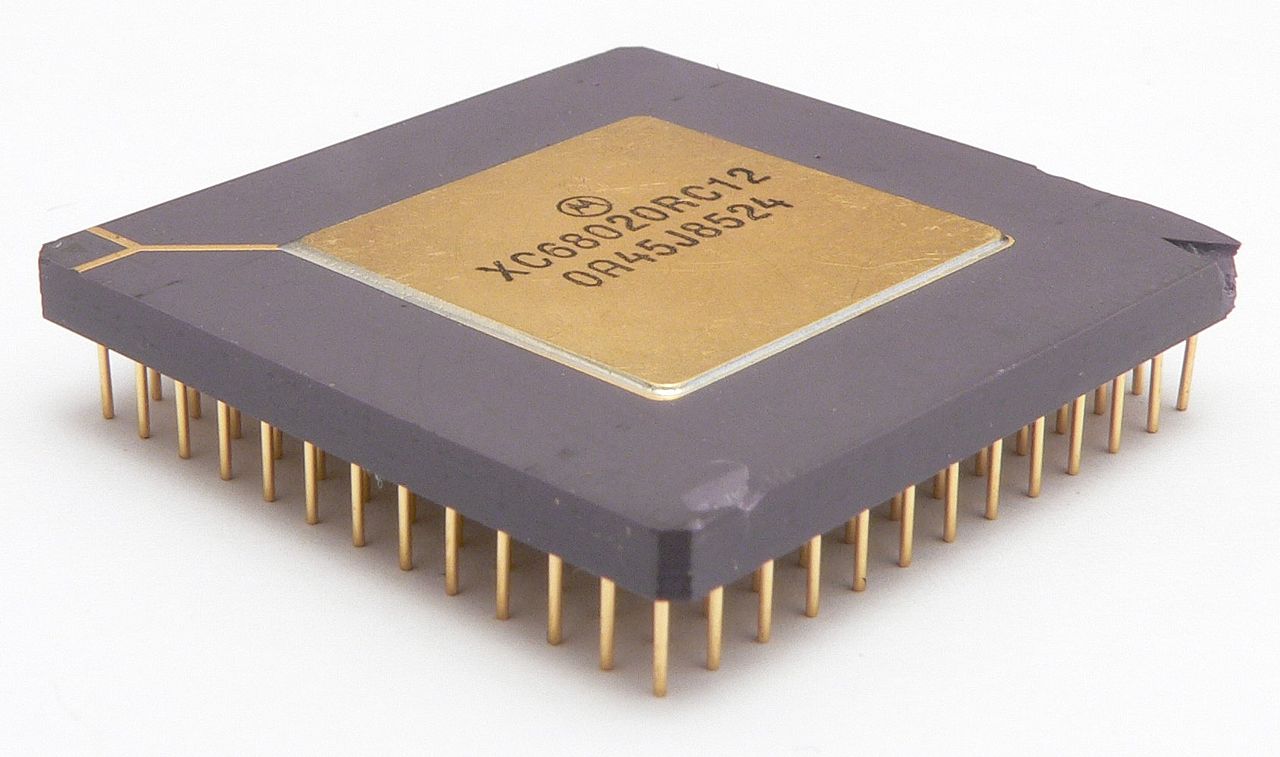
Key characteristics
At the simplest level a 32-bit unit can represent 2^32 distinct values. As a signed two's-complement integer this commonly gives a range from -2,147,483,648 to 2,147,483,647; as an unsigned integer it spans 0 to 4,294,967,295. The term applies equally to 32-bit integers, memory addresses, and other 32-bit data types. The literal width, often described as 32 bits, also implies an idealized 4 gigabyte address space (2^32 bytes).
History and evolution
The transition from 16-bit to 32-bit designs in the 1980s and 1990s enabled more complex operating systems and larger addressable memory. Many mainstream desktop and server CPUs implemented 32-bit registers and instruction sets. Over time manufacturers added extensions—such as Physical Address Extension (PAE)—to let systems use more than 4 GB of physical RAM while retaining 32-bit programs.
Uses, limits and examples
32-bit systems dominated personal computing for decades and are still common in embedded devices and legacy software. Consumer operating systems compiled for 32-bit hardware typically cannot use the full 4 GB of physical RAM for a single process; for example certain Windows editions and configurations expose only about 3.5 GB of user-addressable memory because of reserved kernel and hardware mappings. PAE and 64-bit upgrades are ways to work around or eliminate that limit.
Notable distinctions
- Bit width is not the only performance factor: clock speed, cache, and instruction set matter.
- 32-bit pointers limit virtual address space per process; 64-bit architectures expand that dramatically.
- Compatibility layers allow many 32-bit programs to run on newer 64-bit systems, but driver and kernel support differ.
Understanding whether a system or program is 32-bit helps predict numeric ranges, memory constraints, and compatibility needs when designing or upgrading software and hardware.
Related articles
Author
AlegsaOnline.com 32-bit computing Leandro Alegsa
URL: https://en.alegsaonline.com/art/112816