
Zinc chloride (ZnCl2): properties, production, uses, and safety
Zinc chloride is a hygroscopic inorganic salt used as a Lewis acid catalyst, flux, and preservative. This article summarizes its properties, common preparations, applications, and safety considerations.
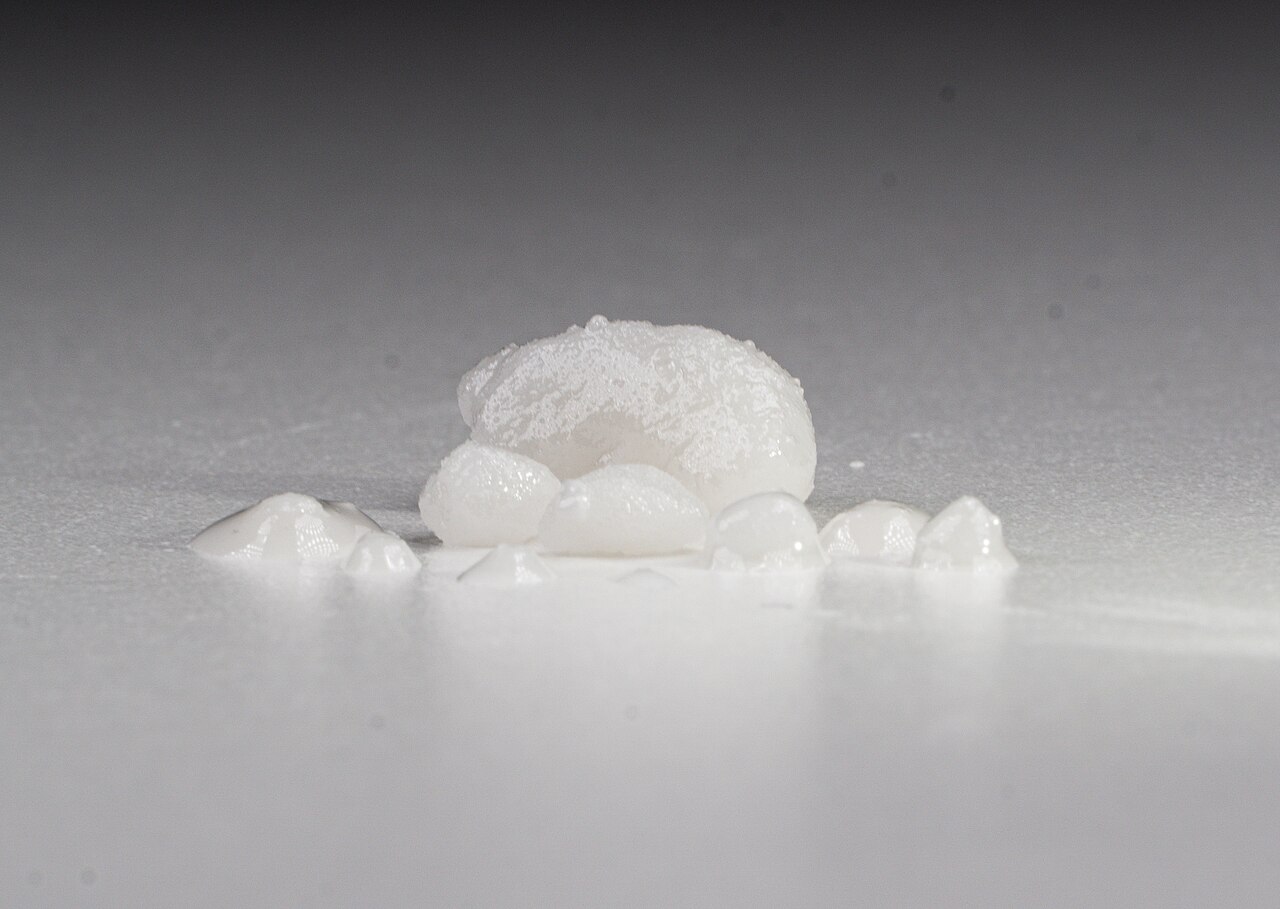
Zinc chloride is an inorganic salt with the formula ZnCl2. It typically appears as a colorless to white crystalline solid or as a clear, highly concentrated aqueous solution. ZnCl2 is strongly hygroscopic (it absorbs water from air) and dissolves readily in water, forming acidic solutions. The substance is a source of zinc in the +2 oxidation state and chloride anions, and it acts as a Lewis acid in many chemical reactions. Overview of zinc chloride

Image gallery
7 Images



Characteristics and structure
In solid form ZnCl2 can exist in different structural motifs depending on hydration and temperature; anhydrous ZnCl2 often shows polymeric connectivity where zinc atoms are coordinated to chloride ligands. In solution it forms complex ions with additional chloride and solvent molecules. Its strong affinity for water and chloride ligands underlies many of its chemical behaviors, including hydrolysis and complex formation. Physical and chemical properties
Preparation and reactions
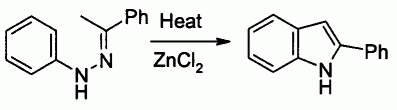
Common laboratory and industrial routes make ZnCl2 by reacting zinc metal, zinc oxide, or zinc carbonate with hydrochloric acid, followed by concentration and drying for the anhydrous form. It reacts with bases to give zinc hydroxide or carbonate, and with excess chloride it can form complex anions. As a Lewis acid, ZnCl2 promotes reactions such as acylations and rearrangements in organic synthesis. Preparation methods
Uses and applications
Zinc chloride has a diverse set of uses in industry and chemistry. Typical applications include:
- As a flux in soldering and metalwork to clean metal surfaces and promote bonding.
- As a catalyst and reagent in organic synthesis (Lewis acid reactions).
- In textile processing, wood preservation, and some metal finishing operations.
- In specialty batteries and electrolytes, and in analytical chemistry reagents.
Its combination of solubility, acidity, and complexation ability makes it useful across these fields. Industrial uses
Safety, handling, and environmental notes
Zinc chloride solutions are corrosive and can cause irritation or burns on contact with skin and eyes; ingestion or inhalation can be harmful. Proper protective equipment, ventilation, and spill controls are important when working with this chemical. Waste disposal should follow local regulations because high concentrations of zinc or chloride can affect aquatic organisms. Safety and regulatory guidance
Notable distinctions: ZnCl2 differs from zinc oxide and other zinc salts in being strongly hygroscopic and in its pronounced Lewis acidity. It forms various hydrates and complexes, and its behavior depends strongly on concentration and the presence of coordinating anions. These properties explain both its usefulness and the precautions needed in storage and handling.
Related articles
Author
AlegsaOnline.com Zinc chloride (ZnCl2): properties, production, uses, and safety Leandro Alegsa
URL: https://en.alegsaonline.com/art/110623