
Zinc sulfide (ZnS) — properties, structure and uses
Zinc sulfide (ZnS) is a wide‑bandgap inorganic compound found in nature as sphalerite and wurtzite. It is used as a pigment, optical material and phosphor when doped; notable for two crystal forms and luminescent properties.
Zinc sulfide is an inorganic compound with the formula ZnS. It consists of zinc cations and sulfide anions and appears in two main mineral forms: the cubic zinc blende (sphalerite) and the hexagonal wurtzite. For general reference on the compound see ZnS data, while background on its constituents appears at zinc and sulfide.
Image gallery
4 Images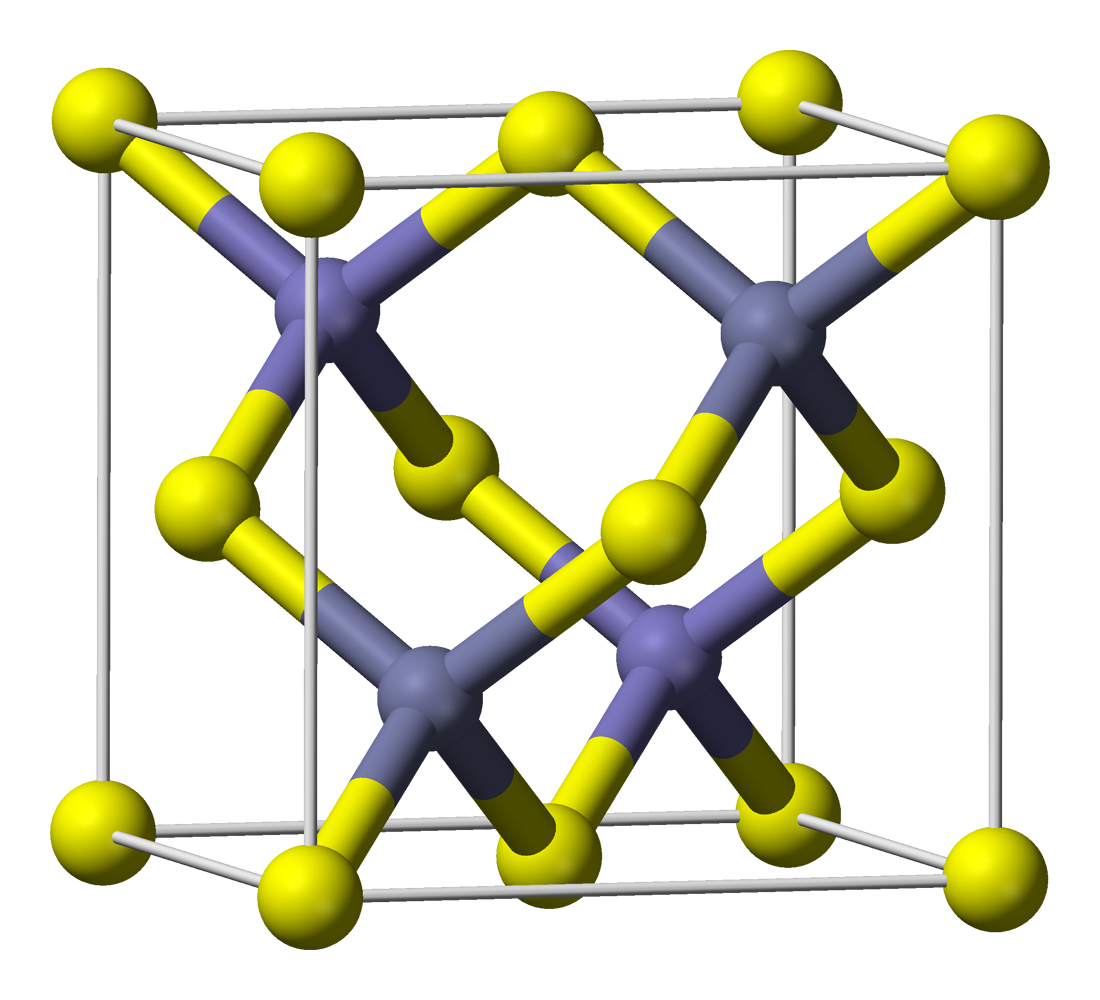


Structure and physical properties
ZnS is a white to slightly colored solid depending on impurities. It is a wide band gap semiconductor, which gives it useful optical transparency in visible and near‑infrared regions and a relatively high refractive index. The two crystal structures, cubic and hexagonal, differ in stacking of atomic layers and produce subtly different optical and electronic behavior. Undoped ZnS is not a good conductor of electricity and is chemically stable under normal conditions.
Synthesis and history
Natural ZnS occurs as the ores sphalerite and wurtzite, long known to miners and mineralogists. Synthetic ZnS is prepared by precipitation from soluble zinc salts with hydrogen sulfide or by direct combination of the elements at elevated temperature; thin films and powders are also produced by chemical vapor deposition and other modern methods. In the early 20th century, doped ZnS became important in luminous paints and display technologies.
Major applications
- Phosphors and luminescent materials: when doped with activators such as copper or silver, ZnS emits light and has been used in glow‑in‑the‑dark paints, cathode ray tubes and electroluminescent devices.
- Optics: ZnS is used for infrared and visible optical windows, lenses and coatings because of its transparency and refractive properties.
- Pigments and fillers: ground ZnS serves as a white pigment and opacifier in specialized coatings and plastics.
- Electronics and sensors: thin films of ZnS are employed in some semiconductor and sensing applications due to the wide band gap.
Other industrial and research uses include photocatalysis and composite materials. Detailed technical specifications and safety information are available from material datasheets such as manufacturer data.
Distinctions and safety notes
Doping changes the emission color and efficiency: copper yields greenish emission, while silver and rare‑earth dopants produce blue or other hues. ZnS should be handled with standard inorganic chemical precautions; if ZnS is treated with strong acids, toxic hydrogen sulfide gas can be released, so acid reactions require appropriate ventilation and controls.
Related articles
Author
AlegsaOnline.com Zinc sulfide (ZnS) — properties, structure and uses Leandro Alegsa
URL: https://en.alegsaonline.com/art/110632