
World Youth Day: International Catholic Gathering of Young People
World Youth Day is a global Catholic event that brings young people together for worship, cultural exchange and faith formation. It began in the 1980s and meets locally each year and internationally every few years.
Overview
World Youth Day (WYD) is a worldwide gathering of young Catholics for prayer, catechesis, cultural exchange and communal worship. Organized by the Catholic Church, the event aims to deepen faith, encourage service, and foster solidarity among youth from different countries and backgrounds. Local celebrations take place annually in many dioceses, while a large international pilgrimage convention is usually held every two to three years in a different host city.
Image gallery
5 Images


Origins and development
The festival was initiated by Pope John Paul II in the mid-1980s as part of an effort to strengthen youth ministry and to encourage young people to take a more active role in church life. Church leaders framed WYD as an occasion for formation and commitment rather than merely a social gathering. The idea took shape in the 1980s and has evolved into a recurring global event with rotating host cities and increasingly complex pastoral programs (mid-1980s). Over time, succeeding popes and national bishops’ conferences have adapted the format to different cultures and pastoral priorities; references to "the pope" as a central celebrant are common in official descriptions the pope.
Typical program and activities
International World Youth Day gatherings usually include a mix of liturgy, catechetical sessions, cultural events and service activities. Common elements are:
- Opening ceremonies and welcome events with music and testimony.
- Small-group catechesis led by bishops or pastoral teams.
- Pilgrimage-style processions, prayer vigils and the final Mass presided over by the pope or a delegated celebrant.
- Opportunities for charitable work, intercultural exchange and vocational discernment.
Examples and global impact
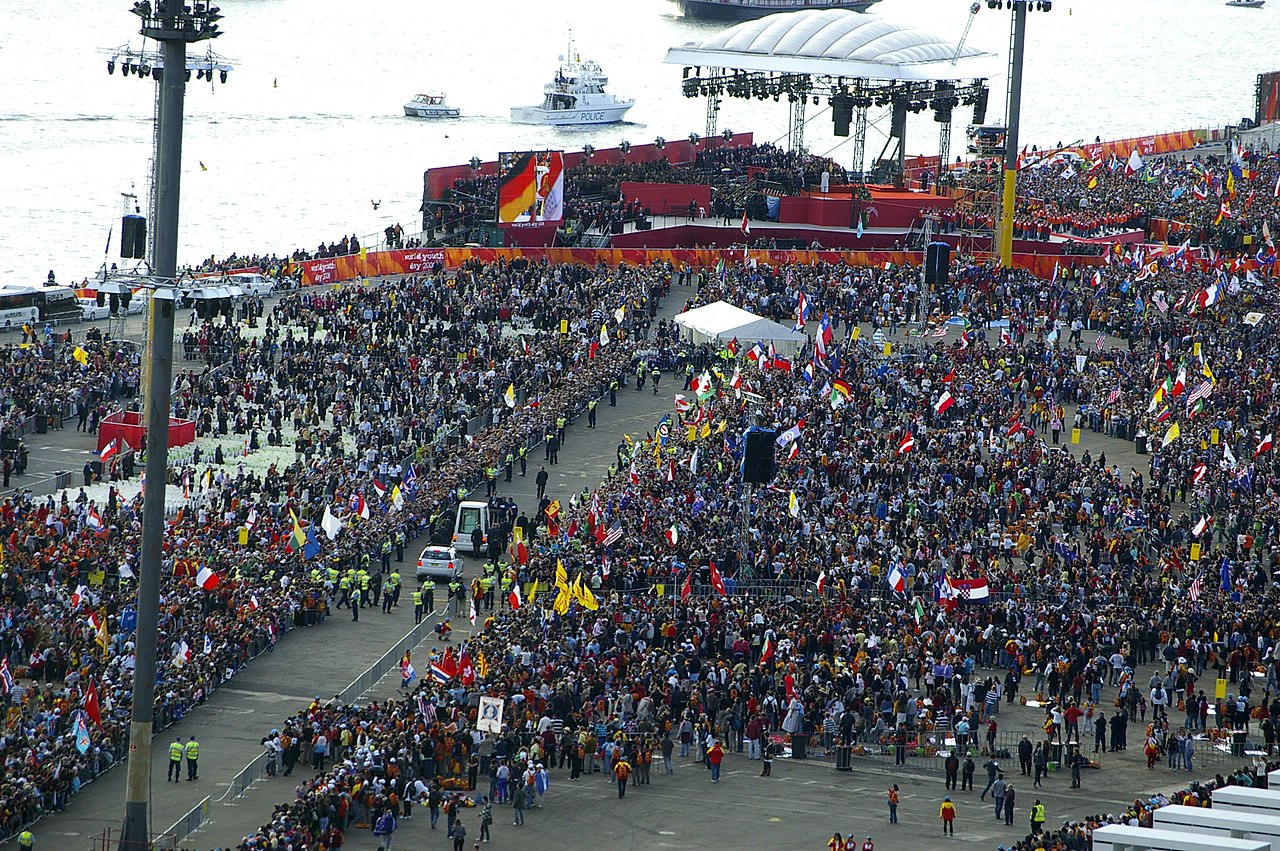
World Youth Day has drawn large international crowds and often attracts widespread media attention. For example, the 2005 international gathering in Cologne (Germany) was widely reported as drawing more than a million participants and was notable for the participation of Pope Benedict XVI. Other recent host cities have included locations on several continents, and national or diocesan WYD celebrations take place in many countries each year. These events have frequently encouraged local youth ministries, inspired volunteer projects, and created long-term networks among participants 2005 event.
Significance and distinctions
World Youth Day differs from routine parish youth work in scale and symbolism: it is both a pilgrimage and a public sign of the church’s commitment to younger generations. Its international gatherings emphasize encounter across cultures, while local WYD-related activities focus on ongoing formation and service. Observers note that the event serves pastoral, cultural and diplomatic functions: it provides catechesis, showcases youth cultures within the church, and occasionally shapes public perceptions of Catholicism in host countries.
Further considerations
Participation can be spiritual, social and formative; organizers encourage preparation and follow-up so that the experience contributes to long-term involvement in church and civic life. For more official resources and historical summaries see official diocesan and Vatican materials, and national youth ministry organizations often publish guides for pilgrims and volunteers. Additional information and event histories are available through dedicated pages and archives produced by the church and participating communities.
Related articles
Author
AlegsaOnline.com World Youth Day: International Catholic Gathering of Young People Leandro Alegsa
URL: https://en.alegsaonline.com/art/109132