
Wounded Knee Massacre
An 1890 confrontation at Wounded Knee Creek in South Dakota in which U.S. soldiers killed many Lakota men, women and children; widely remembered as a tragic end to large-scale Indian War fighting.
Overview
The Wounded Knee Massacre occurred on December 29, 1890, on the plains of South Dakota at Wounded Knee Creek. A detachment of the U.S. 7th Cavalry attempted to disarm a band of Lakota people. Estimates of the dead vary: contemporary and later accounts put Lakota fatalities in the hundreds, with a smaller number of soldiers killed or wounded. The Lakota involved were part of the larger Sioux peoples and are often referred to specifically as Lakota.
Image gallery
10 Images


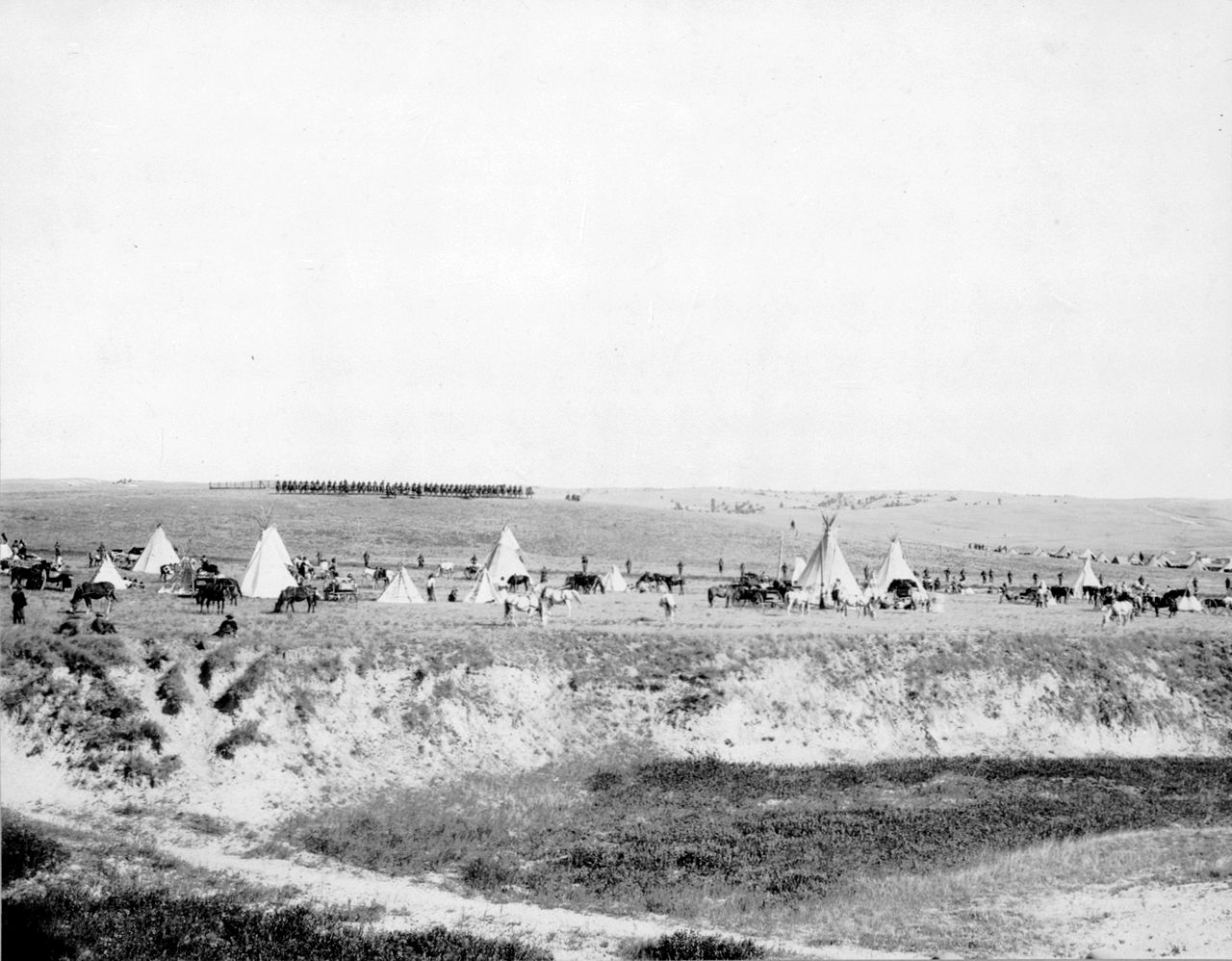


Background and causes
In the months before the incident tensions rose across the northern Plains. The spread of the Ghost Dance movement, fears among settlers, and the recent death of the Hunkpapa leader Sitting Bull contributed to alarm. Federal authorities ordered troops to the Pine Ridge area to restore order and to disarm bands perceived as threatening. A group led by a chief sometimes called Spotted Elk (Big Foot) was intercepted while moving toward what they hoped would be safety.
The confrontation
Accounts describe a chaotic attempt to disarm the Lakota camp. A single shot—its source still debated—set off a rapid escalation. Soldiers opened fire with rifles and Hotchkiss guns; Lakota return fire was limited by confusion and the presence of many noncombatants. The fight lasted only minutes but resulted in heavy casualties among men, women and children. The location is identified as Wounded Knee Creek.
Casualties and immediate aftermath
- Fatalities: historical estimates vary; many scholars cite roughly two to three hundred Lakota dead, including women and children.
- U.S. forces: around two dozen soldiers were reported killed or wounded.
- Short-term consequences: captured survivors were held; bodies were buried in mass graves at the site.
Historical significance and controversy
The event is widely remembered as a massacre and as marking the end of large-scale armed resistance by Plains tribes to U.S. expansion. Official responses at the time included investigations and, controversially, the award of Medals of Honor to several soldiers—an action that has been criticized by Native communities and historians. The site has since become a symbol of Native American suffering and resistance.
Memory and legacy
Wounded Knee remains a focal point in discussions about U.S. Indian policy, cultural suppression, and historical memory. The battlefield is commemorated and interpreted in various ways—through memorials, scholarship, and public remembrance—and it later became connected to the 1973 occupation by Indigenous activists. The event continues to influence debates about commemoration, justice, and reconciliation.
For concise introductions and further reading see primary overviews and archival material: Lakota background, Wounded Knee location, and the broader Sioux history.
Questions and answers
Q: What was the Wounded Knee Massacre?
A: The Wounded Knee Massacre was a brief fight between the Native American Lakota people and the US Army on December 29, 1890.
Q: Where did the Wounded Knee Massacre take place?
A: The Wounded Knee Massacre took place at Wounded Knee Creek in South Dakota.
Q: How many Lakota and soldiers were killed during the Wounded Knee Massacre?
A: About 300 Lakota and 25 soldiers were killed during the Wounded Knee Massacre.
Q: Who were the Lakota?
A: The Lakota were part of the Sioux nation.
Q: Why did the army go to the area of Wounded Knee Creek?
A: The army had been sent into the area to take the guns owned by the Lakota.
Q: When did the Wounded Knee Massacre occur?
A: The Wounded Knee Massacre occurred on December 29, 1890.
Q: What was the outcome of the Wounded Knee Massacre?
A: The outcome of the Wounded Knee Massacre was the death of many Lakota people and soldiers, and it marked the end of the American Indian Wars.
Related articles
Author
AlegsaOnline.com Wounded Knee Massacre Leandro Alegsa
URL: https://en.alegsaonline.com/art/109161
Sources
- eyewitnesstohistory.com : "Massacre At Wounded Knee, 1890"