
Workhouse (British poor relief institutions)
Institutions that provided shelter and compulsory labour for people unable to support themselves in Britain; shaped by medieval poor laws, reformed in the 19th century and largely transformed by the mid-20th century.
Overview
The workhouse was a purpose-built institution that combined accommodation with compulsory work for people judged unable to support themselves by local authorities. The practice developed in England and Wales from the early modern period, with contemporary uses of the phrase attested from the 17th century. One of the earliest municipal mentions is a 1631 report describing the provision of a house for the needy in Abingdon.
Image gallery
10 Images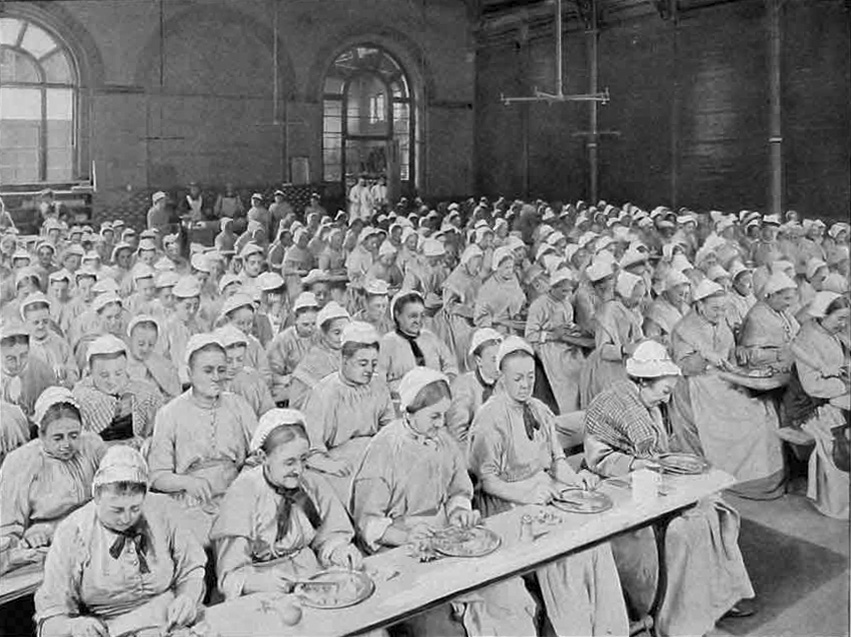



Origins and legal context
Systems of local relief in the British Isles have medieval roots. Authorities encountered a need to manage poverty and labour shortages after demographic crises such as the Black Death, and over centuries parishes and local officials assumed responsibility for support. The evolving arrangements reflected a mixture of charity, duty and control: the community was expected to provide for its poor but to do so in ways that discouraged idleness and uncontrolled migration. As welfare responsibilities shifted from informal provision to more formal local structures, institutions that combined shelter with work became one response to recurrent need.
Organisation, rules and daily life
Workhouses were organised under local boards or parochial managers and operated to a strict regimen. Administrators commonly aimed to make conditions less attractive than ordinary labour so that only those in genuine destitution would accept relief; this is often summarised by the Victorian idea of making relief "less eligible." In practice that meant separation of families in some establishments, uniforms or bedding rules, fixed mealtimes, and a system of discipline for infringements. At the same time, many workhouses provided rudimentary medical care and elementary schooling for children—services the poorest families often lacked outside the institution.
Work and purpose
Work assigned to inmates tended to be unskilled, monotonous and physically demanding. Tasks were chosen to occupy time and, where possible, recover some value: breaking stones for road-making, laundry and domestic chores, textile repair and handling refuse were common. Some institutions processed animal remains and bones as part of bone-crushing or rendering for agricultural fertiliser, and residents were set to separate old rope fibres (oakum) for reuse. The harsh chores and strict discipline led to the workhouse gaining a stigmatising reputation; the metal implement used to unpick rope contributed to the grim nickname the spike.
19th-century reform and pressures
Industrial change, mechanisation and economic shocks after the Napoleonic Wars increased unemployment pressures in some regions. Periods of poor harvest and crop failure—often described as bad harvests—added to seasonal and long-term insecurity. In response, authorities sought to centralise and standardise relief provision; reforms in the 19th century emphasised that relief should ordinarily be given only inside workhouses, a principle intended to deter casual dependence while containing costs. Implementation varied: some boards attempted to use inmate labour to offset expenses, while others focused on care provision.
Children, medical care and social consequences
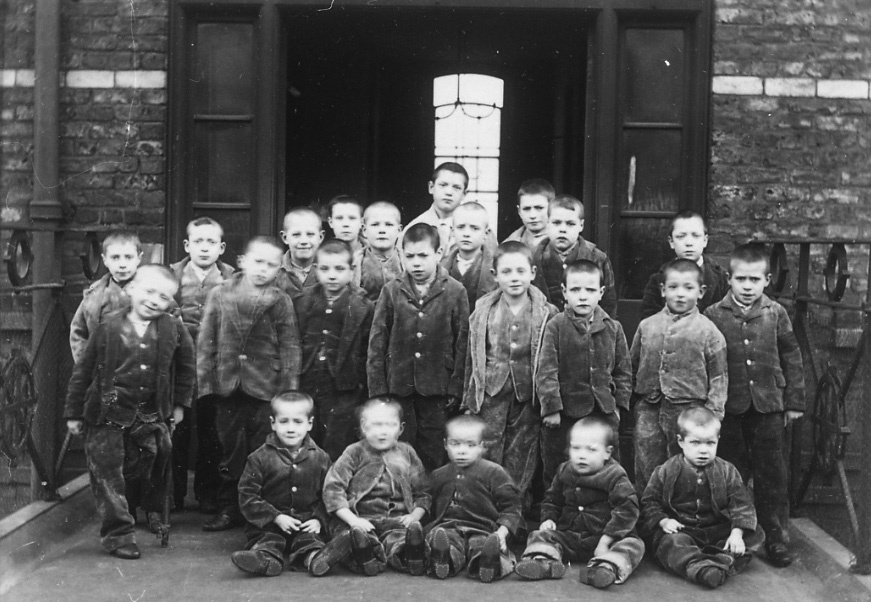
While workhouses are remembered for punitive features, they also offered services that were otherwise unavailable to many poor families. Education for resident children and basic medical treatment were provided in many institutions, and these aspects later informed wider public health and schooling developments. Nevertheless, the stigma of having entered a workhouse could carry strong social consequences for families and individuals.
Decline, transformation and legacy
By the late 19th and early 20th centuries the population of many workhouses shifted towards the elderly, infirm and chronically ill rather than able-bodied poor. Administrative changes gradually reclassified many institutions as hospitals or public assistance institutions, and the expansion of state welfare in the 20th century ended the distinct workhouse model. Debates about the workhouse helped shape evolving ideas about public responsibility for poverty and the balance between relief and control in social policy. Historians, museums and preserved sites continue to study workhouses to understand everyday life inside them and their influence on later welfare developments. For discussions of the administrative and social dimensions of poor relief, see wider literature on historical approaches to welfare.
Research and public memory
Surviving records—minute books, admission registers and local reports—form the basis for much scholarship on workhouses. Local and national archives, as well as heritage organisations, preserve buildings, interpretive displays and collections that illuminate living conditions, institutional rules and the experiences of inmates. These resources help place workhouses in the broader story of social change and public policy in Britain, and provide a focal point for contemporary reflection on poverty, dignity and state provision.
For comparative and contextual study of poor relief across time, consult descriptive surveys of social policy and collections of primary sources that trace changes from medieval parish relief to modern welfare institutions.
Questions and answers
Q: What was the purpose of workhouses?
A: Workhouses were places which offered housing and work to people who did not have any. They were designed to help solve a shortage of workers after the Black Death, and to provide welfare for the poor.
Q: When did workhouses first appear?
A: The first use of the word workhouse was in a report by the mayor of Abingdon in 1631 on the building of a workhouse in the town. However, their beginnings go back to the Poor Law Act of 1388.
Q: What caused an increase in unemployment during this period?
A: After the Napoleonic Wars there was a lot of unemployment, as well as unemployment caused by machines taking over work from farm workers. In addition, there were several bad harvests during this time period which put too much pressure on existing ways of looking after poor people.
Q: How did life in a workhouse differ from life outside it?
A: Life in a workhouse was not meant to be easy; it was made hard so only those with no hope of finding other employment would seek help there. Workhouse inmates had no rights and were subjected to strict rules and harsh punishments, but they did receive free medical care and education for children - something that wasn't available outside the system.
Q: When did laws change regarding how people received assistance?
A: Towards the end of 1800s, laws changed such that instead of unemployed poor people filling up most spaces within workhouses, they became filled with old and sick individuals instead. In 1929 further changes occurred when these institutions became hospitals known as Public Assistance Institutions, finally disappearing when National Assistance act passed 1948.
Q: What type of jobs would inmates do at a workhouse?
A: Most inmates didn't have skills necessary for normal jobs so their tasks included breaking rocks into small stones, breaking bones to make fertilizer or pulling apart old rope to reuse its fibre (known as oakum). This old rope was used to pack joints in shipbuilding projects keep them watertight using metal spikes for unpicking purposes.
Related articles
Author
AlegsaOnline.com Workhouse (British poor relief institutions) Leandro Alegsa
URL: https://en.alegsaonline.com/art/109060
Sources
- workhouses.org.uk : "An Introduction to the Workhouse"