
Yang di‑Pertuan Agong: Malaysia’s elected constitutional monarch
Overview of the Yang di‑Pertuan Agong — the elected monarch and head of state of Malaysia — covering selection, constitutional powers, ceremonial roles, history and notable distinctions.
Overview
The Yang di‑Pertuan Agong (literally "He Who Is Made Lord" in Malay) is the federal head of state of Malaysia and the country’s monarch. The office was established when the Federation of Malaya gained independence in 1957 and later adopted by the Constitution of Malaysia. Unlike most monarchs, the position is occupied by one of the hereditary rulers of the Malay states on a limited, elective basis. In English usage the title is commonly rendered as the King or Supreme Head, while his consort is styled the Raja Permaisuri Agong. For more on the basic constitutional role, see monarch and head of state contexts in comparative systems, or general information about Malaysia.
Image gallery
10 Images
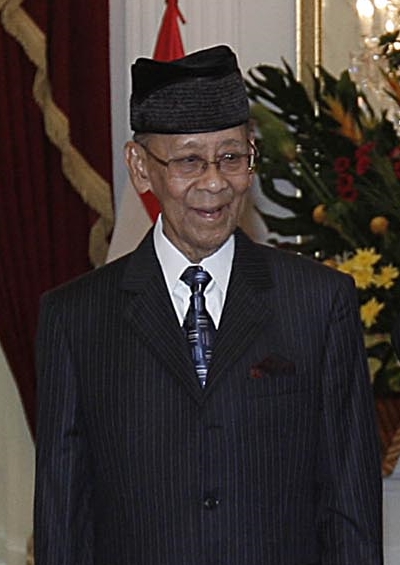





Selection and rotation
The Yang di‑Pertuan Agong is chosen every five years by the Conference of Rulers, a council formed by the nine hereditary Malay rulers. The Conference uses a customary rotation system, but the selection is formally an election among those rulers eligible at the time. The process reflects Malaysia’s attempt to combine traditional royal institutions with a modern constitutional order. For details on how elective monarchies operate within constitutional frameworks, see notes on constitutional monarchy.
Constitutional powers and limits
The federal constitution vests executive authority in the Yang di‑Pertuan Agong, but in practice most powers are exercised on the advice of the federal Cabinet and the Prime Minister. This arrangement makes the office largely ceremonial in everyday government, while preserving certain discretionary powers that can be important in moments of political uncertainty. Typical formal powers and roles include:
- appointing the Prime Minister and other ministers (normally on the advice of elected leaders);
- summoning and proroguing Parliament and, in specified circumstances, consenting to the dissolution of Parliament;
- giving royal assent to legislation (with constitutional provisions for how assent is handled when withheld);
- serving as the nominal commander‑in‑chief of the armed forces and as a protector of the Constitution;
- exercising the prerogative of mercy in criminal matters in respect of federal offences.
Although these functions are set out in law, constitutional conventions and judicial interpretation largely determine how they are used. For discussion of separation between ceremonial authority and executive government, consult materials on state rulers and their federal roles.
Ceremonial and religious roles
Beyond constitutional duties, the Yang di‑Pertuan Agong performs numerous ceremonial functions: opening sessions of Parliament, presiding over state ceremonies, and conferring national honours. In federal matters the monarch is also recognized as a symbol of Malay identity and, within constitutional limits, as the head of Islam for the states without a hereditary ruler. These special cultural and religious responsibilities distinguish the office from purely symbolic heads of state in republics. Readers may compare ceremonial duties with other systems via constitutional summaries and studies of religious leadership in state institutions at ministerial and cultural references.
History and development
The institution draws on older Malay monarchical traditions while being a modern creation of the independence era. Since 1957 the Conference of Rulers has managed succession to the federal throne, and a number of constitutional episodes have clarified the balance between royal discretion and ministerial advice. Occasional high‑profile political events have tested the scope of discretionary authority, prompting legal and scholarly commentary on the constitutional text, the role of the judiciary, and the interplay between written law and convention. For background on Malaysia's constitutional history, see sources on the country’s formation and governance at prime ministerial and parliamentary reference points.
Notable facts and distinctions
The Yang di‑Pertuan Agong is among only a handful of elective monarchs in the contemporary world, combining hereditary state rulership with a short federal term. The office-holder retains his position as ruler of his own state while serving federally. The formal styles used in English are "His Majesty" and "Her Majesty" for the sovereign and consort respectively. Succession, selection criteria and the exercise of specific powers continue to be subjects of public interest and occasional constitutional interpretation; for comparative study of royal titles and forms, consult the resources indexed at royal style, current holders, and regional profiles such as that of Pahang and Kelantan which have supplied recent monarchs. General constitutional materials and further reading may be found via legal and historical compilations.
For readers seeking more detail, consult constitutional texts, academic commentaries and official publications of the Conference of Rulers to understand how written provisions and long‑standing conventions shape the office in practice.
Questions and answers
Q: Who is the current Yang di-Pertuan Agong?
A: The current Yang di-Pertuan Agong is Al-Sultan Abdullah of Pahang.
Q: How long is the term for the Yang di-Pertuan Agong?
A: The term for the Yang di-Pertuan Agong is five years.
Q: What powers does the Yang di-Pertuan Agong have within Malaysia's constitutional monarchy?
A: The constitution specifies that the executive power of the Federal government is given to the Yang di-Pertuan Agong, and he has discretionary powers to choose who he wants as Prime Minister. He also can dismiss or withhold consent to a request for dissolution of Parliament, discontinue or dissolve Parliament, and reject any new laws or amendments to existing laws.
Q: Who appoints the Prime Minister in Malaysia?
A: The Prime Minister in Malaysia is appointed by the Yang di-Pertuan Agong from among elected members of Parliament.
Q: What happens if permission from the Yang di-Pertuan Agong is withheld on a law or amendment?
A: If permission from the Yang di-Pertuan Agong is withheld on a law or amendment, it will automatically become law after 30 days from initial submission to him.
Q: What title doe sthe queen consort take when married to a ruling Sultan?
A: When married to a ruling Sultan, the queen consort takes on title Raja Permaisuri Agong.
Q: How are His Majesty and Her Majesty styled in English when referring to them together?
A: His Majesty and Her Majesty are styled in English as "His Majesty" and "Her Majesty".
Related articles
Author
AlegsaOnline.com Yang di‑Pertuan Agong: Malaysia’s elected constitutional monarch Leandro Alegsa
URL: https://en.alegsaonline.com/art/109604
Sources
- agc.gov.my : "Act 269 - Civil List Act 1982"
- bbc.com : "Malaysia king: Sultan Muhammad V sworn in"
- allmalaysia.info : Powers of the king.
- mtholyoke.edu : Constitutional Crisis, Crisis of 1983
- royalark.net : Royal Ark
- astroawani.com : "Sultan Pahang sah YDP Agong baharu | Astro Awani"