
Windows Server 2016 — Overview, Features and Uses
Windows Server 2016 is a Microsoft server operating system released in 2016. It introduced containers, Nano Server, Shielded VMs, Storage Spaces Direct and other enterprise features for virtualization, storage, and security.
Windows Server 2016 is a server operating system developed by Microsoft as part of the Windows NT family, and was developed alongside Windows 10. It emerged from a series of technical previews beginning October 1, 2014 and was unveiled at Microsoft's Ignite conference on September 26, 2016; general availability followed on October 12, 2016. As a release it sits in the Long-Term Servicing Channel and later received successors such as Windows Server 2019.
Image gallery
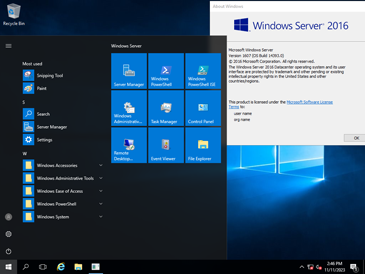
2 Images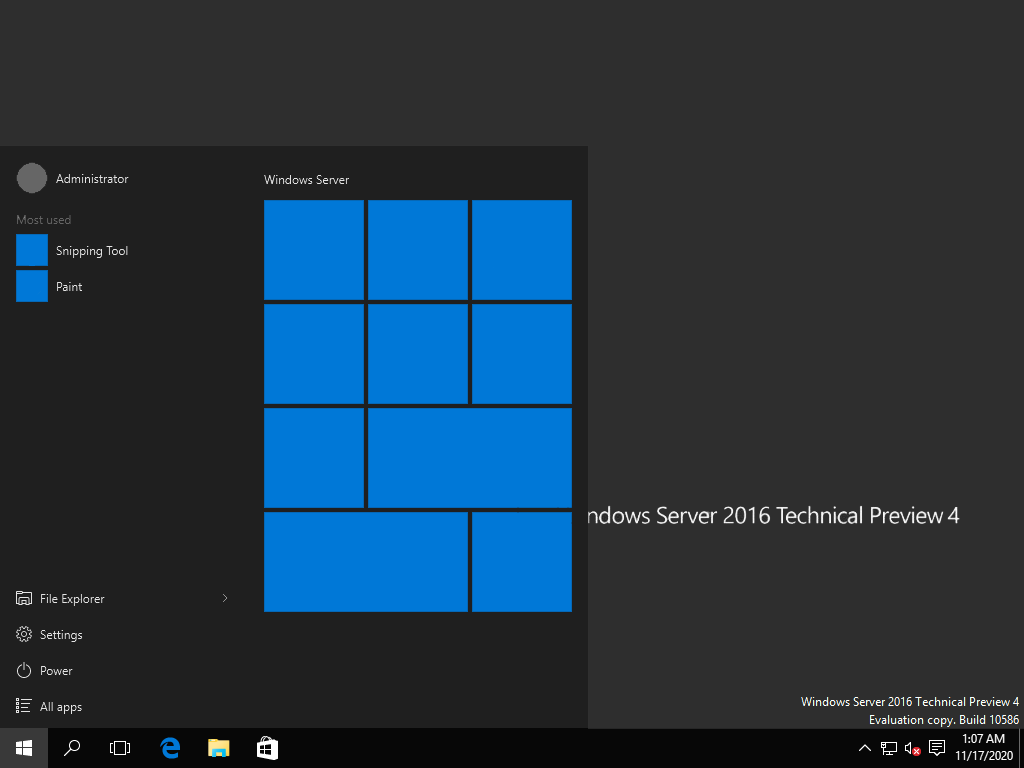
Key characteristics and architecture
Windows Server 2016 introduced several platform-level changes aimed at cloud, virtualization and security. Notable elements include container support (Windows and Hyper‑V containers), Nano Server as a lightweight deployment option, enhanced Hyper‑V features, integrated Windows Defender, and an updated PowerShell. It also supported software-defined storage and networking capabilities designed to improve scalability and resilience for datacenter workloads.
Notable features
- Containers: Native container support that works with Docker tooling and enables application isolation for faster deployment and density.
- Nano Server: Minimal-footprint installation optimized for cloud and container hosts; it reduced the servicing surface compared with traditional installations.
- Shielded VMs and Host Guardian Service: Protections for virtual machines to prevent tampering and unauthorized access on Hyper‑V hosts, helping secure multitenant and hoster environments.
- Storage Spaces Direct & Storage Replica: Built-in clustering and replication features that enable resilient, software-defined storage and synchronous/asynchronous replication for disaster recovery.
- Installation options: Desktop Experience (GUI), Server Core, and Nano Server (intended for headless or containerized scenarios).
Editions, licensing and deployment
The product was offered in editions such as Datacenter, Standard and Essentials, reflecting different virtualization rights and feature sets. Microsoft moved to a core-based licensing model for many customers; edition choice and licensing affect permitted virtualization and software-defined features. Typical deployment scenarios include on-premises datacenters, private clouds, and hybrid architectures that integrate with public cloud services.
Uses, examples and importance
Common roles for Windows Server 2016 include virtualization host (Hyper‑V), file and storage server, Active Directory domain services, and an application platform for both traditional and containerized workloads. Features such as Storage Replica support disaster recovery, while containers and Nano Server enable faster delivery and reduced resource consumption for modern microservice applications.
Management, history and distinctions
Administration improvements included expanded PowerShell cmdlets, Desired State Configuration (DSC) enhancements for automated configuration, and improved tooling for monitoring and telemetry to simplify large-scale provisioning. Historically, the product followed a visible preview period that began in 2014 and was released in 2016, and it later coexisted with Microsoft's Semi‑Annual Channel releases that focus on rapid feature delivery and often omit the full graphical shell. For official guidance and further technical documentation see product resources.
Questions and answers
Q: What is Windows Server 2016?
A: Windows Server 2016 is a server operating system developed by Microsoft as part of the Windows NT family of operating systems.
Q: When did the first early preview version of Windows Server 2016 become available?
A: The first early preview version (Technical Preview) of Windows Server 2016 became available on October 1, 2014.
Q: When was Windows Server 2016 released?
A: Windows Server 2016 was released on September 26, 2016 at Microsoft's Ignite conference.
Q: When did Windows Server 2016 become generally available?
A: Windows Server 2016 became generally available on October 12, 2016.
Q: What are the successors of Windows Server 2016?
A: The successors of Windows Server 2016 are Windows Server 2019, and the Windows Server Semi-Annual Channel.
Q: What does the Windows Server Semi-Annual Channel exclude?
A: The Windows Server Semi-Annual Channel excludes the graphical user interface and many older components.
Q: Was Windows Server 2016 developed concurrently with Windows 10?
A: Yes, Windows Server 2016 was developed concurrently with Windows 10.
Related articles
Author
AlegsaOnline.com Windows Server 2016 — Overview, Features and Uses Leandro Alegsa
URL: https://en.alegsaonline.com/art/108535
Sources
- support.microsoft.com : "Microsoft Product Lifecycle"
- blogs.technet.microsoft.com : "Announcing availability of Windows Server Technical Preview and System Center Technical Preview"
- blogs.technet.microsoft.com : "Announcing the launch of Windows Server 2016"
- zdnet.com : "Microsoft's Windows Server 2016 hits general availability"
- networkworld.com : "Microsoft to release next generation of Windows Server in 2016"
- theverge.com : "Microsoft unveils new ARM server designs, threatening Intel's dominance"
- zdnet.com : "Windows Server on ARM: It's happening"
- arstechnica.com : "Microsoft's latest open source servers shown off with Intel, AMD, and even ARM chips"
- zdnet.com : "Microsoft's Windows Server on ARM move: More questions and answers"
- windowsitpro.com : Windows IT Pro: Windows Server Technical Preview expires 15 April 2015
- neowin.net : Neowin: Second tech preview of Windows Server 2016 coming next month
- redmondmag.com : RedmondMag: Windows Server 'Insider' Testing Program Coming This Summer
- blogs.windows.com : "Announcing Windows Server Insider Preview Build 16237"
- arstechnica.com : "Windows Server 2016 moving to per core, not per socket, licensing"
- download.microsoft.com : "Windows Server 2016 Licensing Datasheet - Microsoft"