
Windows Vista: overview, features, history and legacy
Windows Vista is the sixth major Microsoft Windows release. Introduced as Longhorn, it added new graphics, security, and system features but faced criticism for compatibility and resource demands.
Overview
Windows Vista is the sixth major release of the Windows family and an operating system produced by Microsoft. Announced under the development codename "Longhorn," Vista was positioned as the successor to Windows XP and introduced a number of visible and architectural changes. Microsoft revealed the product name on July 28, 2005. Vista's lifecycle included later service packs that affected how long computers running the system received security updates and support.
Image gallery
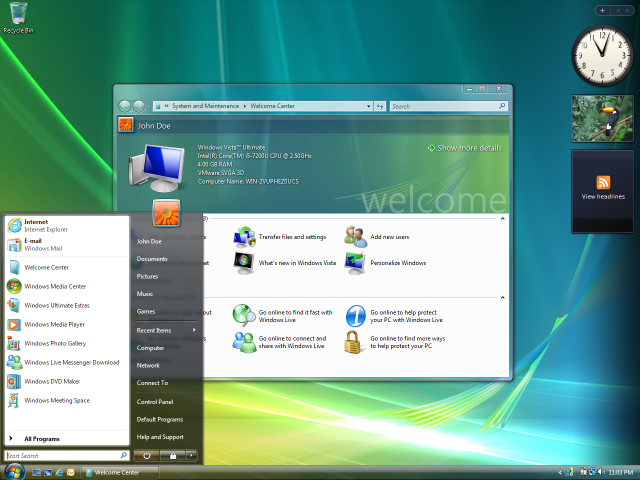
3 Images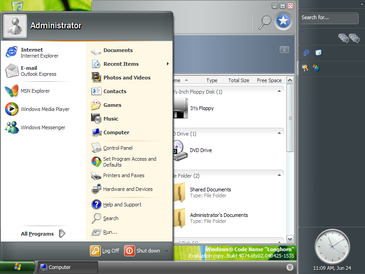

Key characteristics and components
Vista introduced both user-facing and under-the-hood changes. On the visual side it shipped with an updated desktop theme, translucent window effects known as the Aero interface, a redesigned Start menu search box, and the Windows Sidebar for small desktop gadgets. On the system side it included a rewritten display driver model, a new audio stack, and changes intended to improve reliability and resource management.
- Graphical and multimedia: Aero visual style, DirectX 10 support, refreshed window and taskbar behavior.
- Security and stability: User Account Control (UAC), improved firewall and anti-spyware integration, and other measures aimed at reducing exposure to malware.
- System services: New driver model and driver isolation, updated networking and power-management features, and enhancements to memory management such as SuperFetch and ReadyBoost.
Editions and compatibility
Microsoft offered Vista in multiple editions to target home and business users, including Home Basic, Home Premium, Business, Enterprise and Ultimate. Each edition combined different feature sets and licensing terms. The platform's security model and new driver requirements meant that some older hardware and software needed updates; incompatibilities with earlier applications and drivers were a notable practical issue during the rollout, causing businesses and consumers to evaluate upgrades carefully.
History and development
Development of Vista spanned several years and multiple internal milestones. During that period Microsoft worked to modernize many core subsystems and to add functionality that addressed contemporary networked and multimedia uses. The product required significant testing and refinement before its final releases, including a sequence of service packs that consolidated fixes and extended compatibility and support. Users were encouraged to install Service Pack 2 to continue receiving security patches after an initial support cutoff.
Reception and legacy
Vista received mixed reviews at launch. Reviewers and many users praised the visual design, some security improvements and new technologies, but criticized high hardware requirements, perceived performance regressions on older machines, and compatibility problems with legacy applications and drivers. Over time, many concepts first widely deployed in Vista—improved security defaults, the modern display driver model, and desktop search integration—were refined and carried forward into later releases, influencing the design of successor versions.
Notable facts and distinctions
- Codename and naming: While developed as "Longhorn," the product was officially named Windows Vista in mid-2005.
- Support lifecycle: Vista's support depended on service packs; installation of Service Pack 2 was required to continue receiving patches beyond an early support milestone.
- Compatibility impact: The change in how drivers and system components worked led some older programs to stop functioning without updates, a major consideration for enterprise deployment.
For official details, feature lists, and support information see the manufacturer and platform documentation: visit the product pages and support resources provided by Microsoft and related Windows documentation portals (Windows product pages), as well as archived technical articles at operating system resources. Additional historical context and contemporary commentary can be found through platform histories and technology reviews (Windows XP comparisons and security analyses).
Questions and answers
Q: What is Windows Vista?
A: Windows Vista is the 6th version of the Microsoft Windows operating system from Microsoft. It is the successor to Windows XP.
Q: What was its original name before it was released?
A: Before it was released, it was called Longhorn.
Q: When did Microsoft give out its real name?
A: On July 28, 2005, Microsoft gave out its real name, which was Windows Vista.
Q: How long did original release of Windows Vista receive support until?
A: The original release of Windows Vista received support until April 13, 2010.
Q: What do users need to install in order to receive security patches and support after that date?
A: In order to receive security patches and support after April 13, 2010, users need to install Service Pack 2 on their Windows Vista systems.
Q: When did mainstream support for Service Pack 2 installed on Window Vista end?
A: Mainstream support for Service Pack 2 installed on Window Vista ended on April 10, 2012.
Q: When did Microsoft stop supporting Window Vista as a whole?
A: Microsoft stopped supporting Window Vista as a whole on April 11, 2017.
Related articles
Author
AlegsaOnline.com Windows Vista: overview, features, history and legacy Leandro Alegsa
URL: https://en.alegsaonline.com/art/108541
Sources
- mydigitallife.info : "Windows Vista with SP2 RTM Slipstreamed/Integrated DVD ISO Image (BT Download)"
- microsoft.com : "Windows Licensing Programs"
- support.microsoft.com : "Windows Vista Lifecycle Policy"
- technet.microsoft.com : "Windows Vista Enterprise Hardware Planning Guidance"
- microsoft.com : "Windows Vista: Recommended System Requirements"
- blogs.zdnet.com : "No update from Microsoft on Vista SP1, Media Center problems"
- windowsvistablog.com : "Announcing the RTM of Windows Vista SP1"
- windowsvistablog.com : "Windows Vista Service Pack 1 Beta White Paper"
- pcworld.com : "Feb. Launch Now Set for Windows Vista SP1" · web.archive.org
- microsoft.com : "Windows Vista Service Pack 1 All Language Standalone (KB936330)"
- windowsteamblog.com : windowsteamblog.com/blogs/windowsvista/archive/2009/04/28/windows-vista-sp2-rtm-windows-v…
- news.softpedia.com : "Download Windows Vista Service Pack 2 (SP2) RTM"
- windowsvistablog.com : "Windows Vista Team Blog : Windows Vista Service Pack 2 Beta"
- support.microsoft.com : "Information about Windows Server 2008 Service Pack 2 and Windows Vista Service Pack 2"