
Winglet: Aircraft wingtip device that reduces drag and saves fuel
A winglet is a vertical or angled extension at a wingtip that reduces induced drag, improving efficiency, range, and noise characteristics for many types of aircraft.
A winglet is a small vertical or canted surface fitted at or near the tip of an aircraft wing. Its primary purpose is to weaken the wingtip vortex that forms because of pressure differences between the upper and lower wing surfaces, thereby reducing induced drag and improving overall efficiency. Winglets are used on many types of aircraft to lower fuel consumption and extend range.
Image gallery
10 Images


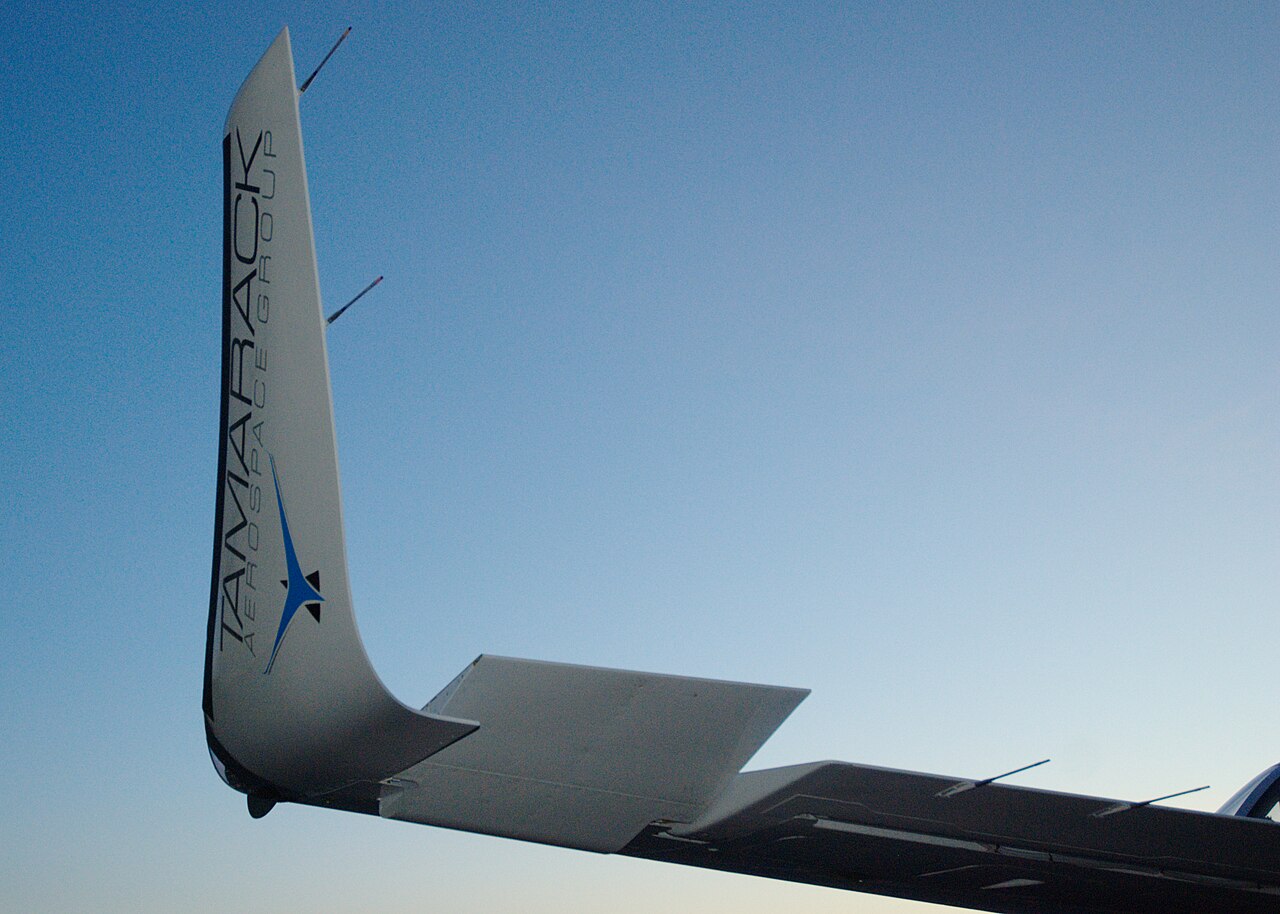


How winglets work
Lift-producing wings create spanwise airflow toward the tip; when high-pressure air from beneath the wing wraps around the tip to the low-pressure upper surface it forms a rotating vortex. Winglets change the local airflow and pressure distribution, weakening those vortices and cutting the energy lost to induced drag. The effect is most pronounced during cruise and takeoff phases where lift-induced losses matter.
Types and common features
- Winglet: a discrete, typically vertical or slightly swept surface at the wingtip.
- Blended winglet: a smooth, curving junction between wing and tip that reduces interference drag.
- Wingtip fence: small up-and-down surfaces used on some regional jets and turboprops.
- Raked wingtips: swept, extended tips used to improve aerodynamic efficiency on some widebodies.
- Sharklet/brand variants: manufacturer trade names and optimized shapes tailored to each airframe.
History and development
Research into wingtip devices dates back many decades, but a seminal advance is credited to aerodynamicists at NASA in the late 20th century who refined the modern winglet concept. Since then designers and manufacturers have evolved shapes and materials to balance aerodynamic benefit against weight and structural complexity. Commercial adoption accelerated as fuel costs and environmental concerns increased interest in efficiency improvements.
Benefits, uses and trade-offs
Winglets can yield noticeable fuel savings, reduced carbon emissions and lower noise near airports; the magnitude varies with aircraft type and mission profile and is commonly described as a small-to-moderate percentage improvement in cruise efficiency. They also allow designers to achieve higher effective aspect ratios without lengthening the wing span. Drawbacks include added weight, manufacturing cost, and potential structural reinforcement at the tip; for some small aircraft the benefits may not justify the added complexity.
Notable facts and distinctions
Wingtip devices appear on everything from gliders and business jets to major airliners. Different names—winglet, sharklet, raked tip—reflect geometry and manufacturer branding rather than fundamentally different goals. Airports, airlines and retrofit specialists often consider winglets as a cost-effective way to improve fleet efficiency, and designers continue to refine shapes using computational methods and flight testing.
Related articles
Author
AlegsaOnline.com Winglet: Aircraft wingtip device that reduces drag and saves fuel Leandro Alegsa
URL: https://en.alegsaonline.com/art/108582