
Woodhenge: Neolithic timber circle and henge near Stonehenge
Woodhenge is a Neolithic timber circle and henge monument near Stonehenge in Wiltshire, part of the Stonehenge World Heritage Site. It is interpreted as a ceremonial feature of the wider prehistoric landscape.
Overview
Woodhenge is a prehistoric timber circle and henge monument located on Salisbury Plain in Wiltshire, England. Constructed during the Neolithic period, it forms part of the ritual landscape surrounding Stonehenge and is included in the wider Stonehenge World Heritage Site, a designation administered under UNESCO. The term henge describes a circular earthwork with a bank and internal ditch; Woodhenge combines this form with a pattern of timber posts.
Image gallery
5 Images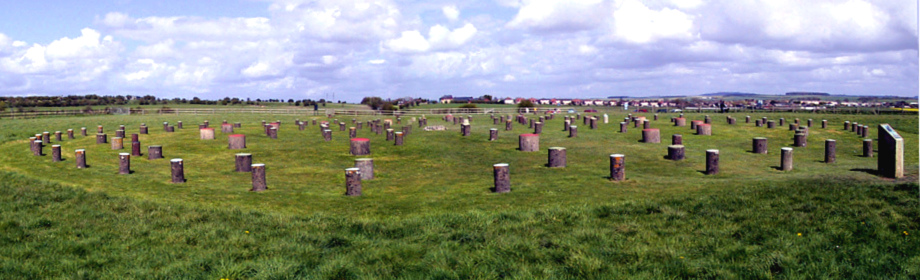


Characteristics
The monument consists of concentric rings of postholes set within an encircling ditch and low bank. Excavations revealed arrangements of timber posts that would once have formed one or more upright wooden circles, with a defined entrance leading toward the northeast. These features indicate deliberate planning and construction using Neolithic woodworking techniques and communal labour.
- Concentric timber rings marked by postholes
- Surrounding ditch and bank typical of a henge
- Clear entrance or avenue orientation tied to the local landscape
Archaeological work in the early 20th century identified the postholes and earthworks; later fieldwork and surveys have refined the plan and interpretation. Finds near the site include domestic and ceremonial material typical of late Neolithic contexts, though the timber itself has long since decayed.
Function and interpretation
Scholars view Woodhenge as part of a complex of monuments on Salisbury Plain used for ceremonial, social or funerary purposes. Its proximity and visual alignment with other monuments suggest it played a role in processions, seasonal gatherings, or ritual activities linked to ancestor veneration and community identity. Timber circles were often replaced or paralleled by stone monuments elsewhere, underlining differing local practices within a shared tradition.
Today Woodhenge is interpreted in relation to broader prehistoric traditions, including other henges and timber circles. General readers can learn about its context via interpretive panels on site and through resources provided by heritage organizations (see Neolithic period and a definition of henge for background).
Preservation and significance
As a protected part of the World Heritage Site, Woodhenge is managed to conserve subsurface features and to present the monument within its landscape context. It is a valuable example of timber architecture in prehistory and contributes to the understanding of ceremonial landscapes that include Stonehenge and other nearby sites. Its status highlights the diversity of Neolithic monument-building and the importance of landscape-scale archaeology.
Questions and answers
Q: What is Woodhenge?
A: Woodhenge is a henge and timber circle monument located in Wiltshire, near Stonehenge.
Q: What historical period does Woodhenge belong to?
A: Woodhenge belongs to the Neolithic period.
Q: Is Woodhenge considered a part of the UNESCO Stonehenge World Heritage Site?
A: Yes, Woodhenge is a part of the UNESCO Stonehenge World Heritage Site in Wiltshire.
Q: How far is Woodhenge located from Stonehenge?
A: Woodhenge is located 2 miles (3.2 km) northeast of Stonehenge.
Q: Does Woodhenge have any religious or cultural significance?
A: It is believed that Woodhenge had some religious or cultural significance during the Neolithic period.
Q: What was the purpose of the timber circle in Woodhenge?
A: The purpose of the timber circle in Woodhenge is unknown, but it is believed that it may have been used for rituals or ceremonies.
Q: Is Woodhenge considered an important archaeological site?
A: Yes, Woodhenge is considered an important archaeological site and attracts visitors from all over the world.
Related articles
Author
AlegsaOnline.com Woodhenge: Neolithic timber circle and henge near Stonehenge Leandro Alegsa
URL: https://en.alegsaonline.com/art/108946
Sources
- whc.unesco.org : UNESCO World Heritage site No 373
- list.english-heritage.org.uk : English Heritage Scheduled Monument record: Henge monuments at Durrington Walls and Woodhenge, a round barrow cemetery, two additional round barrows and four settlements
- english-heritage.org.uk : "Woodhenge"
- english-heritage.org.uk : "History and Research: Woodhenge"
- pastscape.org.uk : "Woodhenge"