
White Ship (1120) — sinking that precipitated an English succession crisis
The White Ship sank off Barfleur in 1120, killing William Adelin and most aboard. Its loss caused a dynastic crisis in England that led to civil war and long-term political change.
The White Ship, often called la Blanche-Nef in contemporary French sources, was a passenger vessel that foundered on 25 November 1120. Leaving the Normandy coast after a feast, the vessel struck submerged rocks and sank in the night in the English Channel. Of all on board, only two survived. The disaster is remembered primarily because it claimed the life of William Adelin, the heir to the English throne and the only legitimate surviving son of King Henry I.
Image gallery
3 Images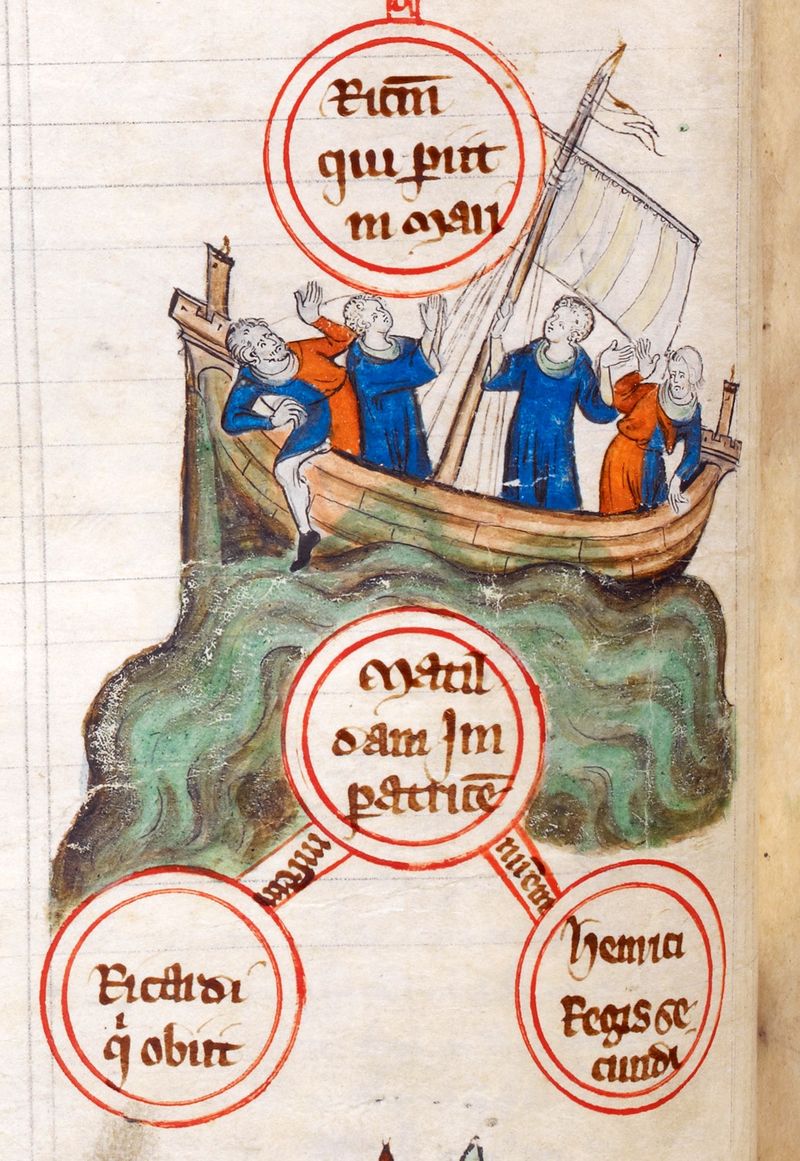


Overview and ship details
Contemporary accounts describe the White Ship as a well-appointed vessel carrying nobles, knights and household servants returning to England after time spent with the king in Normandy. As a ship it was presumably typical of early 12th-century Norman transport craft: clinker-built, sail-driven, and reliant on coastal pilots. The exact dimensions and construction are not known with certainty, but narrative sources emphasize the speed and comfort that made it a preferred choice for high-status travelers.
The sinking and immediate aftermath
According to chronicles, the ship departed at night and, possibly because of intoxicated crew or passengers and a desire to overtake the king's ship, struck a hidden rock near Barfleur off the Normandy coast. Panic and overcrowding impeded rescue. Only two people lived to tell the tale, one a butcher from Rouen; many aristocratic families lost husbands, sons and retainers. The loss of the heir triggered a sudden vacuum in royal succession and profound political uncertainty in England.
Consequences and historical importance
The death of William Adelin led to a contested succession when King Henry I later named his daughter Matilda as his heir. That decision was resisted by other magnates and by Henry's nephew Stephen of Blois, producing a prolonged civil conflict known as The Anarchy (1135–1153). Historians often treat the White Ship disaster as the proximate cause of this period of disorder and as a turning point in medieval English governance and aristocratic alignments.
Sources, memory and notable facts
- Primary knowledge of the event comes from medieval chroniclers whose reports mix eyewitness detail with moral interpretation. Scholars analyze these accounts to separate probable facts from later embellishment.
- The sinking is a frequent subject in discussions of medieval maritime risk, princely succession and the fragility of dynastic continuity—an episode sometimes labeled a defining maritime disaster in Norman-English history.
- Its cultural legacy appears in chronicles, genealogical studies and later histories that use the White Ship as an explanation for political upheaval in 12th-century England.
For further reading and primary source excerpts, see specialized studies and translations that examine the chronicle tradition and the broader consequences of the catastrophe for Anglo-Norman society. Relevant bibliography and archival references can be found in modern treatments of Anglo-Norman political history and naval incidents of the period; for introductions consult general surveys and annotated editions available through academic and popular outlets (French accounts, maritime studies, channel navigation, local Normandy history, coastal archaeology, biographies of William, Henry I, English political history, disaster studies).
Questions and answers
Q: What was the White Ship?
A: The White Ship was a historic ship that sank in the English Channel.
Q: When did the White Ship sink?
A: The White Ship sank on 25 November 1120.
Q: Where did the White Ship sink?
A: The White Ship sank near the Normandy coast off Barfleur.
Q: How many people survived the sinking of the White Ship?
A: Only two of those aboard the White Ship survived.
Q: Who was William Adelin?
A: William Adelin was the only surviving legitimate son and heir of King Henry I of England.
Q: What happened after William Adelin's death?
A: William Adelin's death led to a succession crisis and a chain of events that changed the history of England.
Q: What effect did the sinking of the White Ship have?
A: The sinking of the White Ship had a profound effect on English history due to the death of William Adelin and the resulting succession crisis.
Related articles
Author
AlegsaOnline.com White Ship (1120) — sinking that precipitated an English succession crisis Leandro Alegsa
URL: https://en.alegsaonline.com/art/107853
Sources
- rossettiarchive.org : "Dante Gabriel Rossetti: "The White Ship: a ballad""
- digital.lib.ucdavis.edu : "The Poetical Works of Mrs. Hemans : electronic version"