
West Pomeranian Voivodeship
Northwestern Polish voivodeship with capital Szczecin, Baltic coastline, seaside resorts and ports. Noted for lakes, forests, protected parks and a maritime economy since its 1999 establishment.
Overview
The West Pomeranian Voivodeship (often called a province) is an administrative region in northwestern Poland. Its capital and largest city is Szczecin, an important river port, cultural centre and transport hub. The modern voivodeship was created on January 1, 1999, during a nationwide administrative reform. Its identity is closely tied to the historic region of Pomerania and to maritime and forested landscapes.
Image gallery
10 Images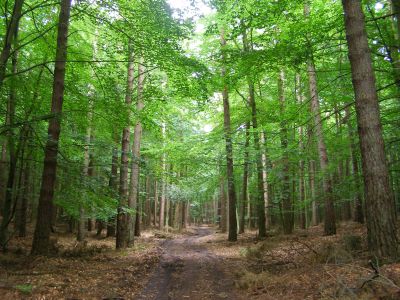




Geography and environment
The voivodeship fronts the Baltic Sea and includes a varied coastline of sandy beaches, dunes, cliffs and coastal lagoons. Notable coastal features include the Szczecin Lagoon at the mouth of the Oder (Odra) River and the islands of Wolin and Usedom, where resort towns and nature reserves are found. Several protected areas lie within the region, including Wolin National Park and Drawieński National Park, together with numerous landscape parks that conserve coastal, lake and forest habitats.
Climate
Climate is temperate with maritime influence: summers are generally mild and suitable for seaside tourism, while winters are moderated by the Baltic, though occasional cold spells occur. Precipitation is moderate and distributed throughout the year, supporting mixed forests and agricultural land.
Economy and transport
Maritime activity shapes the economy. The seaports of Szczecin, Świnoujście and Police handle cargo traffic, ferry services and fishing, and together form a significant maritime and logistics complex. Shipbuilding, ship repair, port services, tourism, agriculture and forestry are important sectors. Coastal spa towns and seaside resorts attract large numbers of seasonal visitors, while inland areas combine farming with light industry. The region is connected by road and rail to other parts of Poland and to neighboring Germany, supporting cross-border trade and commuting.
Administration and population
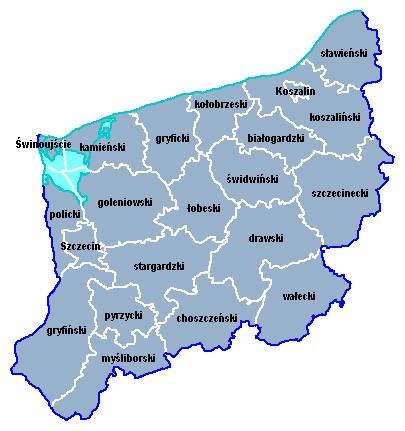
The voivodeship is subdivided into counties and municipalities that administer urban and rural areas. Szczecin serves as the regional seat. Other important urban centres include Koszalin, Stargard, Kołobrzeg and Police, each contributing to regional commerce, culture and services.
History and culture
Long-term settlement in the area reflects Slavic and Germanic influences and a history of trade across the Baltic. After the Second World War the region became part of the modern Polish state and underwent demographic and economic changes. Today the voivodeship promotes its maritime heritage, festivals, museums and historic sites, as well as cross-border cooperation with German neighbours to the west.
Tourism and attractions
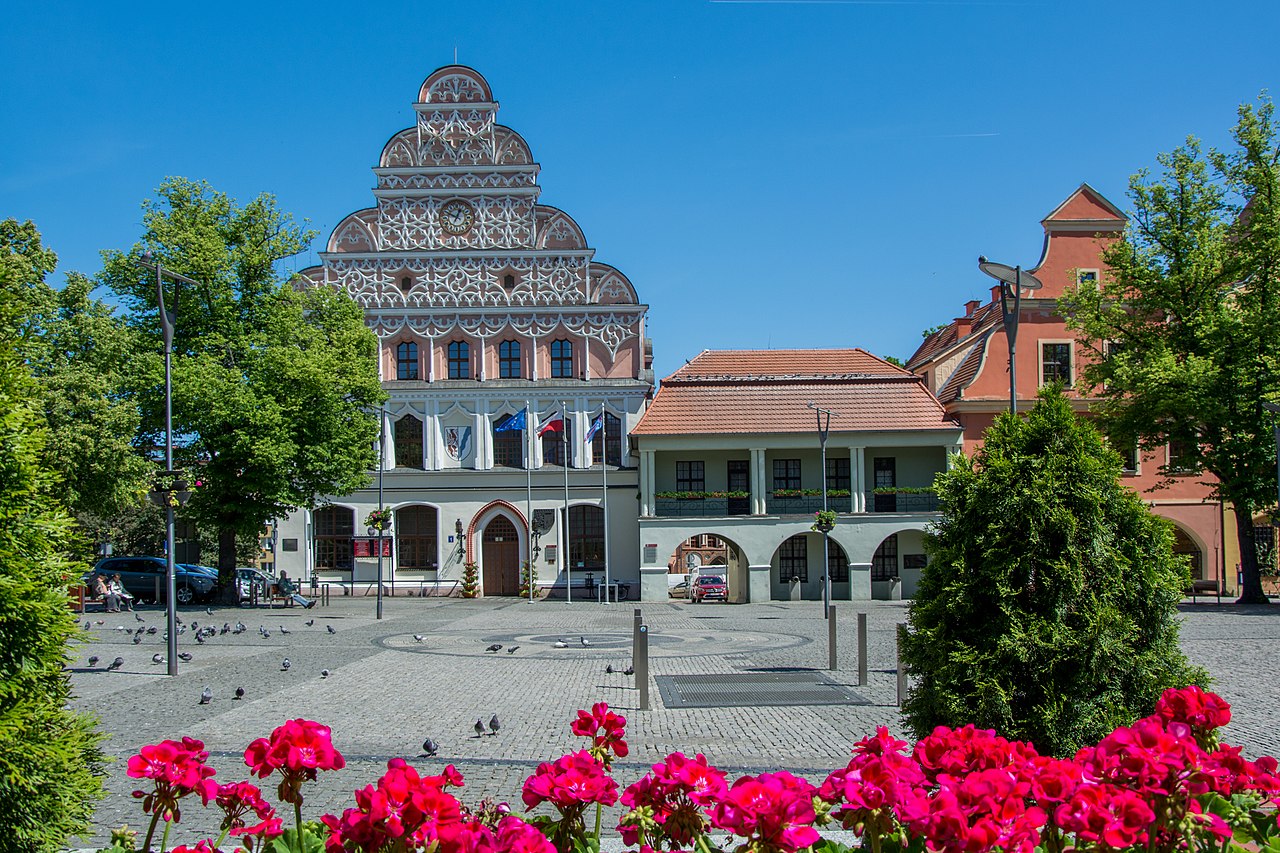
- Szczecin — river port, historic architecture and cultural institutions (more).
- Świnoujście — island town with ferry links and beach resorts (more).
- Police — industrial and port area near Szczecin (more).
- Coastal spa towns such as Kołobrzeg, Międzyzdroje and Mielno, known for beaches and health resorts.
- Natural parks and protected shores offering hiking, birdwatching and water recreation.
Overall, the West Pomeranian Voivodeship combines a maritime economy with significant natural landscapes and urban centres, serving as an important gateway on Poland's Baltic coast and a popular destination for recreation, nature tourism and cultural travel.
Related articles
Author
AlegsaOnline.com West Pomeranian Voivodeship Leandro Alegsa
URL: https://en.alegsaonline.com/art/107439