
West Side Park (Chicago) — early home of the Chicago Cubs
West Side Park in Chicago was the Chicago Cubs' primary ballpark from 1893 to 1915. An intimate Near West Side stadium, it hosted the 1907–1908 champions and was replaced by Wrigley Field in 1916.
West Side Park was the name given to an early professional baseball ground on Chicago's Near West Side that served as the principal home of the Chicago National League club from the 1890s until 1915. The name is most commonly associated with the larger of two adjacent stadia that bore the same name at different times in the late 19th and early 20th centuries. The club played there during an important period of growth in professional baseball and metropolitan spectator sports.
Image gallery
10 Images


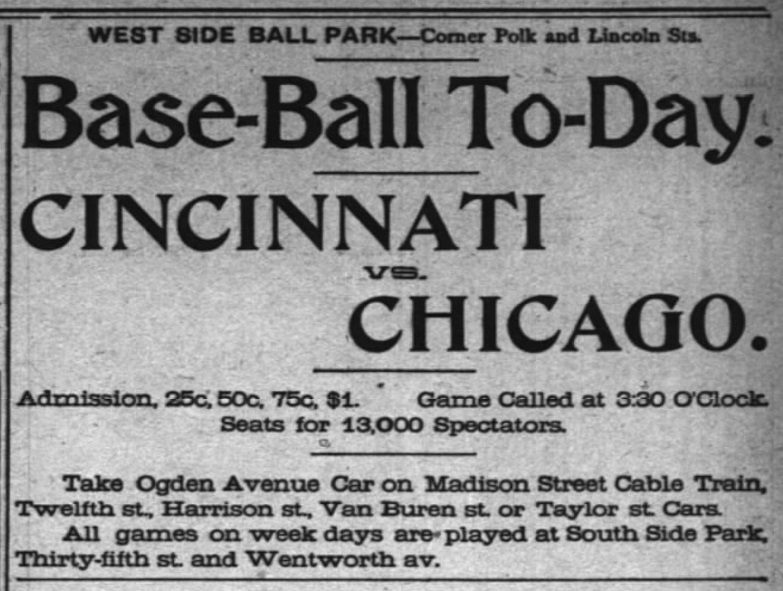


Location and design
The park occupied an urban block and was closely integrated with the surrounding neighborhood, streetcar lines and street grid. Typical of ballparks of the era, it had wooden grandstands, bleachers and limited amenities compared with later concrete-and-steel stadiums. Sightlines were intimate; fans sat near the playing field and passing city traffic was part of the venue's everyday soundscape. The site was accessible by public transit of the time and by foot from nearby neighborhoods.
Use and significance
The ballpark served as the principal home of the team now known as the Chicago Cubs from 1893 through the 1915 season. During its tenure the club won consecutive World Series championships in 1907 and 1908, achievements that are frequently cited when recounting the franchise's early success in the modern championship era (World Series). The venue hosted hundreds of major league games, exhibition contests and other events important to the city's cultural life.
Historical notes
- The name "West Side Park" was used for two nearby grounds; the later, larger site is most often identified with the club's successful seasons before relocation.
- Facilities reflected the technology and materials of the period: mostly wood construction, limited protective netting, and minimal player and spectator comforts by later standards.
- Photographs and contemporary accounts show how urban ballparks of this era were woven into city neighborhoods rather than sited as isolated complexes.
Decline, move and legacy
After the 1915 season the franchise moved to a new venue on Chicago's north side, which opened in 1916 and later became widely known as Wrigley Field. The former West Side Park site was redeveloped in subsequent decades and is occupied today by institutional and educational buildings associated with medical and university uses. Although the physical structures are gone, the park remains notable in baseball history for its association with the club's early championships and for exemplifying the compact, neighborhood ballparks that preceded modern stadium design.
Research and further reading: Contemporary histories of Chicago sport and specialized works on early ballparks discuss West Side Park's layout, the two adjacent grounds of the same name, and the team's transition north. For general reference on the club and its venues, see sources that treat the history of the ballpark and the franchise's early years.
West Side Park is remembered both as a stage for important competitive achievements and as a symbol of how late 19th- and early 20th-century urban life and professional sport were closely intertwined.
Questions and answers
Q: What is West Side Park?
A: West Side Park is a former baseball park in Chicago, Illinois.
Q: Which baseball team played at West Side Park?
A: The Chicago Cubs played at West Side Park.
Q: For how long did the Chicago Cubs play at West Side Park?
A: The Chicago Cubs played at West Side Park from 1893 through 1915.
Q: Which baseball team won their only World Series championships at West Side Park?
A: The Chicago Cubs won their only World Series championships at West Side Park in 1907 and 1908.
Q: When did the Chicago Cubs move to Wrigley Field?
A: The Chicago Cubs moved to Wrigley Field in 1916.
Q: Why is the ballpark named West Side Park?
A: The ballpark is named West Side Park because it was located on the west side of Chicago.
Q: What is currently located where West Side Park once stood?
A: Where West Side Park once stood there is now a building in the University of Illinois Medical School.
Related articles
Author
AlegsaOnline.com West Side Park (Chicago) — early home of the Chicago Cubs Leandro Alegsa
URL: https://en.alegsaonline.com/art/107449