
Wadden Sea: intertidal region of the southern North Sea
A broad intertidal zone along the Netherlands, Germany and Denmark coasts, the Wadden Sea features mudflats, salt marshes and barrier islands and is vital for biodiversity, fisheries and coastal protection.

The Wadden Sea is a broad, shallow coastal region of the North Sea that lies between the mainland coasts and a series of barrier islands. It is an extensive intertidal zone where tides regularly expose mudflats, sandflats and channels. The exposed seafloor — called mudflat in English and "Watt" in German — is the feature that gives the area its name. Stretching along the coast from the Netherlands through Germany to the south of Denmark, the Wadden Sea forms one of the largest continuous tidal systems in the world.
Image gallery
10 Images
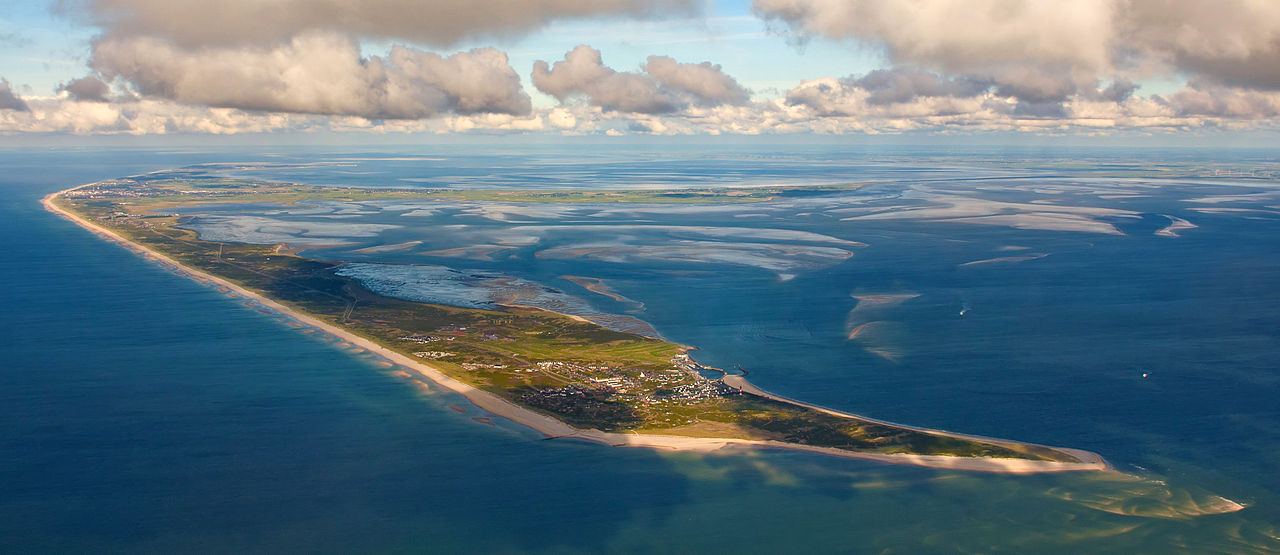




Characteristic landscapes and habitats
The landscape of the Wadden Sea is dynamic and shaped by tides, waves and sediment transport. Key habitats include mudflats and sandflats that are exposed at low tide, salt marshes that fringe the higher shore, tidal channels and lagoons, and dune systems on the barrier islands. These components shift over time: channels migrate, islands move, and new shoals form as sediments are eroded and deposited.
Ecological importance
The Wadden Sea is internationally important for wildlife. Its rich supply of benthic invertebrates supports vast numbers of migratory shorebirds using the East Atlantic Flyway: during migration seasons millions of birds stop to feed and rest. The shallow waters and sheltered channels also serve as nurseries for fish and habitats for seals and other marine mammals. Because productivity is high, the area plays a central role in regional marine food webs.
Human use, history and conservation
Humans have used the Wadden Sea for centuries for fishing, shellfishing, salt production and transport. Settlements and embankments altered parts of the coast, while barrier islands and tidal flats shaped local cultures and economies. In modern times the region attracts nature tourism, recreational activities like guided mudflat walks, and commercial fisheries. Recognizing its global value, national and international measures protect much of the area; significant portions are designated as protected sites and recognized for their conservation importance.
Notable facts and current challenges
- Dynamic environment: the Wadden Sea constantly changes with tides and storms, so its shoreline and habitats are not fixed.
- Connectivity: it links terrestrial and marine ecosystems and supports migratory species across long distances.
- Threats: sea-level rise, coastal engineering, pollution and intensive resource use pose challenges to ecological integrity.
Management balances human activities and conservation through cross-border cooperation among coastal states. The Wadden Sea remains a striking example of how natural tidal processes create productive and vulnerable coastal landscapes that are important both locally and internationally.
Related articles
Author
AlegsaOnline.com Wadden Sea: intertidal region of the southern North Sea Leandro Alegsa
URL: https://en.alegsaonline.com/art/106091