
Wakarusa River (Kansas tributary)
The Wakarusa River is an 80.5-mile tributary of the Kansas River in eastern Kansas. Impounded to form Clinton Lake, it supports recreation, wildlife habitat and regional water management.
Overview
The Wakarusa River is an approximately 80.5-mile (129.6 km) tributary of the Kansas River. It lies in eastern Kansas in the United States and flows generally northeastward across a landscape of prairie, farmland and woodlands. The river’s corridor connects rural and suburban areas and passes south of the regional cities of Topeka and Lawrence.
Image gallery
2 Images
Course and watershed
The Wakarusa rises from smaller creeks and springs within a largely agricultural basin and collects runoff as it moves toward the Kansas River. Its channel alternates between meandering lowland reaches with floodplain forest and swifter, narrower stretches. Seasonal flow varies with precipitation, with higher discharge in the spring and during heavy storm events. The river contributes to the larger Kansas–Missouri–Mississippi drainage system through its connection with the Kansas River.
Clinton Lake and water management
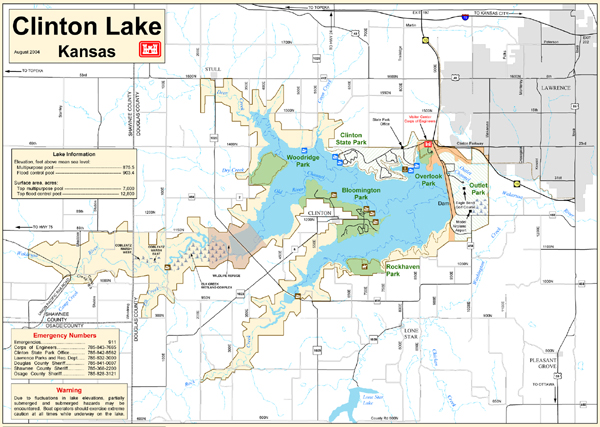
A major feature on the Wakarusa is the impoundment that forms Clinton Lake, created by a dam for flood control, water supply and recreation. The reservoir moderates downstream flows, provides municipal and industrial water storage, and is managed to balance flood protection with ecological and recreational needs. The presence of the lake has influenced land use planning and infrastructure in the surrounding counties.
Ecology and recreation
Riparian corridors along the Wakarusa support cottonwood and willow stands, native grasses and wetland plants that shelter birds, mammals and aquatic life. Fish and amphibian communities occur in the river and in Clinton Lake; migratory and resident waterfowl and songbirds use the river valley during seasonal movements. Recreational uses include boating, paddling, angling, shoreline hiking and wildlife observation at the reservoir and along accessible river segments.
History and human uses
For centuries the valley provided resources and travel routes for Indigenous peoples, and later influenced Euro-American settlement patterns. Agriculture, transportation crossings, small bridges and municipal water planning have shaped human use of the river. Contemporary uses combine rural resource production with expanding recreational and suburban development pressures in parts of the basin.
Conservation and issues
Conservation efforts in the Wakarusa watershed emphasize maintaining water quality, reducing erosion, and preserving habitat connectivity along riparian zones. Common concerns include nutrient and sediment runoff from agricultural lands, effects of urbanization on stream flow and habitat fragmentation. Local agencies, watershed groups and state programs work together on monitoring and restoration projects to sustain the river’s ecological and social values.
Notable facts
- The Wakarusa is an important local tributary to the Kansas River system and, by extension, to the larger central U.S. river network.
- Clinton Lake is a central feature for flood control, water supply and recreation in the basin.
- The river’s condition reflects land-use choices across parts of eastern Kansas and is the focus of ongoing conservation efforts.
Questions and answers
Q: What is the Wakarusa River?
A: The Wakarusa River is a tributary of the Kansas River.
Q: How long is the Wakarusa River?
A: The Wakarusa River is about 80.5 miles (129.6 km) long.
Q: Where is the Wakarusa River located?
A: The Wakarusa River is located in eastern Kansas in the United States.
Q: What cities are located south of the Wakarusa River?
A: The cities located south of the Wakarusa River are Topeka and Lawrence.
Q: Is the Wakarusa River a major river in Kansas?
A: The Wakarusa River is not a major river in Kansas, but it is a tributary of the Kansas River.
Q: Does the Wakarusa River flow into the Kansas River?
A: Yes, the Wakarusa River is a tributary of the Kansas River, which means it flows into it.
Q: Can you find recreational activities near the Wakarusa River?
A: It is possible to find recreational activities near the Wakarusa River, such as hiking trails and fishing spots.
Related articles
Author
AlegsaOnline.com Wakarusa River (Kansas tributary) Leandro Alegsa
URL: https://en.alegsaonline.com/art/106167
Sources
- geonames.usgs.gov : "Wakarusa River"
- wdr.water.usgs.gov : "Water-Data Report 2012 - 06891500 Wakarusa River near Lawrence, KS"
- viewer.nationalmap.gov : The National Map