
Vyasa (Vyāsa): Compiler of the Vedas and Attributed Author of the Mahabharata
Vyasa is a central sage in Hindu tradition—credited with compiling the Vedas, composing or organizing the Mahabharata and Puranas, celebrated on Guru Purnima, and regarded by many as an incarnation of Vishnu.
Vyasa (Sanskrit: Vyāsa, literally "the Compiler") is a foundational figure in many Hindu traditions. He is traditionally credited with organizing the Vedas into their familiar fourfold form and with composing or transmitting the epic Mahabharata. Texts and oral tradition also call him the recorder or scribe of a large corpus of narrative and religious literature, including numerous Puranas. Within devotional accounts he is often regarded as an avatar or special incarnation of the god Vishnu, and as one of the long-lived figures (the Chiranjivins).
Image gallery
8 Images


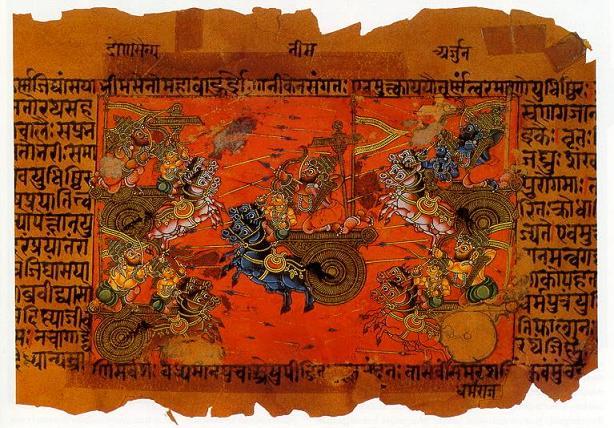
Legendary life and identity
Classical stories identify Vyasa with the epithet Krishna Dvaipāyana (referring to his dark complexion and a river-island birth). He appears as a narrator and actor inside the Mahabharata, where he plays critical roles in events and genealogies. Many traditional accounts attribute to him the paternity of important lineages; for example, the epic describes how he fathered the Kuru progenitors through related episodes. Festival calendars and popular observance place his lifetime far in the past—sometimes around the third millennium BCE in traditional chronologies—but scholarly dates for the texts associated with him are debated and often later.
Works and contributions
Vyasa is associated with several overlapping activities: classification of sacred knowledge, composing or organizing narrative material, and teaching. Most commonly he is said to have divided the Vedas into four parts to preserve them for different schools and to have compiled or dictated the epic that became the Mahabharata. Later religious literature credits him with authoring, arranging, or redacting many of the Puranas. Whether these texts were the work of a single historical person, a succession of teachers using the title "Vyasa," or a collective process of composition and redaction is a matter of scholarly discussion.
Cultural role and observance
Vyasa occupies a central place in religious pedagogy as the archetypal guru and transmitter of knowledge. The full-moon day in the Hindu month of Ashadha is dedicated to him as Guru Purnima (also called Vyasa Purnima), a day when students traditionally honor teachers and many communities remember Vyasa's role in preserving scripture. His image and stories are invoked in ritual, recitation cycles, and in the lineage claims of many teacher-student traditions.
Historical and literary perspectives
Modern historians treat Vyasa primarily as a legendary or symbolic figure whose name marks a formative moment in the preservation and organization of religious literature. Linguistic and philological study suggests that the texts linked to him were composed over many centuries and reflect multiple authors and redactors. Some scholars propose that "Vyasa" functioned as a title for learned compilers, while others emphasize the role of oral transmission and later scribal work in producing the surviving manuscripts.
Notable facts and distinctions
- He is often called Veda Vyāsa for his association with the Vedas and as a way to honor his organizing role (Vedas).
- Many traditions list him among the Chiranjivins, beings granted long life in Hindu belief.
- The dual status of Vyasa as both an authorial figure and a character within the epic narrative makes his identity distinctive: he is part of the literature he transmits.
- Observance of Guru Purnima commemorates both his birthday and his act of dividing the sacred knowledge; the festival remains important in schools of learning and monastic lineages.
Related articles
Author
AlegsaOnline.com Vyasa (Vyāsa): Compiler of the Vedas and Attributed Author of the Mahabharata Leandro Alegsa
URL: https://en.alegsaonline.com/art/106042
Sources
- sacred-texts.com : Mahābhārata 12.350.4-5, K.M. Ganguly full edition
- books.google.com : Awakening Indians to India
- books.google.com : What Is Hinduism?: Modern Adventures Into a Profound Global Faith
- books.google.com : Essays on the Mahābhārata
- commons.wikimedia.org : Vyasa