
Sega Dreamcast VMU (Visual Memory Unit)
The VMU is Sega's Dreamcast memory card with a built-in LCD, controls and mini-game capability. It stores saves, displays in-game info and can run simple standalone games when detached.
Overview
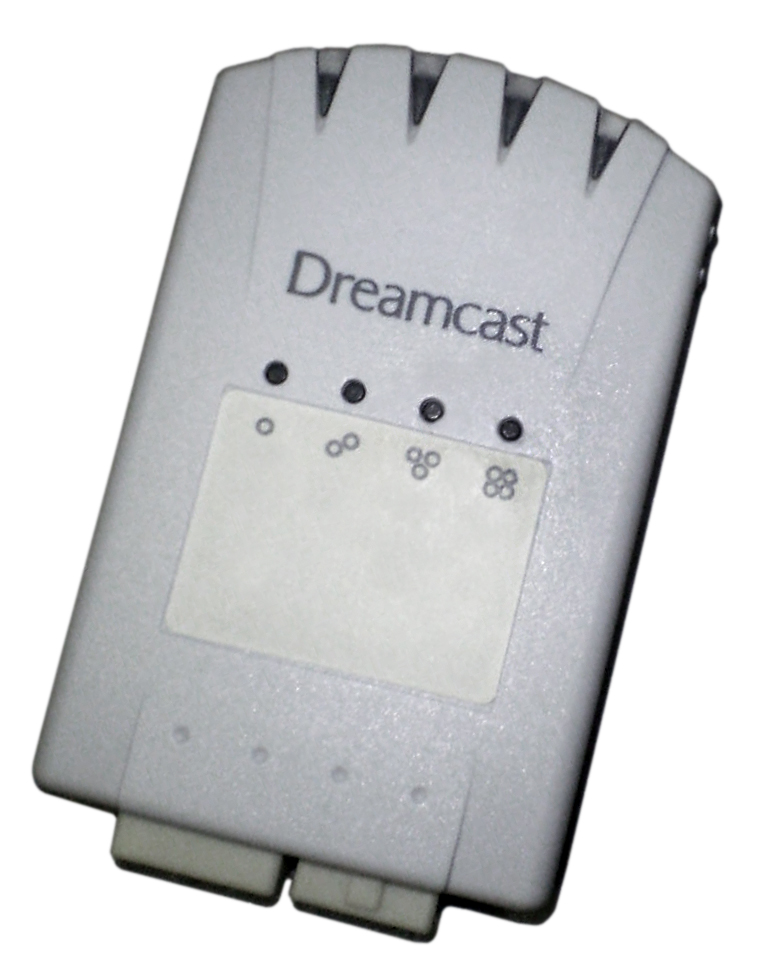
The Visual Memory Unit, commonly called the VMU, is the memory card designed for the Sega Dreamcast console. More than a passive storage device, the VMU combines save-game memory with a small monochrome LCD, a D-pad and a few buttons so it can both store data and act as a tiny handheld game unit. When connected to a Dreamcast controller the VMU can show animations, status icons and numerical readouts while a game is running.
Image gallery
5 Images


Design and components
The VMU contains non-volatile storage for game saves and additional files, a small screen used for icons and mini-displays, basic input controls (D-pad, A, B, Start and Select), a speaker and a battery for stand-alone operation. Typical uses on the running console include saving progress, showing health bars or timers, and providing secondary information outside the main TV display. As a removable device it also functions as a pocket toy when disconnected from the controller.
How it was used
- Saving game data: stores player progress, settings and unlockable content.
- Secondary display: shows small icons, statistics and messages to complement on-screen play.
- Mini-games: some titles downloaded simple standalone games to the VMU that could be played away from the console.
- Transfer and personalization: players could move data between VMUs or use them to carry custom backgrounds and avatars.
History and context
The VMU was introduced with the Dreamcast in the late 1990s as an attempt to extend the home-console experience into a portable, interactive accessory. Its combination of storage and a tiny interactive screen anticipated later ideas about companion devices and second-screen features. The concept has been compared to other contemporaneous memory peripherals that provided small displays and extra functionality for select games.
Importance and legacy
While limited by its small screen and modest memory capacity, the VMU stood out because it let developers design games that used an additional, personal display and portable mini-content. Some titles made memorable use of the VMU by providing virtual pet features, mini-games and extra progress tracking. Today the unit is remembered both as a practical memory card and as an early example of a console accessory that blended storage, secondary display and portable play.
Further information
For technical details, compatibility lists and community resources see the VMU overview at manufacturer and hardware references, a guide to VMU mini-games and files at software resources, collections of VMU art and saved themes at user-created content sites, and preservation or emulation projects at archival resources.
Related articles
Author
AlegsaOnline.com Sega Dreamcast VMU (Visual Memory Unit) Leandro Alegsa
URL: https://en.alegsaonline.com/art/105758