
Voltaic pile (first electric battery)
An early electrochemical battery invented by Alessandro Volta around 1800: a stack of alternating metal discs and electrolyte producing the first steady electric current for experiments and practical use.
The voltaic pile was the earliest device that produced a continuous electric current by chemical means. Developed around 1800 by the Italian physicist Alessandro Volta, it transformed studies of electricity from brief sparks and static charges into controlled, sustained flows suitable for experiments and practical work.
Image gallery
5 Images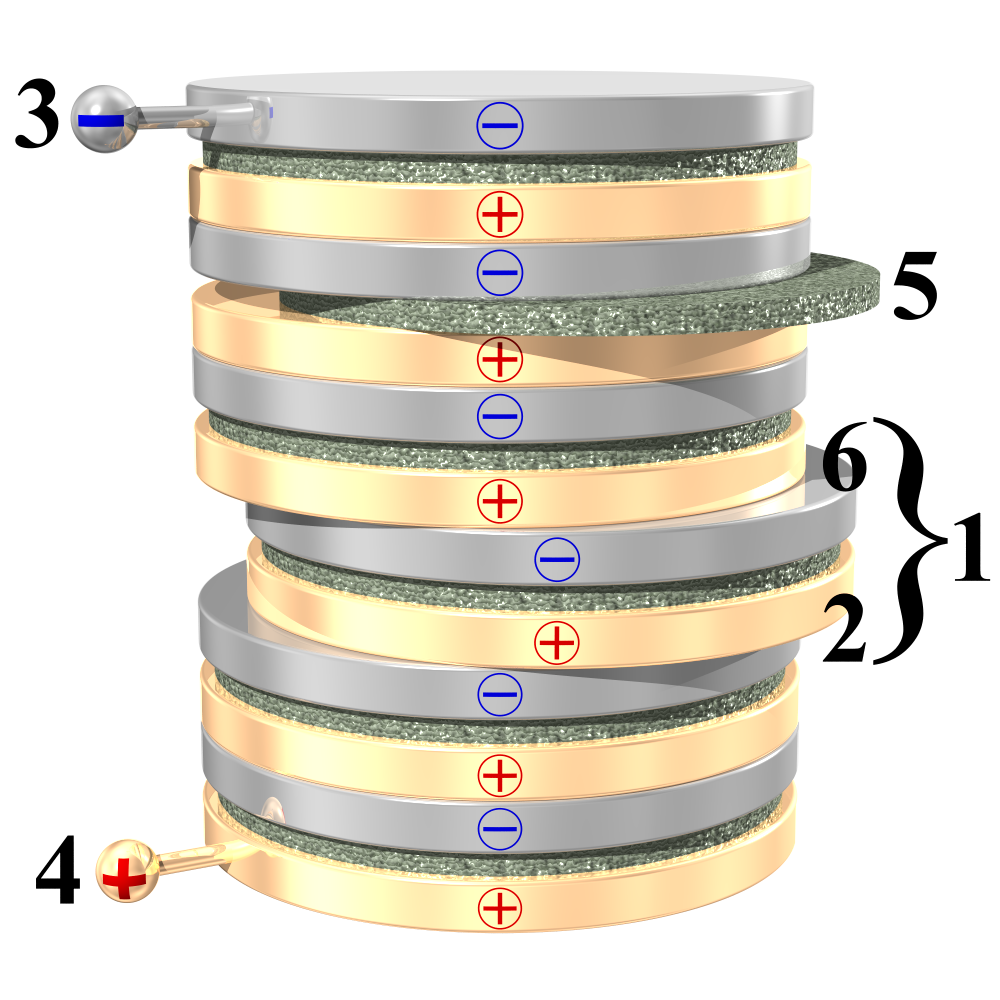



Design and components
At its simplest the pile is a vertical stack of repeating units. Each unit contains two different metals and a conductive separator soaked in an electrolyte. Commonly described elements include:
- a pair of dissimilar metal discs (for example, zinc and copper);
- a porous material or cloth between the metals, wetted with an electrolyte such as brine or acid;
- a supporting stack or column to hold the sequence in contact.
Each metal pair and separator acts as an elementary cell. When many cells are stacked, their voltages add and produce a steady current between the top and bottom terminals.
Historical context
The voltaic pile emerged from experiments and debate about animal electricity and galvanism. Volta sought a reproducible source of electric current that did not rely on biological tissue. His invention rapidly attracted attention across Europe and helped establish the new field of electrochemistry. The unit of electrical potential, the volt, was later named in his honor.
Uses, impact, and limitations
Early adopters used piles to decompose compounds, study electrolysis, and power small experiments. The ability to sustain current led to discoveries about chemical reactions driven by electricity and to techniques such as electroplating. However, the original pile had drawbacks: significant internal resistance, gradual degradation of the metals and electrolyte, and polarization that reduced performance over time. These limitations motivated subsequent improvements and alternative cell designs.
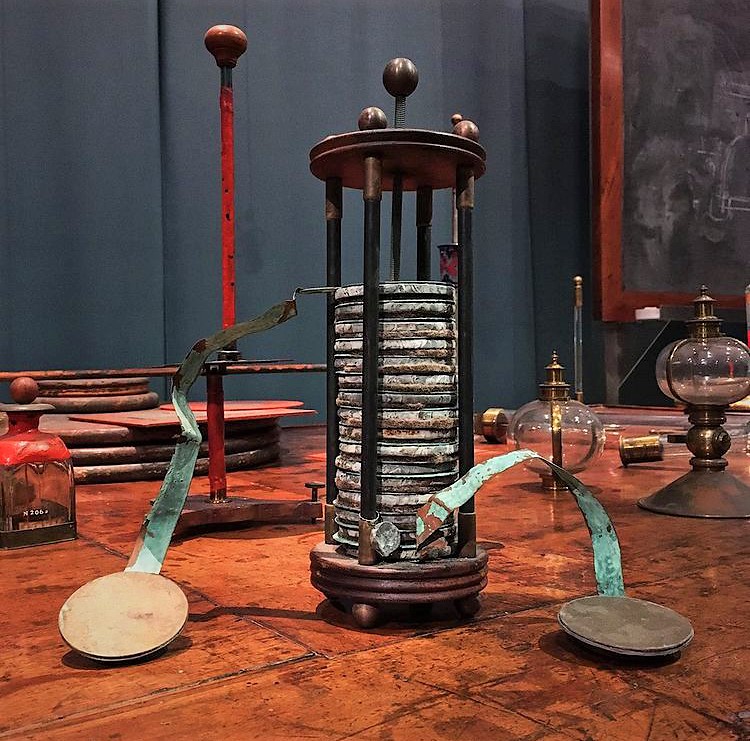
Although later batteries and rechargeable cells replaced the voltaic pile in practical applications, its conceptual breakthrough—using electrochemical differences between metals to generate electricity—remains the foundation of modern battery technology. Historical reconstructions of voltaic piles are displayed in museums to illustrate the origins of electrical engineering and experimental science.
Related articles
Author
AlegsaOnline.com Voltaic pile (first electric battery) Leandro Alegsa
URL: https://en.alegsaonline.com/art/105886