
Voltmeter: instrument for measuring electrical potential difference
A voltmeter measures electrical potential difference (voltage). This article explains types, design principles, history, common uses, and practical safety and accuracy considerations.
Overview
A voltmeter is an electrical instrument that indicates the potential difference, commonly called voltage, between two points in an electrical circuit. It is connected in parallel with the element whose voltage is being measured and reports the result in volts (V). Voltmeters range from simple handheld meters to precision laboratory instruments and are essential tools for electrical diagnosis, design and education.
Image gallery
2 Images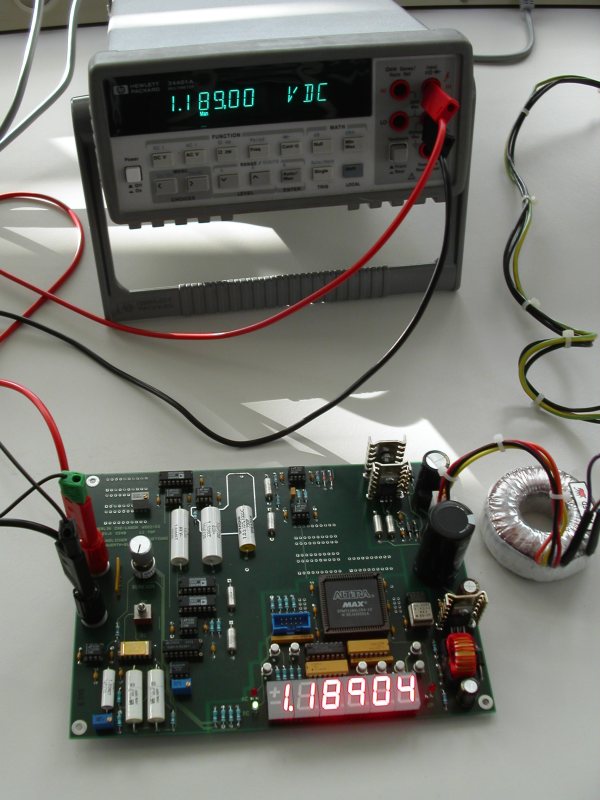

Design and main components
Fundamentally a voltmeter converts an electrical quantity into a readable display. Traditional analog voltmeters combine a sensitive current-measuring device (a galvanometer) with a series resistor so that the meter deflection corresponds to voltage. Modern digital voltmeters use input protection, signal conditioning and an analog-to-digital converter to present a numeric value. A key characteristic is input impedance (or internal resistance): higher impedance reduces the instrument's effect on the circuit being measured.
Types and common forms
- Analog moving-coil: simple needle display, useful for observing slow trends and relative change.
- Digital multimeters (DVM): numeric readout, often combined with current and resistance measurement.
- Oscilloscopes and differential probes: used when voltage varies rapidly with time or for small differential signals.
- Specialized voltmeters: e.g., high-voltage meters, battery testers and panel-mounted indicators used in industrial systems and for testing batteries.
History and development
In the early 19th century, discoveries about electricity and magnetism—such as those by Alessandro Volta and Hans Christian Ørsted—led to practical sources and measurement techniques. Instruments that detected and displayed electrical quantities evolved from basic galvanometers into calibrated voltmeters as electrical technology and manufacturing advanced. The transition to solid-state electronics and precision ADCs in the 20th century produced compact digital instruments with improved accuracy and safety features. For additional background see further reading.
Uses, importance and examples
Voltmeters are used in laboratory experiments, electronics repair, automotive testing, power distribution monitoring and product development. Common tasks include verifying supply voltages, checking battery state, diagnosing faulty components and confirming signal levels. Because a voltmeter measures potential difference, it helps determine whether circuits are energized and whether voltage regulators or power converters function correctly.
Practical notes, accuracy and safety
When using a voltmeter connect it in parallel with the component or points of interest and select an appropriate range if the instrument is not autoranging. Be aware that real meters have finite input impedance which can load sensitive circuits, producing measurement error; high-quality meters specify input impedance values. For high-voltage work or unfamiliar equipment follow safety procedures: use rated probes, keep hands clear of terminals, and observe isolation and grounding practices. Finally, distinguish a voltmeter from an ammeter (which measures current in series) and from a multimeter (which combines multiple functions) when planning tests.
Related articles
Author
AlegsaOnline.com Voltmeter: instrument for measuring electrical potential difference Leandro Alegsa
URL: https://en.alegsaonline.com/art/105889
Sources
- wisegeek.com : "What is a Voltmeter?"
- hyperphysics.phy-astr.gsu.edu : "Voltmeter Design"
- searchsmb.techtarget.com : "What is a voltmeter? - a definition from Whatis.com"