
Vortex mixer: laboratory device for rapid sample mixing
A compact laboratory instrument that agitates small vessels by circular motion. Describes design, operation modes, common uses, safety and maintenance, and variations for different lab tasks.
Overview
A vortex mixer is a compact laboratory instrument used to mix small volumes of liquid contained in tubes, vials, microplates, or small beakers. It produces a circular, oscillating motion that rapidly combines liquids or re-suspends solids. Vortexers are standard equipment in clinical, research and teaching laboratories because they provide quick, repeatable mixing without manual pipetting or shaking.
Image gallery
2 Images
Design and operation
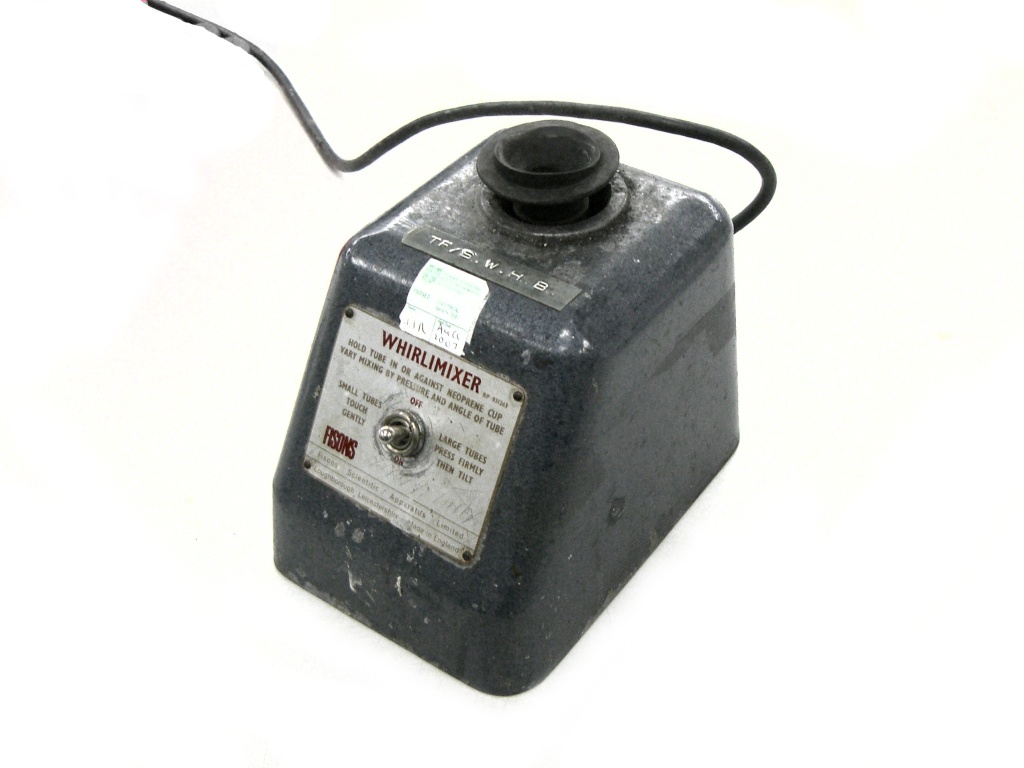
Typical components include a small electric motor, an eccentric cam or eccentric weight to generate orbital motion, a rubber or foam platform (also called a cup), and speed controls. Many units offer two basic modes: "touch" mode, in which the mixer runs only while a tube presses the cup, and continuous mode for ongoing agitation. Variable-speed controls allow gentle mixing or vigorous vortexing depending on the sample and container size.
Common uses
- Resuspending cell pellets, beads, or precipitates.
- Mixing reagents, buffers, and small reaction volumes.
- Preparing serial dilutions and homogenizing samples prior to analysis.
- Mixing samples in microcentrifuge tubes, test tubes, or small beakers; see typical vessel guidance: tube and vial selection.
Safety, maintenance and best practices
Securely close containers to avoid aerosol formation and spills. Use appropriate PPE and, if handling hazardous materials, operate a vortex inside a containment device or fume hood. Regularly inspect the cup for wear, keep the drive shaft clean, and avoid overloading the motor. Manufacturers provide instructions for calibration and care; consult the product literature: manufacturer guidance.
Variations and notable facts
Vortex mixers range from small, single-place units to multi-place platforms and plate shakers. Some models combine timed programs, heating, or orbital shaking for specialized tasks. For technique tips and example protocols, laboratory manuals and online guides are useful resources: mixing techniques.
Related articles
Author
AlegsaOnline.com Vortex mixer: laboratory device for rapid sample mixing Leandro Alegsa
URL: https://en.alegsaonline.com/art/105932