
Visible spectrum: the portion of electromagnetic radiation seen as color
Range of electromagnetic radiation perceptible to human vision, roughly 380–750 nm, covering spectral colors, human perception, measurement, and key applications in optics and spectroscopy.
Overview
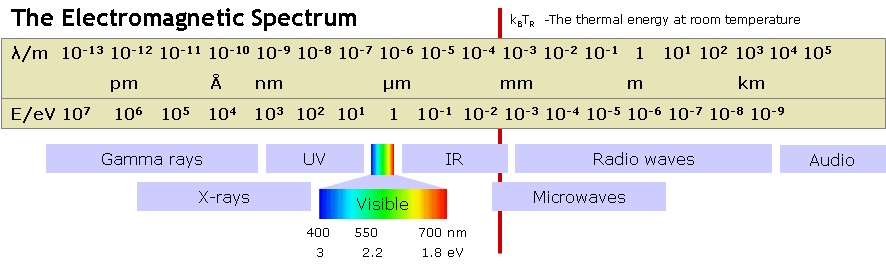
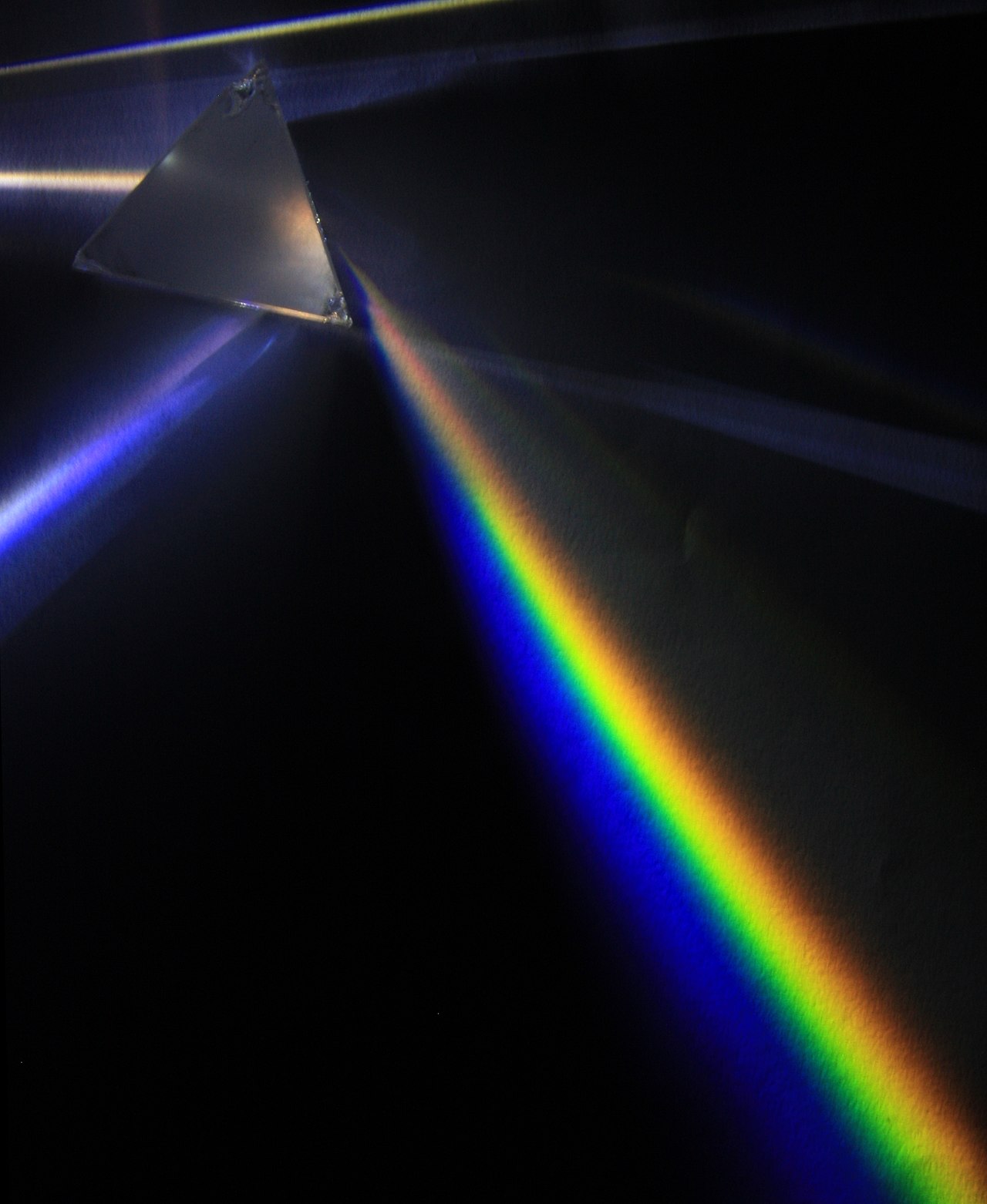
The visible spectrum is the portion of the electromagnetic spectrum that is detectable by the human eye. Electromagnetic radiation in this band is commonly called visible light or simply light. Typical human vision responds to wavelengths in air from roughly 380 to 750 nanometres, though exact limits vary with age, measurement method and individual physiology. When white light is dispersed by a prism or water droplets it separates into a continuous sequence of hues from violet to red, commonly observed as a rainbow.
Image gallery
6 Images


Physical properties and units
Visible light can be described by wavelength, frequency and photon energy. Shorter wavelengths toward the violet end have higher frequency and greater photon energy than longer wavelengths toward the red. Wavelength is usually reported in nanometres (nm) for visible light. Dispersion — the dependence of refractive index on wavelength — causes the spatial separation of colors in prisms and rainbows.
Spectral colors and ranges
Spectral (monochromatic) colors correspond to narrow ranges of wavelength. Common approximate ranges used for illustration are:
- Violet: ~380–450 nm
- Blue: ~450–495 nm
- Green: ~495–570 nm
- Yellow: ~570–590 nm
- Orange: ~590–625 nm
- Red: ~625–750 nm
Boundaries are gradual rather than sharp; some perceptual categories (for example purple) are non‑spectral, produced by mixtures of different wavelengths rather than a single monochromatic source.
Perception and physiology
Human color vision depends on three types of cone photoreceptors, often labeled S, M and L for short-, medium- and long-wavelength sensitivity. The brain compares signals from these cones to produce sensations of hue, saturation and brightness. Color spaces and standards, such as those developed by the CIE, formalize how physical stimuli relate to perceived color and support device calibration.
Color mixing and reproduction
Additive color mixing (light sources) and subtractive mixing (pigments and dyes) create a wide range of perceived colors. Displays and lighting use combinations of narrowband emitters or filtered white light to reproduce colors; color management relies on measurement with spectrometers and standardized colorimetric methods. For foundational methods see resources on prism experiments and spectroscopy basics.
Measurement and spectroscopy
Spectroscopy separates and measures light by wavelength to identify materials and physical conditions. The visible band is important in laboratory analysis, environmental monitoring and astronomical observations because many atoms and molecules produce distinctive visible emission or absorption features. Practical instruments include spectrometers, monochromators and calibrated photometers.
Limits, variation and non-human vision
Individual sensitivity limits vary: some people have expanded or reduced sensitivity at the extremes, and conditions such as color vision deficiencies alter how cone signals are processed. Many animals perceive wavelengths beyond human limits; for example, some insects and birds detect ultraviolet light, while other species extend sensitivity further into the near‑infrared or are limited to different bands.
Applications and safety
Visible light is central to imaging, illumination, photography, theatre, display technology and microscopy. Colorimetry and controlled lighting are essential in manufacturing, art conservation and visual design. While ordinary visible light is not ionizing, intense sources can damage the eye or skin through heating or photochemical effects, so appropriate safety practices are important.
History and further reading
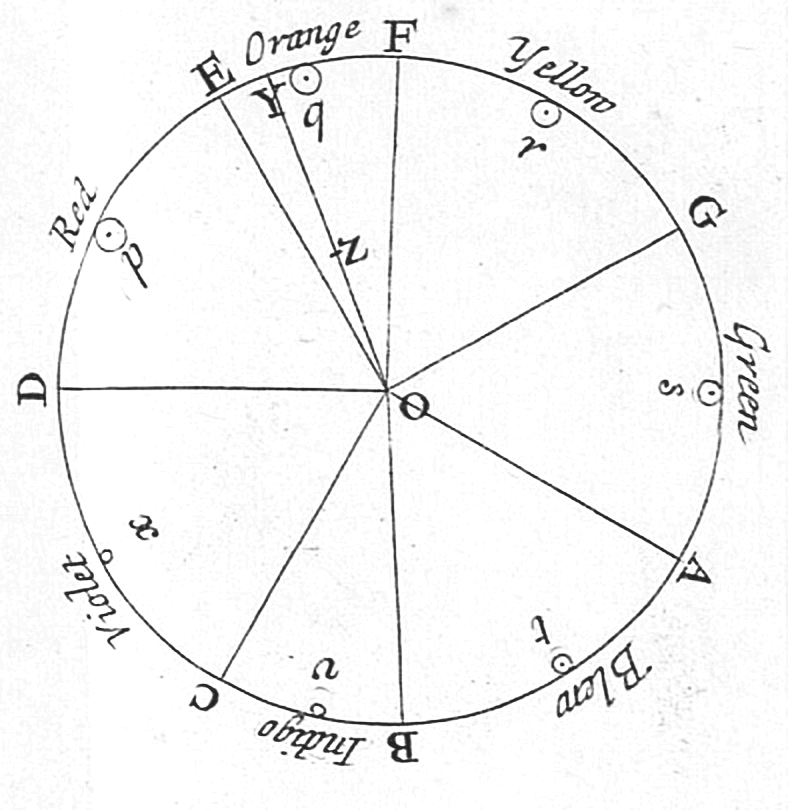
Systematic study of the visible spectrum began with prism experiments and was advanced by Isaac Newton, who demonstrated that white light is a mixture of component colors. Since then, spectroscopy has become a core diagnostic tool across physics, chemistry and astronomy. For introductions and broader context see materials on human vision, electromagnetic radiation, vision science and optical applications.
Related articles
Author
AlegsaOnline.com Visible spectrum: the portion of electromagnetic radiation seen as color Leandro Alegsa
URL: https://en.alegsaonline.com/art/105611
Sources
- books.google.com : Biology: Concepts and Applications
- books.google.com : CRC Handbook of Fundamental Spectroscopic Correlation Charts.