
Vortex: spinning fluid flows — types, physics, and examples
A vortex is a region of fluid that rotates around an axis. This article explains vortex structure, types (free/forced), formation, physical principles, natural examples and engineering relevance.
Overview
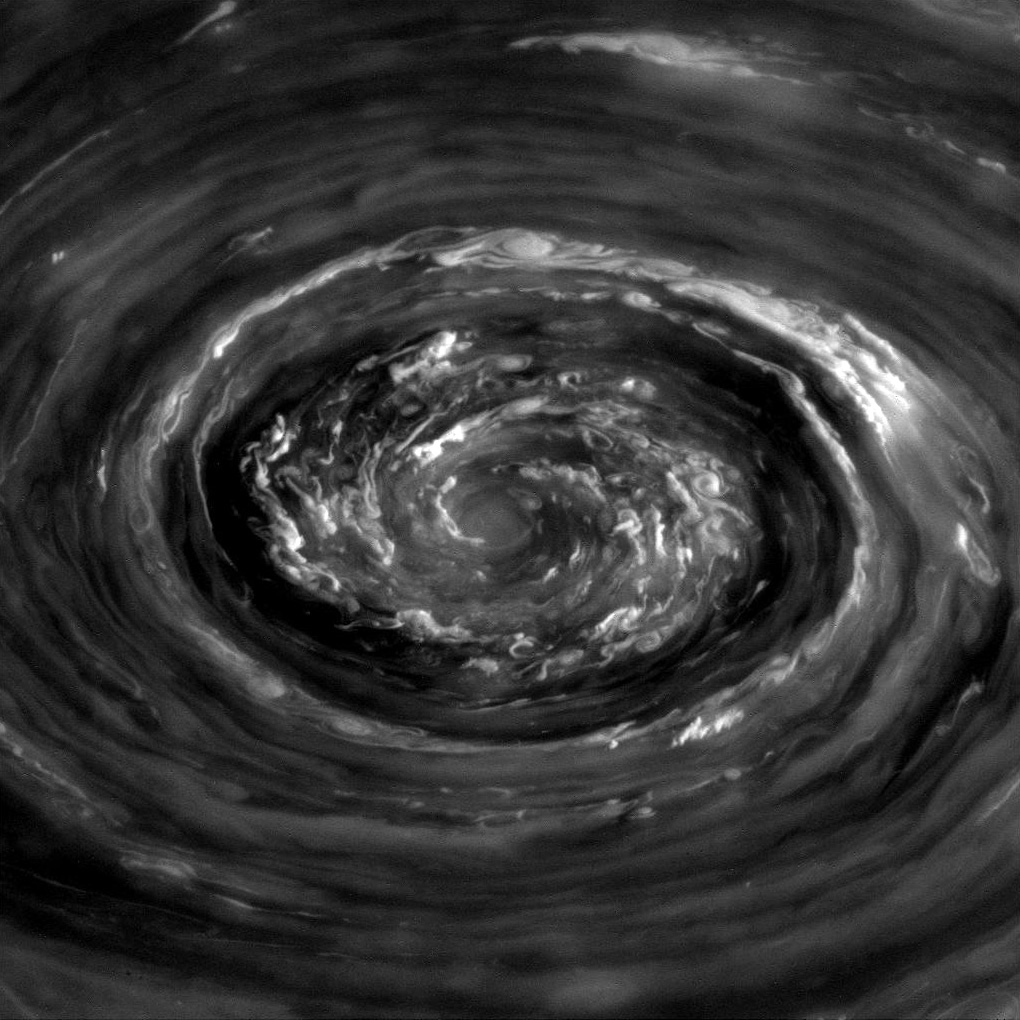
A vortex is a region within a fluid where the flow revolves around a central line or point. In practical flows the motion is often turbulent and three‑dimensional, but the defining feature is circulation: fluid elements follow curved paths about a core where rotation and shear are strongest. Vortices occur in gases and liquids, from tiny eddies to giant atmospheric systems, and appear in many contexts studied in fluid dynamics.
Image gallery
10 Images





Structure and characteristics
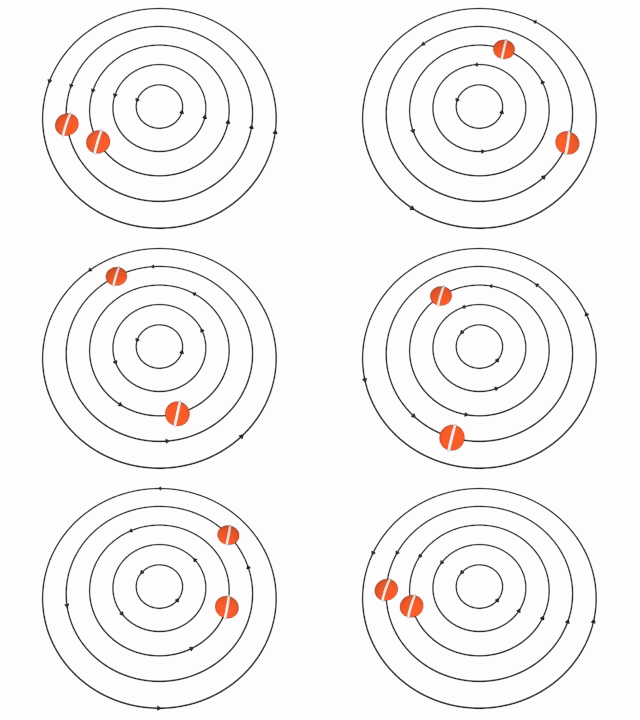
Typical features of a vortex include a core with high angular velocity, a pressure minimum near the center, and surrounding flow whose speed usually decreases with distance from the axis. Two idealized models help describe common behavior: the free (or irrotational) vortex, where angular momentum is conserved and speed falls with radius, and the forced (or solid-body) vortex, where the core rotates more uniformly. Real vortices are combinations of these regimes and may be described by models such as the Rankine or Burgers vortex.
How vortices form
Vortices arise whenever shear, obstacles, or differential heating create rotating motion in a fluid. Examples include flow separation past objects that produces trailing vortices, instabilities in wakes, and buoyancy-driven convection in the atmosphere or oceans. Conservation laws—particularly conservation of angular momentum and circulation—govern their evolution; in many flows viscosity and turbulence determine whether a vortex remains coherent or breaks down into smaller eddies. For more about turbulence and instability see turbulence resources.
Examples and applications
- Natural: tornadoes, waterspouts, whirlpools and dust devils.
- Engineering: wingtip vortices behind aircraft, vortical mixing in combustion, vortex generators on blades, and vortex-induced vibrations of structures.
- Everyday: bathtub drains, smoke rings, and stirred coffee.
Vortices are exploited intentionally (mixers, vortex traps) and managed or mitigated where they cause wear, noise, or structural loading.
Notable facts and distinctions
Vortices can be laminar and long‑lived or turbulent and rapidly changing. A mathematical idealization may predict singular behavior at the center, but real fluids regularize the core through viscosity or compressibility. Vortex lines and tubes provide a useful geometric picture: bundles of vorticity that can stretch, tilt, and reconnect in turbulent flows. Practical study combines experiment, theory and numerical simulation; further reading and examples are available at additional references.
Related articles
Author
AlegsaOnline.com Vortex: spinning fluid flows — types, physics, and examples Leandro Alegsa
URL: https://en.alegsaonline.com/art/105933