
Virgin Galactic: private suborbital flights and air‑launch services
Private spaceflight company founded by Richard Branson in 2004. Develops the SpaceShipTwo suborbital vehicle and LauncherOne air‑launch service for small satellites; notable for crewed test flights in 2021.
Overview
Virgin Galactic is a private aerospace company established in 2004 with the aim of offering commercial, suborbital spaceflights for paying passengers and providing air‑launch services for small satellites. The company was founded by English entrepreneur Richard Branson and is known for its distinctive approach that combines carrier aircraft and air‑released rocket planes. Virgin Galactic's business model emphasizes short, high‑altitude flights that provide a few minutes of weightlessness and a view of Earth from near space.
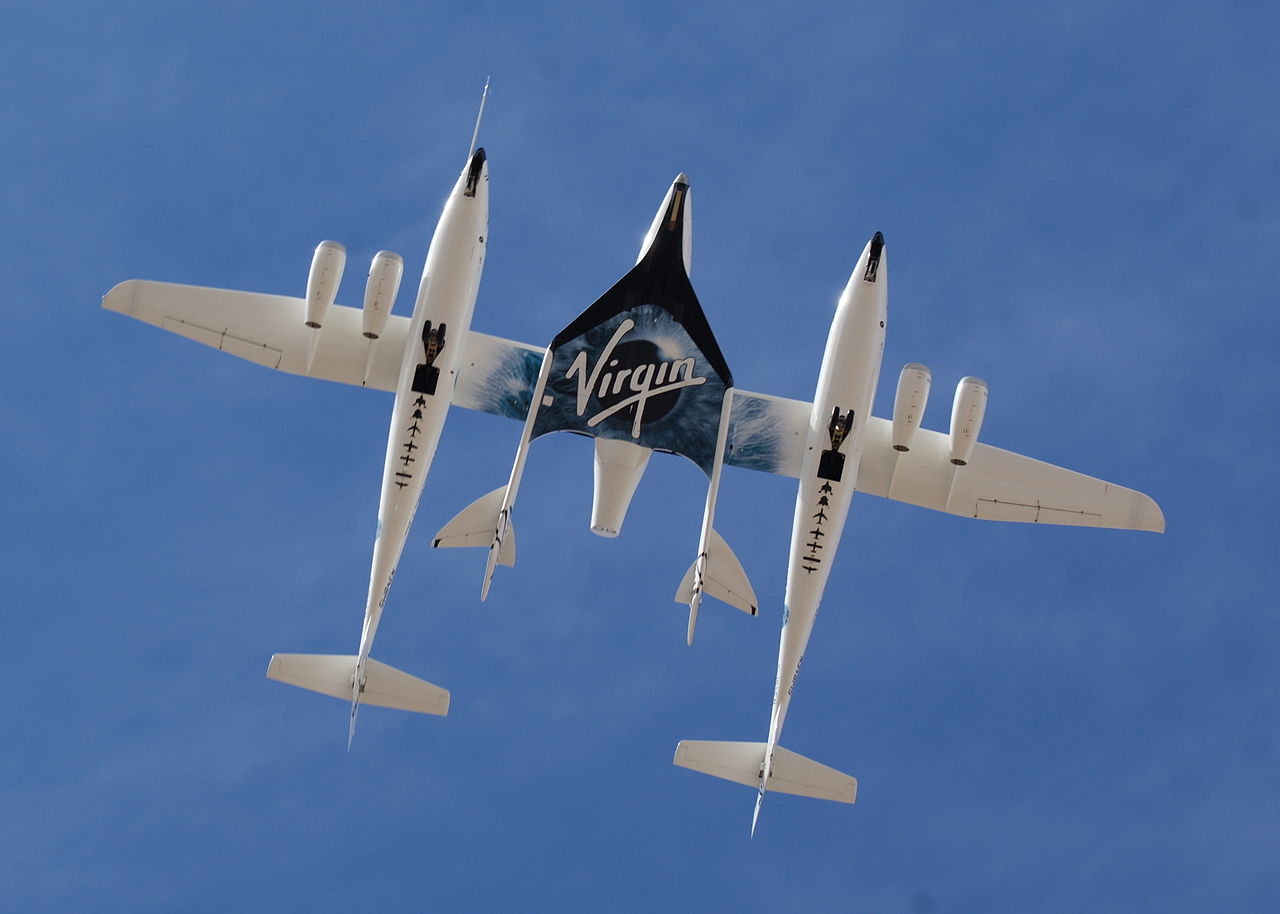
![The spaceplane is rocket-powered. It is a SpaceShipTwo type spaceplane. In 2021, it came to an altitude of 86 km (53 mi), with people inside.[3]](http://upload.wikimedia.org/wikipedia/commons/thumb/b/b1/Virgin_Galactic_SpaceShipTwo_%22Unity%22_rollout_19Feb2016%2C_FAITH_hangar%2C_Mojave%2C_California.jpg/240px-Virgin_Galactic_SpaceShipTwo_%22Unity%22_rollout_19Feb2016%2C_FAITH_hangar%2C_Mojave%2C_California.jpg)
Image gallery
9 Images



Design and operation
Virgin Galactic's primary passenger vehicle follows the rocket-powered, air‑launched concept. A carrier aircraft carries a SpaceShipTwo class vehicle to high altitude and releases it; the spaceplane then fires its rocket motor to climb to the flight's peak. The spacecraft is powered by a hybrid rocket motor and is flown by a crew of pilots assisted by automated systems. Typical missions are suborbital: they reach altitudes above commercial air traffic and offer a short period of microgravity before the vehicle glides back to a runway landing.
History and milestones
The program evolved over many years with repeated test flights and development milestones. In 2014 an accident involving an earlier vehicle resulted in the loss of life and led to a prolonged safety review and redesign. Testing continued afterwards and in 2021 the company conducted crewed test flights that drew wide public attention. One high‑profile flight in July 2021 carried company personnel, including the founder, to an altitude reported at about 86 km. That flight demonstrated the vehicle's ability to carry civilians to the edge of space, though it also prompted regulatory review.
Safety, regulation and notable events
Operations that approach or enter controlled airspace require coordination with aviation authorities. After the July 2021 flight the Federal Aviation Administration investigated an airspace excursion that reportedly lasted 1 minute and 41 seconds; flights were restricted until procedures and airspace protections were adjusted. The company has worked with regulators to expand restricted airspace for the vehicle's flight trajectory and to obtain the necessary certifications for commercial operations. Crews typically include two pilots plus passengers, and the firm emphasizes pilot training, vehicle maintenance and iterative test data as part of safety progress.
Commercial services and platforms
Virgin Galactic's activities include two main strands of business: suborbital human spaceflight and air‑launched orbital delivery of small satellites. The suborbital service uses SpaceShipTwo class craft to carry private passengers and researchers on brief spaceflights. Separately, a modified jetliner known as a launch mother ship carries the LauncherOne rocket under its wing and releases it at altitude to place small payloads into orbit. The satellite launch concept uses a carrier aircraft configuration in which the rocket is attached between the fuselage and a jet engine mount under the wing, enabling flexible launch locations and reduced weather sensitivity compared with ground launches.
Uses, market and distinctions
Virgin Galactic is positioned in the growing market for space tourism and small‑satellite launch services. Potential customers include private individuals seeking a short spaceflight experience, scientists conducting microgravity experiments, and commercial customers needing responsive small‑satellite deployment. The company is often compared with other private initiatives that offer suborbital or orbital services, but it is distinct in its air‑launch, winged spaceplane design and its parallel LauncherOne air‑launch business. As of the early 2020s the venture continued to refine operations, expand regulatory approvals, and transition from test flights toward regular commercial service.
- Key vehicle type: SpaceShipTwo class rocket plane.
- Carrier aircraft for crewed flights: a twin‑fuselage WhiteKnightTwo derivative (not shown here).
- Mother ship for orbital launches: LauncherOne carrier often called Cosmic Girl in public materials.
- Regulators involved: FAA and national aviation authorities.

Related articles
Author
AlegsaOnline.com Virgin Galactic: private suborbital flights and air‑launch services Leandro Alegsa
URL: https://en.alegsaonline.com/art/105520
Sources
- bbc.com : "Virgin Galactic reaches edge of space"