
Viggo Rivad: Danish documentary photographer and pioneer of the photographic essay
Viggo Rivad (1922–2016) was a Danish documentary photographer noted for black-and-white photo essays that empathetically depicted marginalized people and urban life, pioneering narrative sequencing.
Overview
Viggo Reinholdt Rivad (3 July 1922 – 8 February 2016) was a Danish documentary photographer whose work concentrated on people living at the margins of society. Born in the Nørrebro district of Copenhagen, he began his photographic career in 1946 and over subsequent decades became known for quietly empathetic images made in urban settings. He worked primarily in black-and-white and is remembered for combining documentary observation with moral concern for social conditions.
Image gallery
1 Image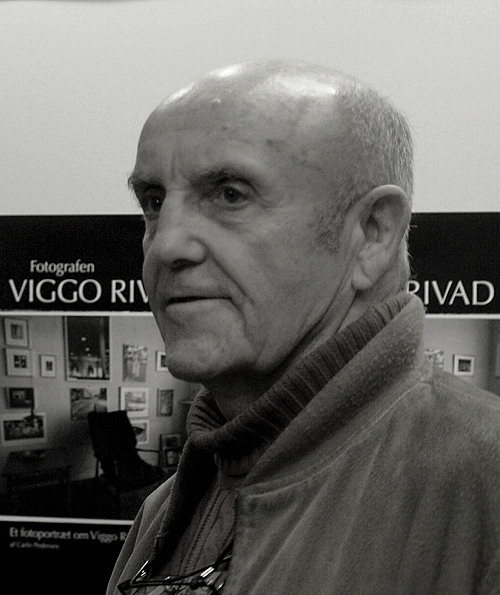
Career and recognition
Rivad established his practice in the immediate postwar period and participated widely in the photographic culture of mid‑20th‑century Denmark. He won several competitions during the 1950s and 1960s and exhibited his work in Danish venues. Although he did not seek celebrity, his consistent focus on human subjects and extended series attracted the attention of critics and curators interested in socially engaged photography.
The "essay approach"
Around 1960 Rivad adopted what he described as an "essay approach": producing sequences of related photographs arranged to convey a narrative, mood or psychological portrait rather than a single iconic frame. These photo essays present a rhythm of images whose order, repetition and variation create meaning through juxtaposition. The method foregrounds continuity in time and place and invites viewers to follow the development of a situation or character.
Subjects and style
- Humanist focus: Rivad concentrated on ordinary and disadvantaged people—children, the elderly, workers and others often overlooked by mainstream media.
- Observational method: He worked with a quiet, unobtrusive approach, making compositions that respect the dignity of his subjects rather than staging scenes.
- Sequencing and narrative: Stories emerge through series; small gestures, repeated motifs and changing viewpoints build emotional or social context.
- Tonal emphasis: Black-and-white imagery allowed him to emphasize texture, light and shadow, supporting expressive and documentary aims.
Notable series and examples
Two of Rivad's best-known series are "Et farvel" (1962) and "Laurits" (1971). Both exemplify the essay approach by following individuals and scenes across a set of images to imply biography, change or loss. His subjects often inhabit city streets, tenement courtyards and other ordinary environments that reveal social conditions without sensationalism.
Life outside photography
To support himself, Rivad at times worked as a taxi driver, a job that brought him close to many aspects of urban life and offered access to everyday encounters. This practical engagement with the city complemented his photographic practice and reinforced his interest in people on the edges of society.
Legacy and reception
Rivad is regarded as an important figure in Danish documentary photography. His emphasis on sequencing influenced later photographers who use serial imagery to explore social and personal themes. His work has been shown in retrospectives and is included in public and private collections in Denmark. Writers and curators note his consistent moral seriousness: photographs that combine compassion with critical attention to social exclusion.
Further resources and reading
Basic biographical notes and summaries of Rivad's career can be found in concise overviews and institutional entries (biography), while selections of his images and reproductions of essays are available in curated galleries and publications (works and selections). Contemporary press reports and obituaries from 2016 provide context on his later life and reception (2016 coverage). Archival holdings and exhibition listings are maintained by Danish cultural institutions and photographic archives (archives and records), and interviews or personal reminiscences occasionally surface in oral-history projects or local media (interviews and accounts).
Death
Viggo Rivad died in Copenhagen on 8 February 2016 at the age of 93 from complications following a stroke. His photographic legacy remains a reference point for those interested in documentary practice that combines narrative sequencing with a sustained social conscience.
For further study consult the referenced institutional pages, exhibition catalogues and collections that document his essays and their place in postwar Danish photography (overview, selected works, archive entries, press, oral histories).
Related articles
Author
AlegsaOnline.com Viggo Rivad: Danish documentary photographer and pioneer of the photographic essay Leandro Alegsa
URL: https://en.alegsaonline.com/art/105115
Sources
- denstoredanske.dk : "Viggo Rivad".