
Vicuña: the wild Andean camelid and its wool
The vicuña (Vicugna vicugna) is a small wild South American camelid native to the high Andes, prized for its exceptionally fine wool and subject to conservation and sustainable-use programs.
Overview
The vicuña (Vicugna vicugna) is a small, wild camelid native to the high Andes of South America. It is one of the two wild South American camelids and is closely related to llamas, alpacas and guanacos. Vicuñas are adapted to life at high altitude and are valued for their very fine undercoat.
Image gallery
10 Images



Physical characteristics
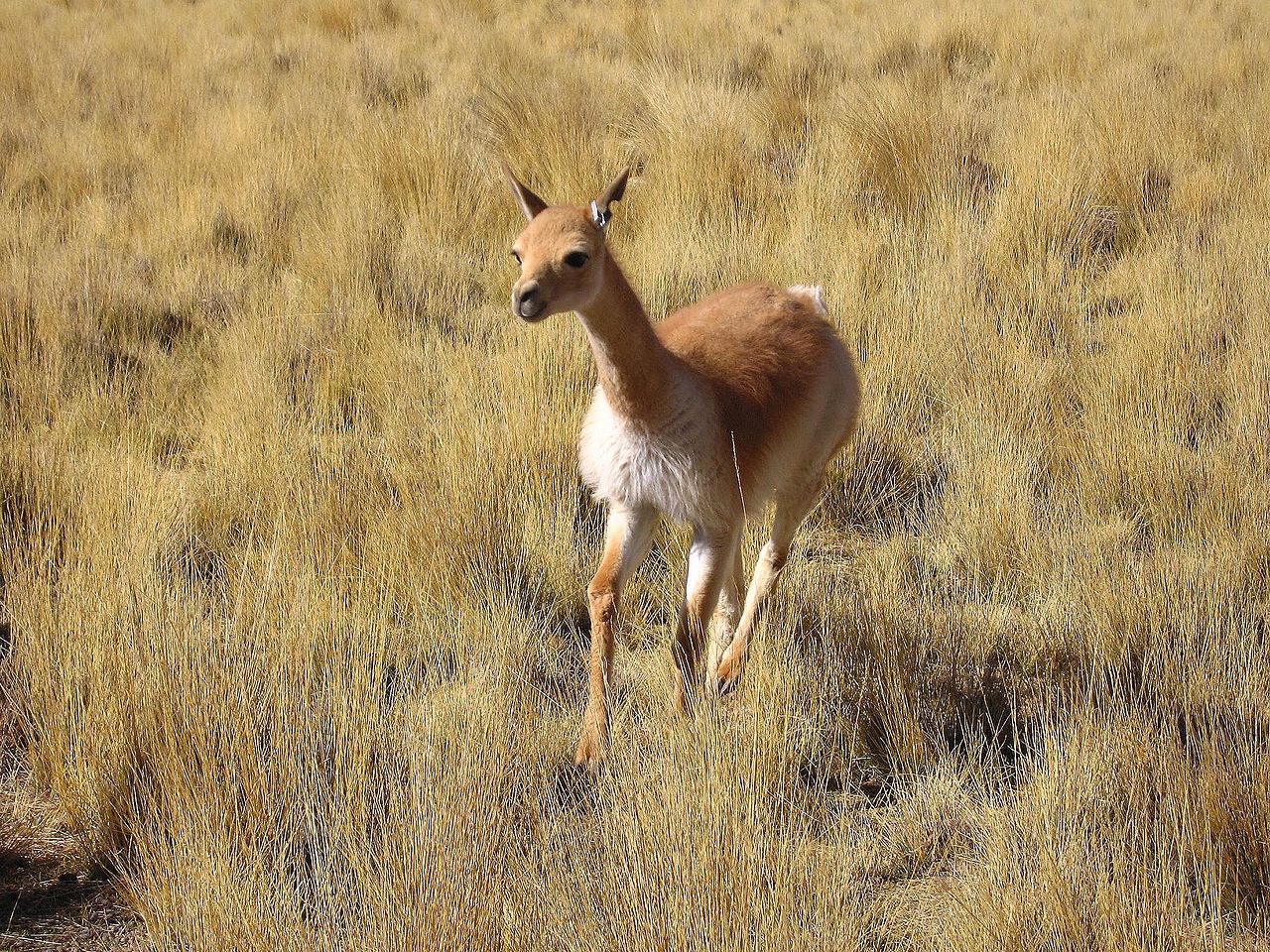
Vicuñas are the smallest of the South American camelids. They have slender bodies, long necks and a short, dense fleece that is soft and insulating. Typical coat coloration is light brown on the back with white on the chest and belly. Their limb structure and padded feet suit walking on rocky, mountainous terrain.
Ecology and behaviour
Vicuñas inhabit puna and high Andean grasslands. They form social groups—often family bands made up of a territorial male, several females and their offspring—while young males sometimes form bachelor groups. They are grazers, feeding on native grasses and herbs, and are most active during cooler parts of the day to avoid midday extremes.
History, conservation and human interactions
Historically, vicuña fiber was highly prized by Andean cultures; the Inca reserved it for nobility. By the 20th century heavy poaching reduced populations, but protection, regulated shearing and community-based management have enabled recovery in many areas. Traditional communal roundups, known as "chaku," are sometimes used to capture, shear and release vicuñas without harming them.
Uses and economic importance
The principal value of the vicuña to people is its ultra-fine wool, regarded as one of the finest natural animal fibers. Because of its rarity and processing requirements, vicuña fiber is used for high-end garments and commands high prices. Increasingly, sustainable harvest programs aim to provide livelihoods for Andean communities while maintaining wild populations.
Distinctions and notable facts
- Vicuñas are wild; alpacas and llamas are domesticated relatives.
- Legal protection and community management are central to modern conservation.
- Research and policy balance demand for fiber with the species’ long-term survival.
For broader context on camelids and their management see related resources.
Related articles
Author
AlegsaOnline.com Vicuña: the wild Andean camelid and its wool Leandro Alegsa
URL: https://en.alegsaonline.com/art/105019