
Viper (family Viperidae)
Vipers are a family of venomous snakes (Viperidae) known for long, hinged fangs, hemotoxic venom, and diverse habits across Africa, Asia, Europe and the Americas.
Overview
Vipers belong to the family Viperidae, a widespread group of venomous snakes. They are most notable for long, folding fangs that allow deep injection of venom. Vipers occupy a variety of habitats—from deserts and grasslands to forests and mountains—and play important roles as predators of small mammals, birds and amphibians.
Image gallery
7 Images

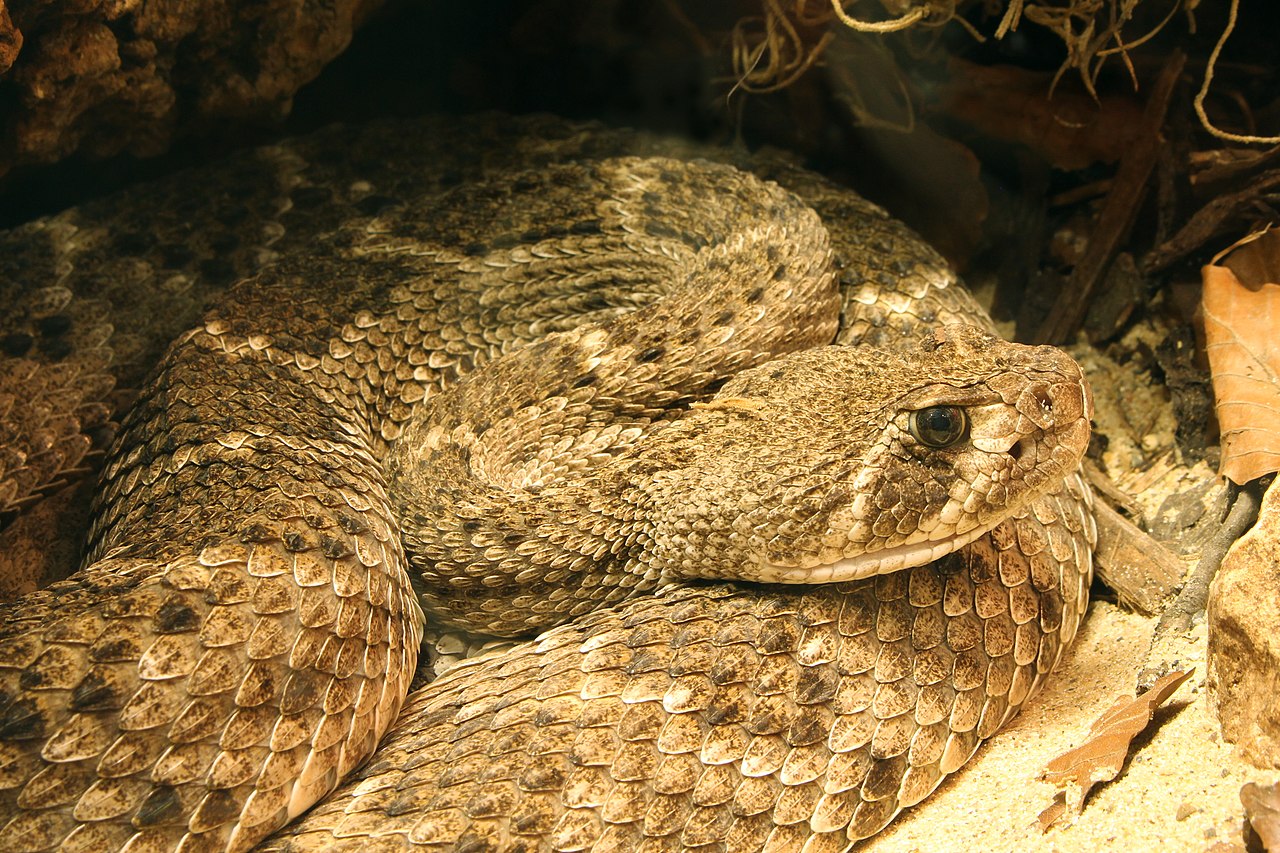


Key characteristics
Members of this family share several distinctive traits. Their hollow, hinged fangs (solenoglyphous dentition) fold back when not in use. Many species possess stout bodies, keeled scales and cryptic coloration. Their venom is often rich in enzymes that damage tissue and disrupt blood clotting, producing effects such as pain, swelling and in severe cases internal bleeding; general information about venom can be found here.
Common features include:
- Long, retractable fangs for efficient envenomation
- Predatory diet of vertebrates and large invertebrates
- Reproductive modes that vary by species (many are live-bearing)
- In pit vipers, heat-sensitive facial pits used to detect warm-blooded prey
Viper venoms are biologically complex: they can cause local tissue destruction, interfere with coagulation, and occasionally produce systemic effects. Information on medical effects and treatment options is available here, but management depends on species and regional medical protocols.
Classification and diversity
Taxonomists commonly recognize several subfamilies within Viperidae, including true vipers and pit vipers, as well as smaller groups with specialized traits. Well-known representatives include rattlesnakes, adders, puff adders and lanceheads. The family shows marked variation in size, behavior and venom composition across its range.
Humans interact with vipers in many ways: they are important ecological regulators, subjects of medical research (antivenom development), and, in some cultures, sources of fear or symbolism. Conservation concerns affect several species because of habitat loss and persecution. For further reading on the family and its biology, consult specialist references and regional field guides.
Related articles
Author
AlegsaOnline.com Viper (family Viperidae) Leandro Alegsa
URL: https://en.alegsaonline.com/art/105488
Sources
- itis.gov : "Viperidae"