
Viverridae: biology, distribution, and taxonomy of viverrids
Viverridae are small to medium cat-like carnivores in the Feliformia. This article explains their appearance, classification, range, ecology, and conservation issues.
Overview
The Viverridae are a family of small to medium-sized mammals commonly called viverrids. They belong to the cat-like suborder Feliformia and include familiar groups such as civets, genets and linsangs. The family was named in the early 19th century by John Edward Gray and historically has been recognized for its ecological diversity and distinctive scent glands.
Image gallery
10 Images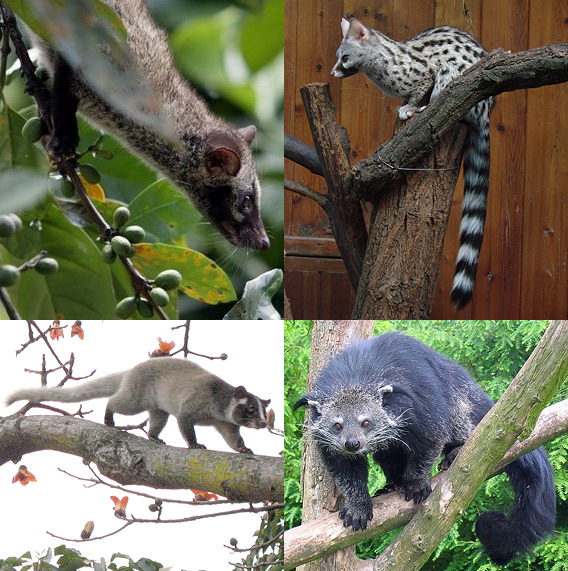




Taxonomy and diversity
Modern classifications typically recognize about 15 genera and roughly 33 species, though exact counts vary with ongoing research. Viverrids are part of the larger carnivore radiation and are distinguished from true cats by skull and dental features, as well as limb proportions. Scientific descriptions and names trace back to early 19th-century naturalists; Gray's formal naming dates to 1821.
Physical characteristics
Viverrids range from compact, mongoose-like bodies to more slender, long-tailed forms. Many have marked pelage patterns—spots, stripes or rings—useful for camouflage. A hallmark of the group is well-developed perineal or anal scent glands used for marking territory and communication. Dentition indicates an omnivorous to carnivorous diet, with molars adapted for both meat and some plant matter.
Distribution and habitat
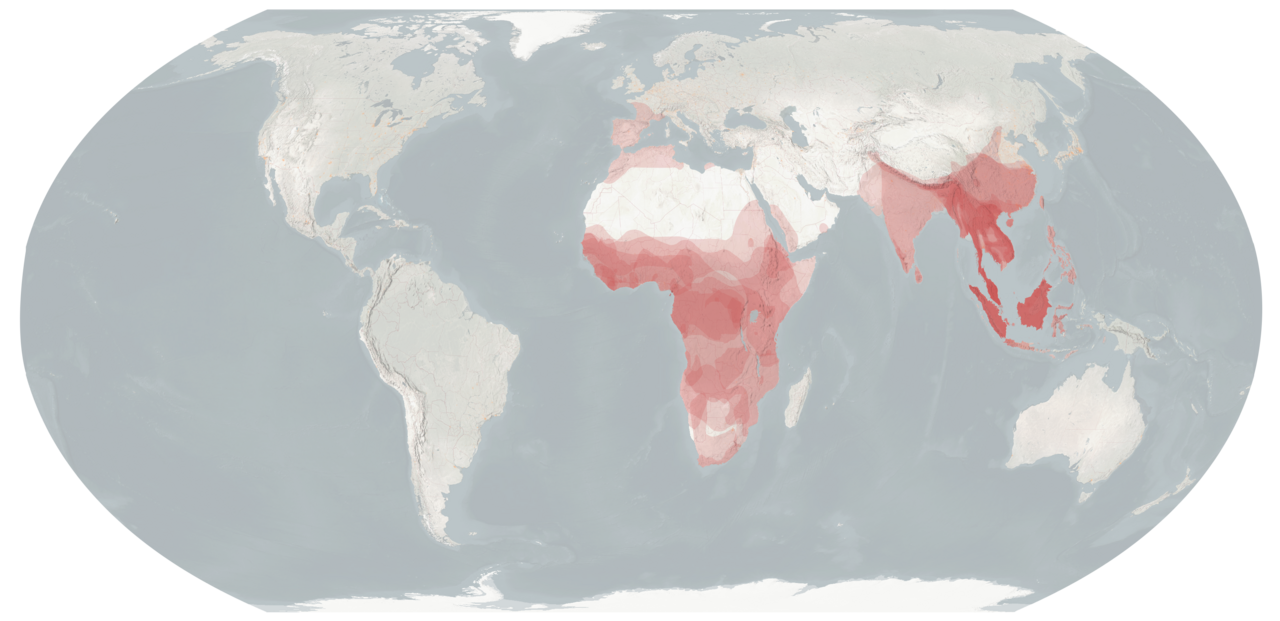
Viverrids occur across large parts of the Old World. They are widespread in the Oriental region, throughout much of Africa, and reach into parts of southern Europe. Their presence on islands such as Madagascar and Celebes indicates past dispersal across tropical zones of the Old World and, in some cases, beyond tropical biogeographic limits and across boundaries like Wallace's line. Habitats range from dense tropical rainforest to woodland, savanna and montane zones.
Behavior and ecology
Many viverrids are nocturnal and solitary, active hunters and opportunistic feeders. Diets include small vertebrates, invertebrates, fruit and carrion; some species are important seed dispersers. Territorial marking with scent glands plays a central role in social interactions. Reproductive rates tend to be modest, and life histories reflect adaptation to variable tropical environments.
Human interactions and conservation
Viverrids have varied relationships with people: civets have been hunted for fur and meat, some species are trapped for the wildlife trade, while others coexist near farms by reducing pest populations. Habitat loss, hunting and fragmentation threaten several species, prompting conservation assessments and habitat protection measures in different countries. Continued taxonomic and field research is important to clarify species limits and conservation status.
Notable distinctions
- Common names: civets, genets, linsangs reflect ecological and morphological variety.
- Biogeography: their distribution across Africa, Asia and some islands illustrates Old World dispersal patterns and ecological flexibility.
- Research: molecular studies continue to refine relationships within Feliformia and to other carnivores.
For further reading and taxonomic details, consult specialist reviews and faunal accounts linked to museum and research portals (family overview, mammal resources). Additional resources include regional checklists and conservation databases (Africa, Asia, Europe).
Questions and answers
Q: What is the Viverridae family?
A: The Viverridae family is a group of small to medium-sized mammals, also known as the viverrids.
Q: What category do the viverrids belong to?
A: The viverrids belong to the Feliformia, a group of cat-like carnivores.
Q: How many genera and species are in the Viverridae family?
A: There are 15 genera and 33 species in the Viverridae family.
Q: Who named the Viverridae family?
A: The Viverridae family was named by John Edward Gray in 1821.
Q: Where are viverrids found?
A: Viverrids are found all over the Oriental region, all over Africa, and into southern Europe. They also live in Madagascar and Celebes, which indicates they lived in the tropics of the Old World, and beyond it, over Wallace's line.
Q: What kind of habitat do viverrids prefer?
A: Viverrids mostly live in tropical rainforest, but they also live in woodland, savanna, and mountains.
Q: How do viverrids differ from other mammals?
A: Viverrids are unique because they are a family of small to medium-sized mammals in the Feliformia group, and they have adapted to living in various habitats, including tropical rainforests, woodlands, savannas, and mountains.
Related articles
Author
AlegsaOnline.com Viverridae: biology, distribution, and taxonomy of viverrids Leandro Alegsa
URL: https://en.alegsaonline.com/art/105694
Sources
- bucknell.edu : "Order Carnivora"
- google.com : Mammal Species of the World
- worldcat.org : 62265494 · archive.org · archive.org
- cdc.gov : cdc.gov/sars/media/civet-ban.html