
VDSL (Very High Bitrate Digital Subscriber Line): high-speed copper broadband technology
VDSL (Very High Bitrate DSL) is a high-speed broadband technology using existing copper phone lines to deliver data, voice and TV; VDSL2 can reach up to ~100 Mbps over short distances.
VDSL (Very High Bitrate Digital Subscriber Line), sometimes written VHDSL, is a family of technologies that deliver high-speed data over a single copper telephone pair. It was developed to provide much higher bandwidth than earlier DSL variants while using the existing local wiring that originally carried Plain Old Telephone Service.
Image gallery
5 Images


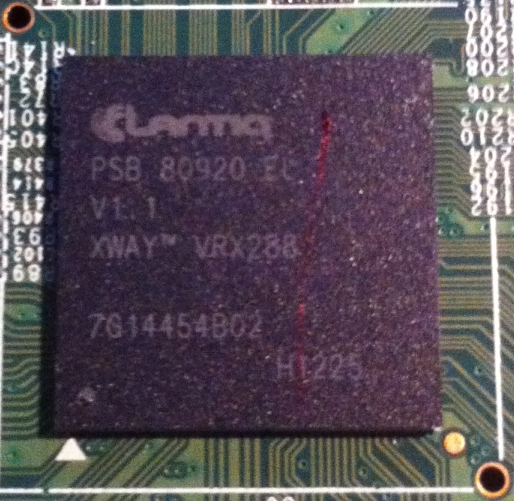
How it works
VDSL systems use advanced line coding and multiple frequency bands to transmit large amounts of data on a single twisted or untwisted pair of copper wires. Like many modern DSL technologies, VDSL divides the available spectrum into subcarriers and typically uses discrete multitone modulation. This permits separate channels for upstream and downstream traffic and allows providers to carry Internet access, voice and television services over the same physical connection.
Performance and limitations
Published specifications allow VDSL equipment to reach substantially higher rates than ADSL: early versions support downstream rates on the order of tens of megabits per second, while successor standards (commonly called VDSL2) can achieve aggregate data rates up to around 100 Mbps under ideal, short-loop conditions. Real-world throughput depends strongly on the length and quality of the copper pair and on interference from neighboring lines; the highest speeds are attainable only over relatively short distances from the distribution point.
Typical uses
- Residential and business Internet access and multimedia services, including IPTV
- Voice over IP (VoIP) alongside data and video on a single subscriber line
- Hybrid fiber deployments, where fiber reaches a neighborhood cabinet and VDSL carries the final segment to the premises
Because it can deliver multiple services together—data, telephony and television—VDSL is often used in "triple-play" offerings for consumers seeking combined broadband and entertainment services over one physical link to the home.
Deployment variants and improvements
Operators commonly deploy VDSL as part of fiber-to-the-neighborhood (FTTN) or fiber-to-the-cabinet (FTTC) architectures, keeping fiber to a nearby node and using copper for the last leg. Techniques such as line bonding (combining multiple copper pairs) and vectoring (crosstalk cancellation) are used to raise throughput and improve stability. Successor standards and vendor implementations continue to refine performance and extend useful reach.
Choosing VDSL
For locations where full fiber-to-the-home is not available, VDSL can offer a pragmatic upgrade path, leveraging existing telephone infrastructure to provide faster broadband and multimedia services. Prospective users should check local service offers and measured speeds, since actual performance varies with loop length, wiring condition and network configuration, and consider alternatives where higher sustained bandwidth or longer reach is required for their Internet needs.
Related articles
Author
AlegsaOnline.com VDSL (Very High Bitrate Digital Subscriber Line): high-speed copper broadband technology Leandro Alegsa
URL: https://en.alegsaonline.com/art/104770
Sources
- kpn.com : KPN - KPN starts VDSL trials
- doi.org : 10.1109/TCOMM.2007.904374