
Vellore Fort: history, architecture, and significance
A comprehensive overview of Vellore Fort in Vellore, Tamil Nadu, covering its origins, architecture, key events, religious structures, and modern conservation.
Overview
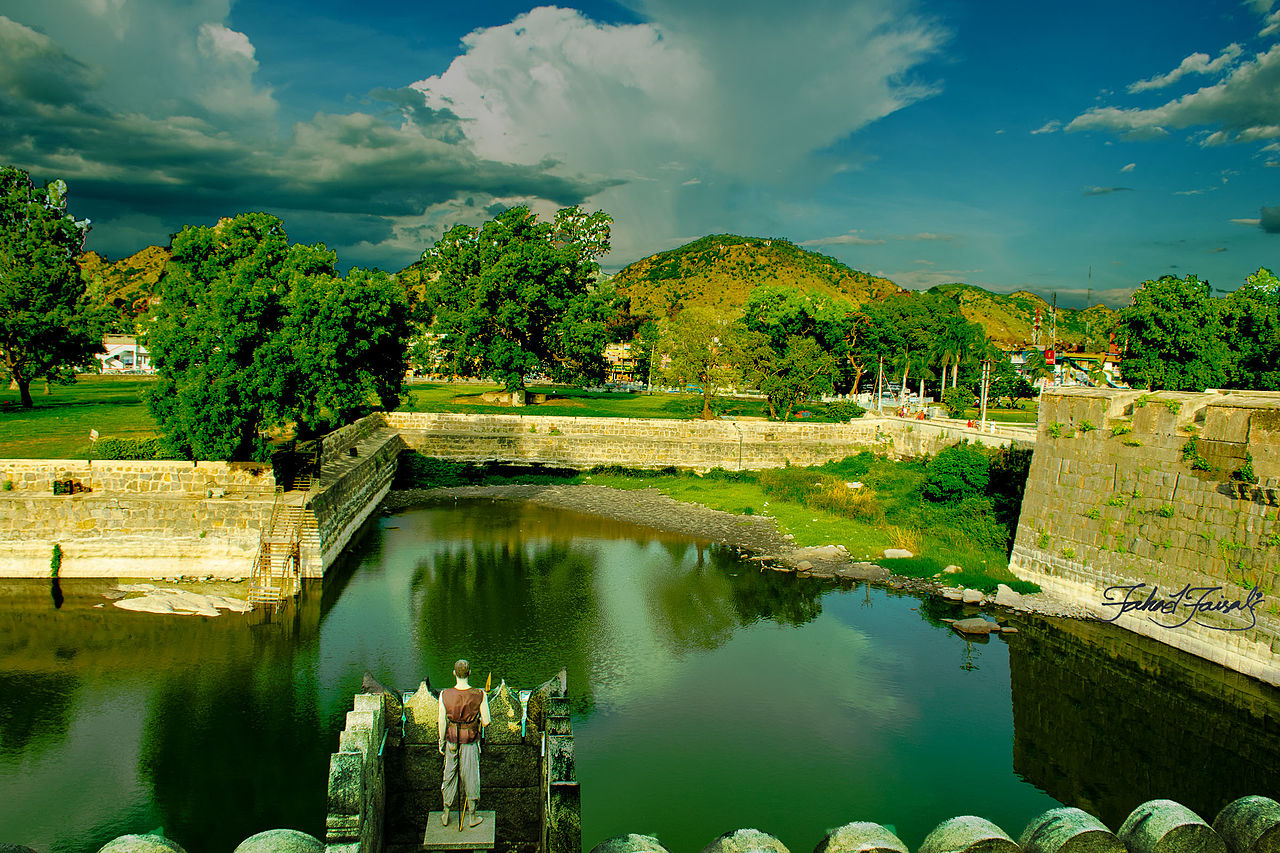
Vellore Fort stands at the heart of the city of Vellore in the state of Tamil Nadu, India. Erected in the 16th century under the influence of the Vijayanagara kings, the fort developed into an important political and military center in South India. Noted for its massive ramparts and a broad moat, the fort complex contains religious buildings and colonial-era structures that reflect the succession of regional powers that controlled it.
Image gallery
10 Images



Architectural characteristics
The fort is characterized by thick granite walls and a wide defensive ditch that together form a strong concentric defense. The ramparts are interspersed with bastions and gateways designed to control movement and mount artillery. Within the walled enclosure are varied stone and brick constructions: temples, a 19th-century church, a mosque, administrative buildings and traces of barracks. Decorative carving and sculptural detail appear most prominently on the principal temple inner shrines.
History and succession of rulers
Construction and major expansions took place during the late Vijayanagara period, after which the fort passed through several hands. It was controlled successively by Bijapur and other Deccan sultanates, Maratha forces, the Nawabs of the Carnatic and later the British colonial administration. During British rule the site was used as a garrison and prison; following Indian independence the fort became a protected monument under the Archaeological Survey of India and other heritage bodies.
Religious and civic structures
The complex contains important religious sites: the Jalakanteswarar Temple with its richly carved stone work, a colonial-era St. John's Church, and a mosque serving the local Muslim community. These buildings illustrate the fort's multi-faith history and the layering of cultural influences over several centuries. Visitors also encounter remnants of administrative buildings and foundations that hint at the fort's role as an urban center.
Notable events and prisoners
Vellore Fort has been the scene of several historically significant events. It was the location of one of the early large-scale military uprisings against British rule in 1806, often cited as the Vellore Mutiny. The fort also served as a place of confinement for prominent prisoners of the period, including members of the family of Tipu Sultan (Tipu) and deposed rulers from neighboring polities. Earlier episodes include violent transfers of power and royal eliminations during times of dynastic collapse.
Conservation, access and significance today
Today the fort is managed as a protected heritage site and attracts scholars, pilgrims and tourists. Conservation efforts focus on stabilizing masonry, preserving sculptural details and maintaining the landscape of the moat and ramparts. The site is used to illustrate regional history in museums and guidebooks and remains an important landmark in local identity and planning. For further practical information, municipal and tourism resources in Vellore and state offices in Tamil Nadu provide visitor details and access updates.
- Key features: ramparts, moat, Jalakanteswarar Temple, St. John's Church, mosque
- Historical phases: Vijayanagara construction, Deccan sultanates, Maratha control, Carnatic Nawabs, British period
- Conservation: protected by central/state archaeological authorities and subject to ongoing preservation work
For introductions to regional context and further reading, see materials provided by local heritage bodies and academic overviews of the late medieval and colonial history of South India. Official guides and curated displays on site offer additional interpretation for visitors and researchers alike. For more on the broader political milieu connected to the fort's founding, consult resources relating to the Vijayanagara polity and its cultural legacy.
Questions and answers
Q: What is Vellore Fort?
A: Vellore Fort is a large 16th-century fort in the center of Vellore city, in the state of Tamil Nadu, India.
Q: Who built Vellore Fort?
A: Vellore Fort was built by the Vijayanagara kings.
Q: Who held ownership of the fort throughout history?
A: The fort's ownership passed from Vijayanagara kings, to the Bijapur sultans, to the Marathas, to the Carnatic Nawabs and finally to the British, who held the fort until India gained independence.
Q: What is the significance of Jalakanteswarar Hindu temple in Vellore Fort?
A: The Jalakanteswarar Hindu temple is famous for its magnificent carvings and is located inside Vellore Fort.
Q: Which historical figures were held prisoners in Vellore Fort?
A: During British rule, the Tipu Sultan's family and the last king of Sri Lanka, Sri Vikrama Rajasinha were held as prisoners in the fort.
Q: What is the significance of St. John's Church in Vellore Fort?
A: St. John's Church is a Christian church located inside Vellore Fort.
Q: What significant events occurred at Vellore Fort during British rule?
A: The first significant military rebellion against British rule erupted at this fort in 1806, and it is also a witness to the massacre of the Vijayanagara royal family of Sriranga Raya.
Related articles
Author
AlegsaOnline.com Vellore Fort: history, architecture, and significance Leandro Alegsa
URL: https://en.alegsaonline.com/art/104496