
Vijayanagara Empire (South India, 14th–17th centuries)
A major medieval South Indian state centered on the city of Vijayanagara (Hampi). Known for military power, temple architecture, trade links and patronage of literature across regional languages.
Overview
The Vijayanagara Empire was a dominant South Indian state founded in the 14th century that controlled large parts of the Indian peninsula. Established around 1336, it rose from the political vacuum in the Deccan and became the principal power across much of the southern subcontinent. The polity took its name from its capital, Vijayanagara — the ruins of which are now known as Hampi in present-day Karnataka. The realm acted as a bulwark against northern invasions and as a center for commerce, religion and the arts in the peninsula and wider southern India.
Image gallery
10 Images




Origins and political development
The empire was traditionally attributed to two brothers, Harihara (Hakka) and Bukka Raya, who consolidated control in the early decades after its foundation. Over the following centuries several dynastic houses — including the Sangama, Saluva, Tuluva and Aravidu lines — provided imperial rulers. Under capable kings, territories expanded through military campaigns and alliances, reaching a peak when Vijayanagara exercised influence across the Deccan and coastal districts. The empire combined centralized royal authority with a network of regional governors and local chiefs.
Administration, economy and society
Vijayanagara developed an administrative structure that balanced royal power and regional autonomy. Royal revenue came largely from agriculture supported by extensive irrigation works, land taxes and tolls on trade routes. The empire fostered vibrant internal and overseas commerce: its ports and markets connected inland producers with Arab, Persian and European merchants. Contemporary European travelers recorded the wealth and cosmopolitan character of the capital, describing flourishing marketplaces and diverse craftsmen.
- Administration: provinces overseen by appointed governors, local chieftains retained traditional roles.
- Economy: rice cultivation, irrigated agriculture, craft production, and maritime trade.
- Military: combined infantry, cavalry and elephants, with fortifications protecting major cities.
Culture and architecture
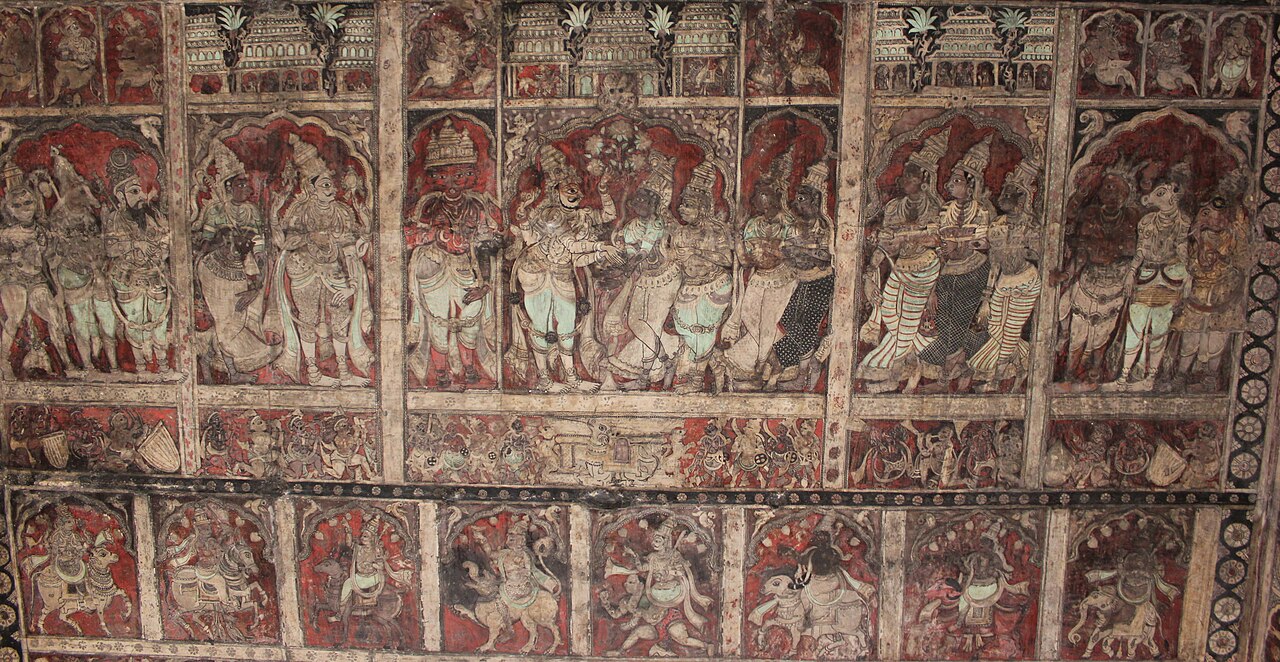
The court of Vijayanagara was an important patron of literature, music and religious institutions. Rulers sponsored works in multiple languages including Kannada, Telugu, Tamil and Sanskrit. Architecturally, the empire produced a distinctive style noted for monumental temples, elaborate pillared halls (mandapas), gateways (gopurams) and finely carved reliefs, often executed in durable local stone. The ruins of the capital at Hampi preserve many of these structures and demonstrate sophisticated urban planning and temple complexes that blended aesthetic and ritual functions.
Decline and legacy
The empire began to weaken after major military setbacks and internal strains in the 16th century, and its capital suffered catastrophic damage in the later military confrontations of that period. Successor polities and regional chieftains emerged from its remnants, but Vijayanagara's political and cultural imprint endured. Its architectural monuments influenced later South Indian temple design, and its multilingual literary patronage shaped regional literary traditions. Accounts by foreign visitors helped transmit contemporary impressions of the empire's scale and prosperity to wider audiences.
Further notes and sources
Eyewitness and near-contemporary narratives provide important lines of evidence for the empire's appearance and administration. European travelers and merchants recorded impressions of Vijayanagara's markets, palace complexes and public works. Modern study draws on archaeological remains at Hampi, epigraphic inscriptions, and literary sources in regional languages to reconstruct the polity's history and institutions.
- Primary traveler accounts and chronicles: Portuguese and Venetian observers.
- Founding date reference: foundation around 1336.
- Geographic scope: peninsular India and the southern Indian plateau.
- Founders: Harihara I and Bukka Raya I.
- Capital and heritage site: Hampi.
Questions and answers
Q: What is the Vijayanagara empire?
A: The Vijayanagara empire was an Indian empire located in southern India, in the Deccan area of the peninsula. It was established in 1336 by two brothers named Harihara and Bukka Raya.
Q: What is the capital of the Vijayanagara empire?
A: The capital of the Vijayanagara empire was Vijayanagara, which is now known as Hampi and is located in the state of Karnataka in modern-day India.
Q: When did the Vijayanagara empire end?
A: The Vijayanagara empire ended in 1660, although in its last century it began losing its power.
Q: Who founded the Vijayanagara empire?
A: The Vijayanagara empire was founded by two brothers named Harihara and Bukka Raya, who ruled as kings of the empire.
Q: What is known about the history of the Vijayanagara empire?
A: There are many stories and accounts of the Vijayanagara empire, but the details are not certain. European travelers like Domingo Paes, Nuniz, and Niccolò Da Conti described the wealth and power of the empire.
Q: Where was the Vijayanagara empire located?
A: The Vijayanagara empire was located in southern India, in the Deccan area of the Indian peninsula.
Q: What was the significance of Vijayanagara in the Vijayanagara empire?
A: Vijayanagara was the capital city of the Vijayanagara empire, and it was an important cultural and economic center of the empire. It was also a center of worship for many Hindus, with many temples and religious buildings constructed throughout the city.
Related articles
Author
AlegsaOnline.com Vijayanagara Empire (South India, 14th–17th centuries) Leandro Alegsa
URL: https://en.alegsaonline.com/art/105134