
Varistor (Voltage-Dependent Resistor): Function, Types, and Uses
A varistor is a non-linear resistor used to suppress voltage transients. This article explains how it works, construction and types, typical applications, history, comparisons and failure modes.
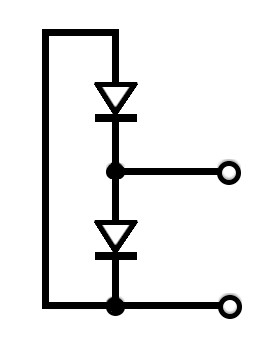
A varistor, often abbreviated VDR (voltage-dependent resistor), is an electrical component whose resistance changes with the voltage applied across it. In normal operating conditions it presents a high resistance and draws minimal current, but when the voltage rises above a designed threshold the device becomes highly conductive and diverts excess current away from protected circuitry. In this way a varistor limits transient voltages and helps prevent component damage; it is commonly encountered as a metal-oxide varistor (MOV) or other ceramic varistor form. It controls the current depending on the voltage across it.
Image gallery
8 Images




How it works and key characteristics
Varistors exhibit a strongly non-linear voltage–current relationship. At low voltages their internal structure keeps resistance high; when the instantaneous voltage reaches the device's characteristic threshold (often called the clamping or varistor voltage), microscopic regions around grain boundaries undergo localized breakdown and the resistance collapses sharply. This change allows the varistor to conduct large currents and convert the transient electrical energy into heat. When the overvoltage subsides, the device returns to a high-resistance state, so it effectively "self-resets" after most transient events. The behavior of a varistor is often summarized by its clamping voltage, energy-absorption capability, peak surge current rating, and leakage current. The abrupt fall in resistance is the fundamental operating principle that enables transient suppression.
Construction and common types
Most modern varistors are produced from sintered polycrystalline ceramic materials, typically zinc oxide mixed with other oxides (a type often called a metal-oxide varistor or MOV). They are usually formed as small discs or blocks with metal contacts and an insulating coating for mechanical protection. Varistors are specified by their nominal clamping voltage, energy rating (joules or a standardized surge waveform), and maximum continuous voltage. Packaging varies from small surface-mount components for electronics to larger bolts-and-flange assemblies for power-distribution equipment. Proper selection considers both steady-state stresses and expected surge environments, such as industrial supply systems or substation protection modules.
Applications and examples
Varistors are widely used where transient suppression is required. Typical applications include:
- Power strip and mains surge protectors that guard household and office electronics.
- Protection of power supplies, motor drives, and industrial control equipment against switching spikes.
- Telecommunications interfaces and data lines, sometimes in combination with other devices for coordinated protection.
- Automotive electrical systems to absorb inductive spikes and transient surges from alternators and load switching.
- Lightning-related protection schemes where they may be used alongside surge arresters to reduce transient stress on equipment exposed to lightning-induced surges.
History, comparisons and practical considerations
Varistor technology became practical in the mid-20th century with advances in ceramic processing and sintering techniques. Over subsequent decades MOVs became the standard choice for many surge-protection roles because of their fast response, simplicity, and ability to absorb substantial energy in a short pulse. They differ from other protective devices: for example, TVS diodes provide very fast clamping at low energy levels and are common in low-voltage electronics, gas discharge tubes handle very large pulses but switch more slowly and may arc, and spark gaps require mechanical or gas elements to operate. Engineers often use varistors in parallel with other devices to take advantage of complementary characteristics.
Limits, failure modes and safety
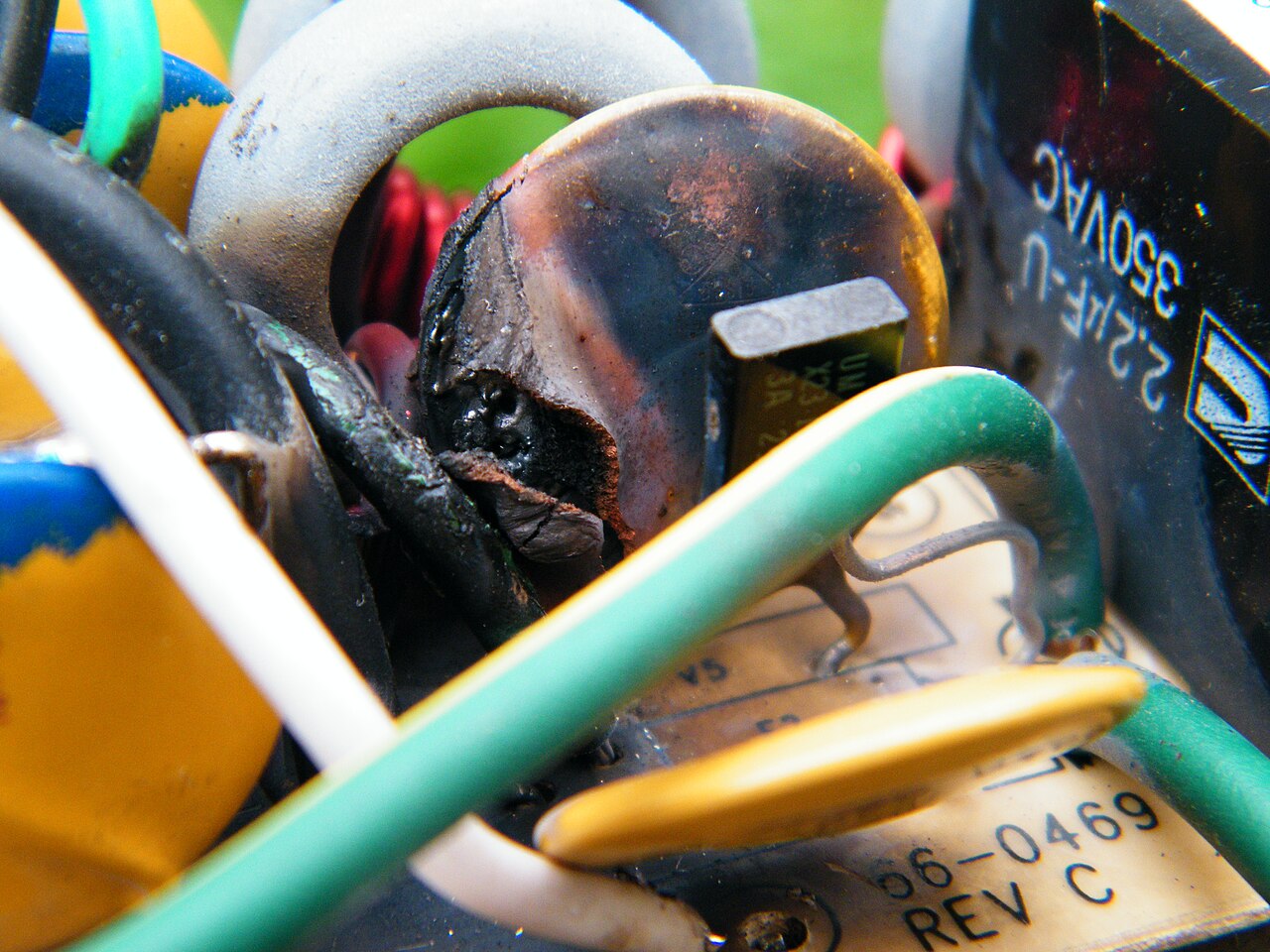
Although varistors reset after most transients, repeated or extreme surges can degrade their material and shift clamping characteristics or increase leakage. Under sustained overvoltage or repeated large-energy events a varistor can overheat, lose protective capability, or fail short-circuit; in some cases a failed varistor may require replacement and should be mounted where a failure will not create hazardous conditions. Design guidance recommends choosing a varistor with adequate margin above normal operating voltage, proper energy ratings, and, where required, thermal protection or fusible elements to prevent dangerous failures. Routine inspection or monitoring of surge-protection status is standard practice in critical installations.
For further technical details and application notes, consult component datasheets and standards from relevant electrical-safety organizations. Manufacturers provide graphs of voltage–current behavior, energy pulse ratings, and recommended mounting and coordination practices to ensure reliable protection in intended environments.
Related articles
Author
AlegsaOnline.com Varistor (Voltage-Dependent Resistor): Function, Types, and Uses Leandro Alegsa
URL: https://en.alegsaonline.com/art/104273