
Electrical substation: functions, components, types, and role in power systems
A substation is a node in the electrical power network where voltage is changed, circuits are switched and protection and control functions are performed to move electricity from generation to consumers.
An electrical substation is a specialized facility within a power network that changes voltage levels, enables switching and provides protection, control and metering of electric power. Substations link electricity generation sources to the broader grid, moving energy through high-voltage transmission lines and into local distribution systems. By transforming voltage up or down and by routing power, substations are essential for efficient, safe and reliable delivery of electricity.
Image gallery
10 Images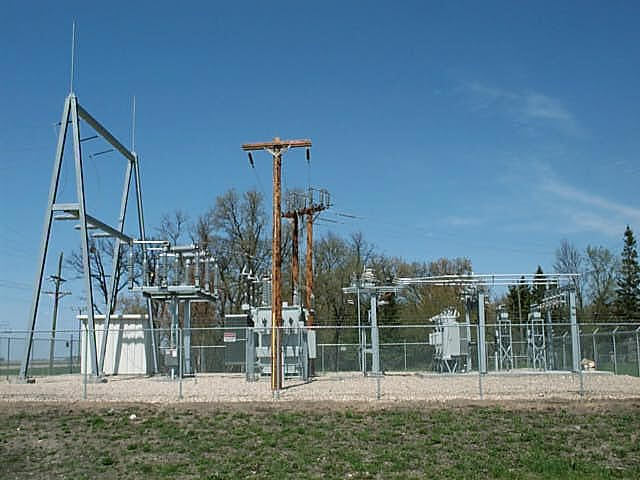


Main components and functions
Most substations contain several standard elements that together perform voltage conversion, circuit isolation and protection. A typical installation will include:
- Transformers to step voltage between transmission and distribution levels.
- Circuit breakers and switchgear to open or close circuits under normal and fault conditions.
- Busbars that collect and distribute power within the substation.
- Instrument transformers — current transformers (CTs) and potential (voltage) transformers (PTs) — used for measurement and protection.
- Protective relays and control equipment (often integrated with SCADA systems) that detect problems and command switching actions.
- Grounding systems, surge arresters and insulating structures to ensure safety and limit equipment damage.
Substation equipment can be built as air-insulated (open-air) or gas-insulated (compact, enclosed) designs; the choice depends on space, environmental and reliability requirements.
Types and typical roles
Substations are classified by their primary task. Step-up substations increase voltage at power plants for long-distance transmission; step-down substations reduce voltage for delivery to industrial, commercial and residential customers. Switching stations permit the rerouting of power without significant voltage conversion. Converter stations connect AC and DC systems. Specialized substations collect power from renewable sites, such as wind farms or solar arrays. Mobile or temporary substations are used during maintenance or emergency restoration.
Electric power often flows through multiple substations between a generating plant and an end user; voltage may be changed in several stages to minimize losses and match the requirements of different equipment and consumers.
History, importance and noteworthy considerations
Substations evolved with the expansion of alternating-current transmission in the late 19th and early 20th centuries, when transformers made voltage conversion practical and efficient. Today substations are vital infrastructure for grid stability, enabling load balancing, fault isolation and integration of new generation sources. Planning and operating substations involve considerations of reliability, protection coordination, environmental impact (noise, oil containment, SF6 handling), and security. Regular maintenance and upgrades are necessary to accommodate changing demand, introducing digital protection, automation and more compact designs in modern grids.
Related articles
Author
AlegsaOnline.com Electrical substation: functions, components, types, and role in power systems Leandro Alegsa
URL: https://en.alegsaonline.com/art/30704