
Valencian language
Valencian (valencià) is the historical name and regional variety of Catalan used in the Valencian Community; it has distinct local forms, official recognition and a long literary and social presence.
Overview
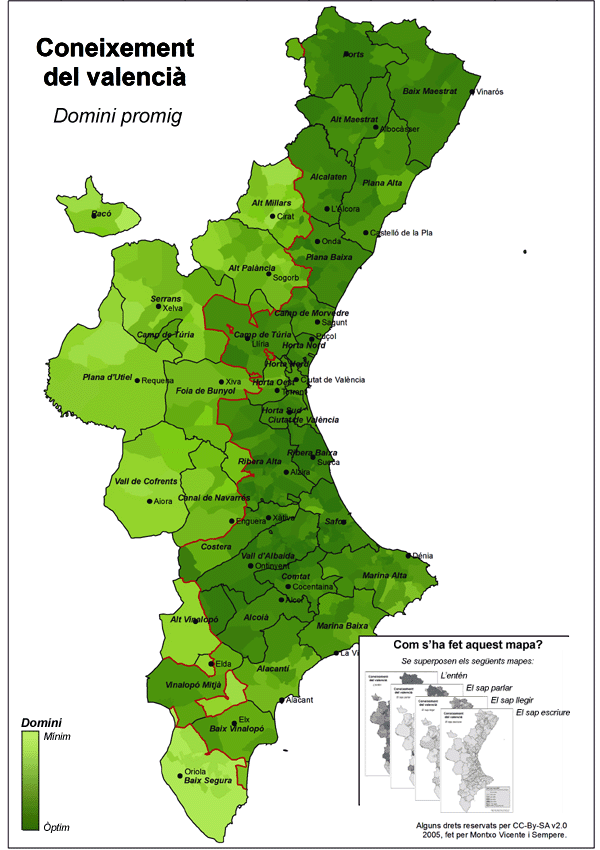
Valencian (valencià) is the traditional and official name used in the Valencian Community for the Romance variety of speech belonging to the Catalan linguistic domain. It is recognized and used in public life within the Valencian Community in Spain and is one of the regional varieties of the language spoken across the eastern Iberian coast and neighbouring territories. Valencian is most closely associated with the central and southern parts of this region.
Image gallery
5 Images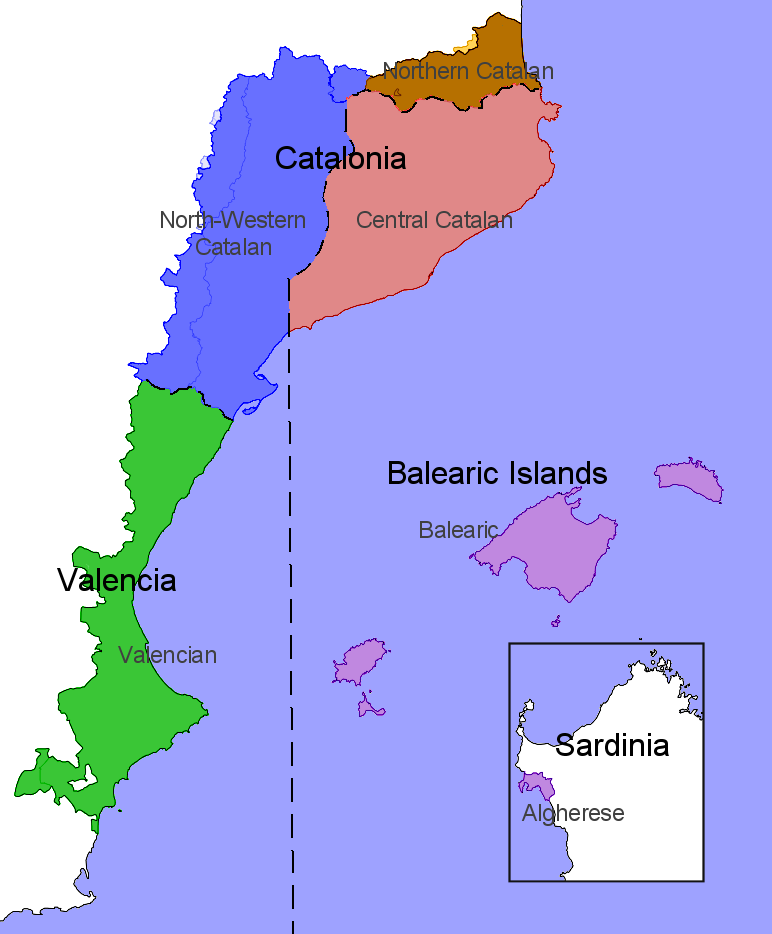


Classification and characteristics
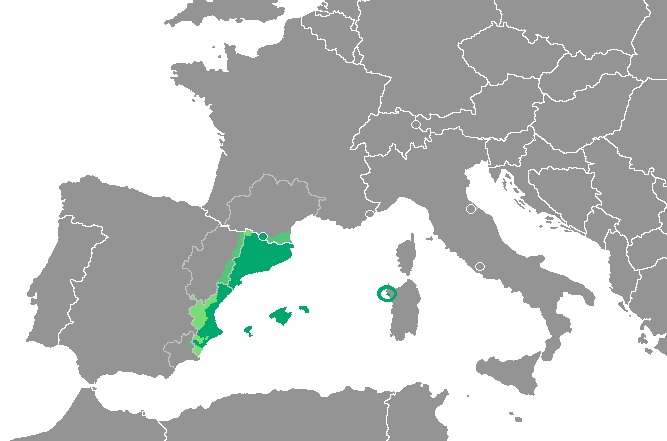
Linguistically, Valencian is part of the same linguistic continuum usually referred to as Catalan. The continuum includes speech varieties spoken in areas such as Catalonia, eastern Aragon, and the Balearic Islands. Within the Valencian area there are internal dialectal differences: local phonetic, lexical and morphosyntactic traits give Valencian its regional identity while remaining mutually intelligible with neighbouring varieties.
History and development
The language developed from Vulgar Latin brought to the eastern Iberian Peninsula in medieval times and later evolved under local conditions of settlement, administration and literature. Related forms of the language are also found beyond Spain: in Andorra, the Roussillon area of southern France, and the city of Alghero on Sardinia, where historical contacts produced distinctive local varieties.
Standardization and official status
In the Valencian Community the language enjoys co‑official status alongside Spanish and is the subject of regional language planning and education. The principal regulatory and advisory institutions that figure in debates about norms and usage include bodies such as the Acadèmia Valenciana de la Llengua and, in the wider Catalan domain, institutions like the Institut d'Estudis Catalans. Legal frameworks governing the teaching, administration and public presence of the language are important to its maintenance and everyday visibility (legal status).
Uses, literature and public life
Valencian is used across media, literature, education and local administration. It appears in newspapers, radio, television and contemporary fiction and poetry; it is taught in schools as part of bilingual programs and promoted through cultural associations. Its use varies with social context and geography, and the bulk of scholarship and corpus work is collected under broader linguistic studies that compare regional features and trace historical developments.
Distinctive points
- Valencian is one regional name for a set of varieties within the Catalan linguistic domain, with a strong regional identity and a distinct literary tradition.
- Mutual intelligibility is high across neighbouring varieties, though pronunciation, vocabulary and some grammatical forms show local particularities.
- Its official recognition and standardization have been shaped by both regional institutions and cooperation with broader Catalan linguistic bodies.
Because terminology and policy can be sensitive, modern descriptions emphasize both the shared linguistic core and the legitimate local identity of Valencian. For readers interested in further details about regional differences, historical texts or contemporary usage, primary sources and institutional publications provide the most direct information.
Related articles
Author
AlegsaOnline.com Valencian language Leandro Alegsa
URL: https://en.alegsaonline.com/art/103977
Sources
- lrec-conf.org : Evaluation of several Maximum Likelihood Linear Regression variants for language adaptation
- commons.wikimedia.org : Valencian