
V838 Monocerotis
V838 Monocerotis is an eruptive variable star in Monoceros notable for a dramatic 2002 outburst that produced a striking light echo and an extreme, temporary expansion of its outer layers.
V838 Monocerotis is an unusual eruptive star located in the direction of the Monoceros constellation. It is often described as a luminous, cool giant; contemporary reports and follow-up studies classify its outbursting object as a peculiar red giant or supergiant-like star (red giant). The event attracted wide attention because of rapid changes in brightness, size and spectrum that differed from classical novae.
Image gallery
10 Images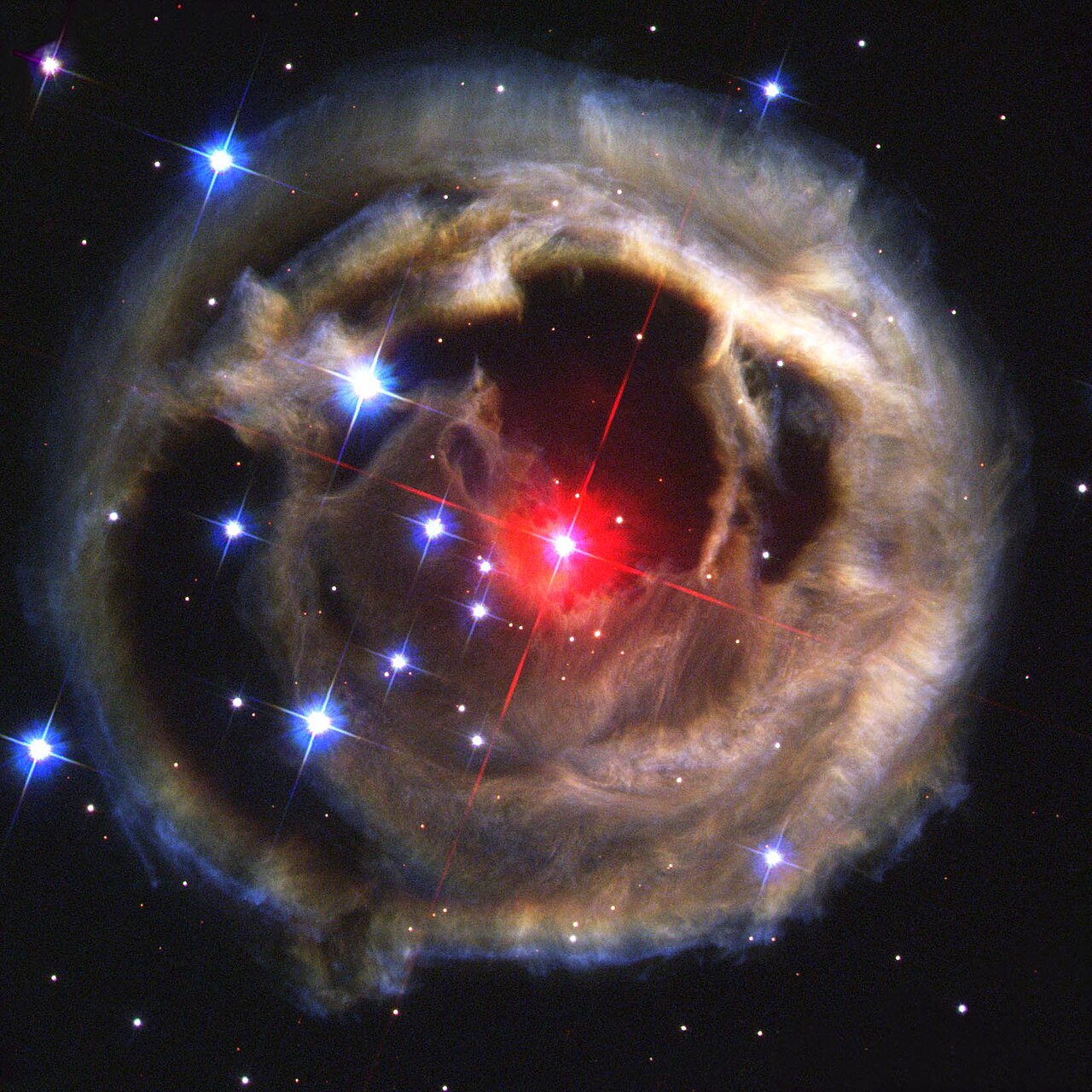





2002 outburst and observed changes
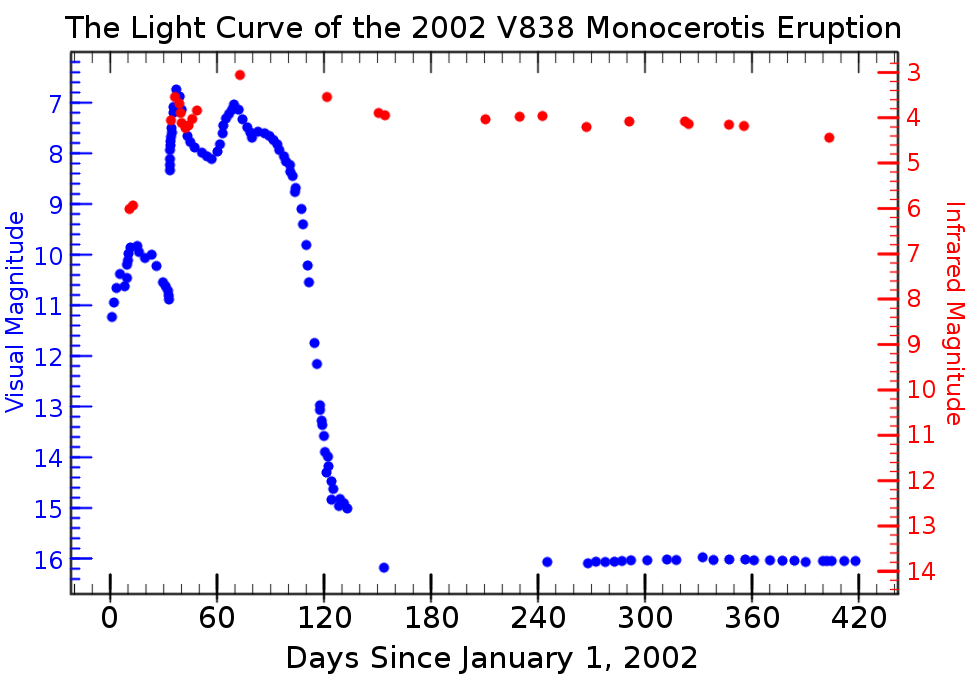
In early 2002 V838 Mon underwent a sudden luminous eruption. During the peak of the episode the star’s photosphere expanded to an enormous size compared with the Sun, with published estimates describing radii many hundreds to over a thousand times solar radius at various stages. After the brightest phase the star contracted and cooled again, accompanied by major changes in its visible spectrum and colour.
Key observational features
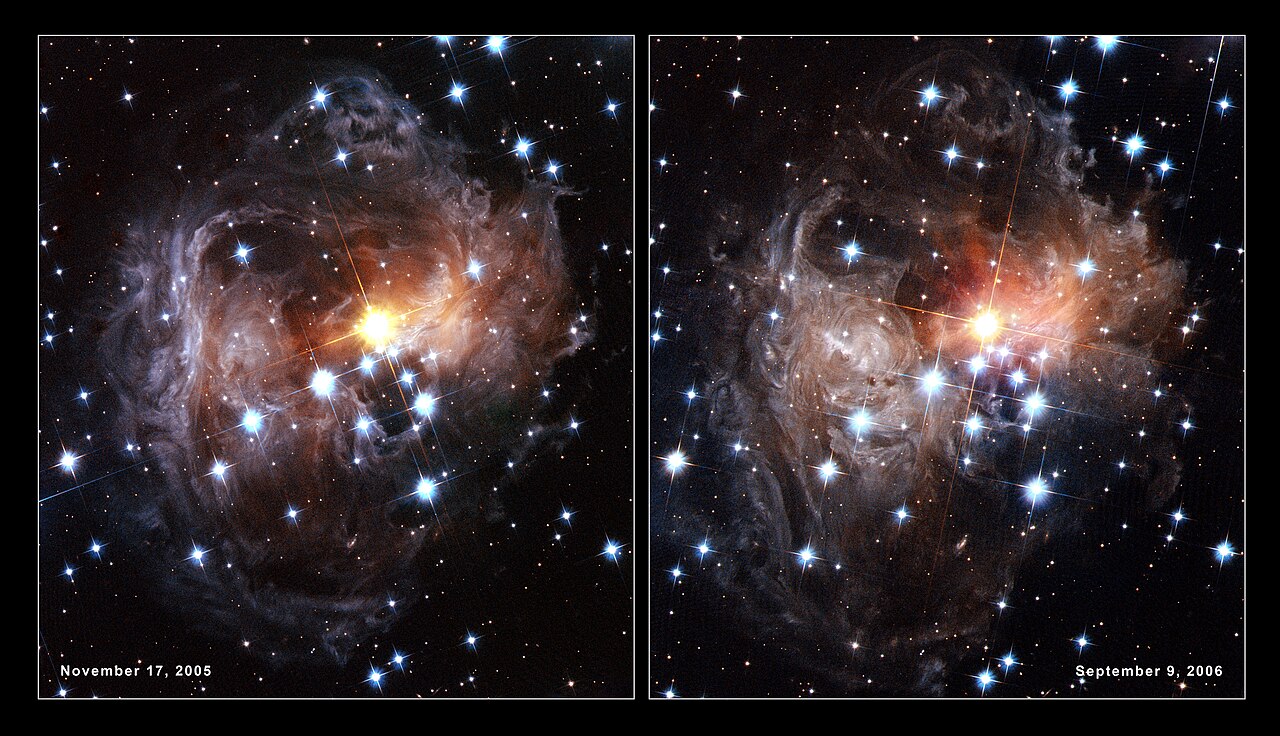
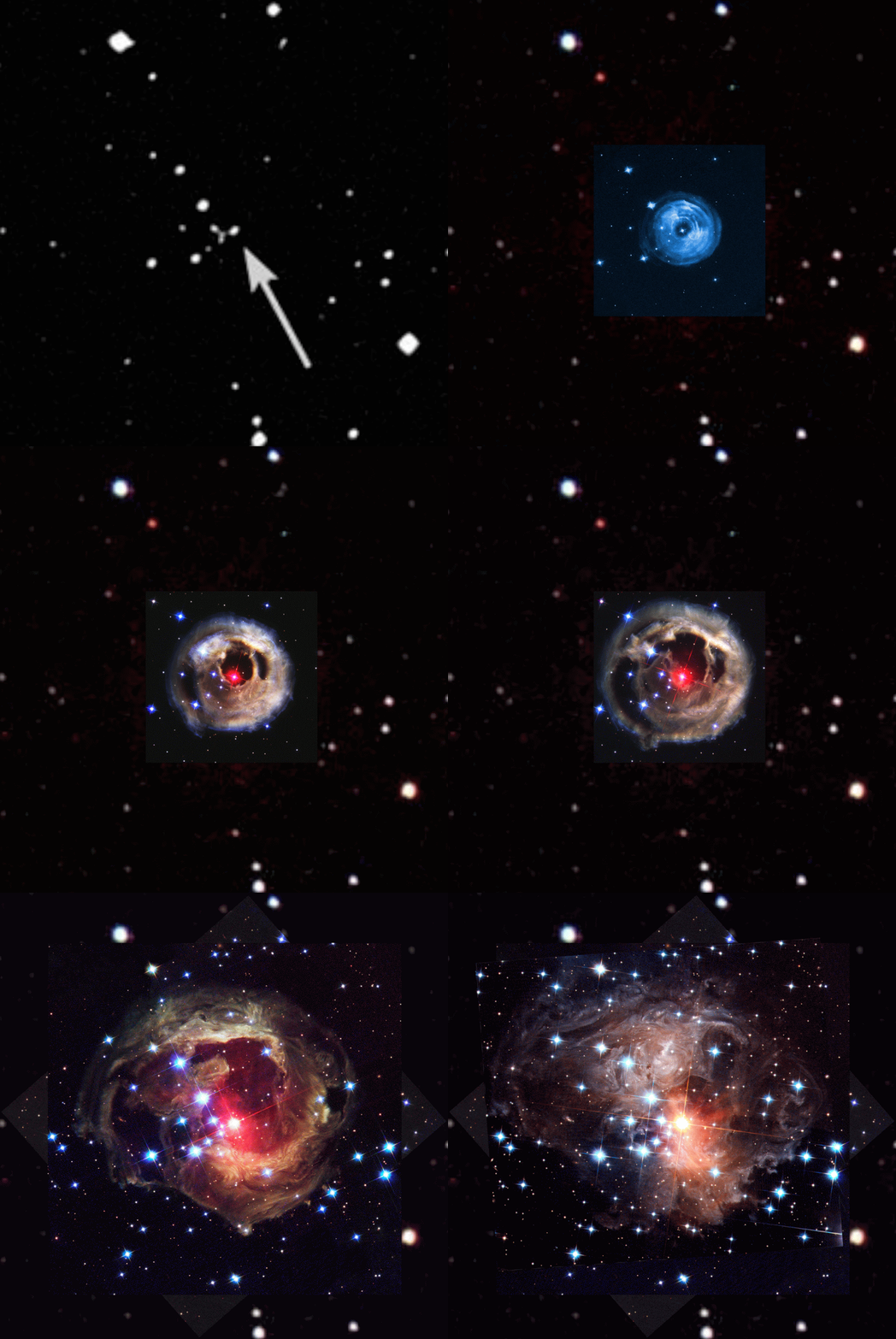
- Light echo: Dust surrounding the star was illuminated by the outburst, producing a time-variable reflection nebula captured in striking images. The expanding rings of light allowed detailed study of the circumstellar and interstellar material.
- Spectral evolution: The object rapidly evolved to very cool temperatures, displaying molecular features and appearing more like a cool supergiant than a classical nova.
- High luminosity: At maximum the object became thousands to tens of thousands of times more luminous than the Sun, though luminosity and radius estimates depend on the assumed distance.
Interpretations and significance
A leading explanation for the eruption is a stellar merger or a similar catastrophic interaction in a binary system; other proposals have included unusual thermonuclear surface events or late-stage stellar activity. V838 Mon is often discussed alongside a small set of objects sometimes referred to as luminous red novae, a class characterized by red colours and large expansions rather than the hot, fast ejecta of classical novae.
Why astronomers study it
V838 Mon remains important because its light echo provided a 3D view of dust around the star and a laboratory for studying transient stellar phenomena. The object challenged existing eruption models and encouraged work on how binary interactions, mergers, or envelope instabilities can produce dramatic, cool outbursts. Its behavior continues to be cited in reviews of eruptive stellar transients and the diversity of stellar end states.
Related articles
Author
AlegsaOnline.com V838 Monocerotis Leandro Alegsa
URL: https://en.alegsaonline.com/art/103824