
Turkmen language: overview, history, features and distribution
Turkmen is an Oghuz Turkic language spoken primarily in Turkmenistan and by communities in Afghanistan, Iran and the wider diaspora; it has distinctive phonology, agglutinative grammar and several writing traditions.
Overview
Turkmen is a Turkic language of the Oghuz branch and serves as the national language of Turkmenistan. It is the first language of the majority in that country and is also spoken by communities beyond its borders. Estimates place native speakers at roughly seven million in Turkmenistan, with additional populations in neighboring countries and diasporas.
Image gallery
6 Images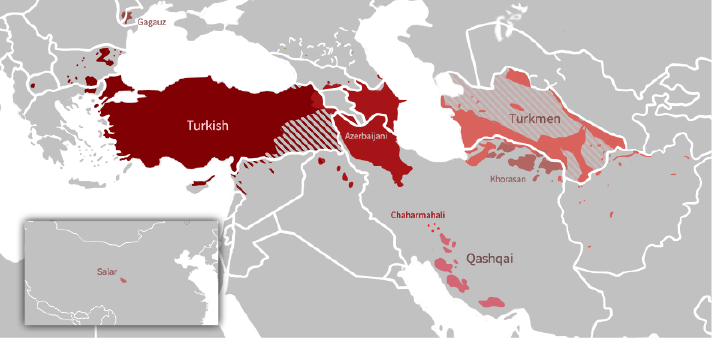



Characteristics
Like other Turkic languages, Turkmen is agglutinative: grammatical relations and meanings are expressed primarily by attaching suffixes to word stems. It generally follows subject–object–verb word order, has no grammatical gender, and makes extensive use of vowel harmony, where vowels within a word harmonize according to front/back and rounding features. The language has a rich vowel inventory and a consonant system familiar to speakers of related Oghuz languages.
Writing systems
Turkmen has been written in several scripts across its history. Before modern reforms many texts used Arabic-based orthographies. During the 20th century orthographic policies changed—Latin and Cyrillic alphabets were used at different times—and, after Turkmenistan's independence, authorities promoted a Latin-based standard. Cyrillic remains in use among some communities and older publications.
History and relationships
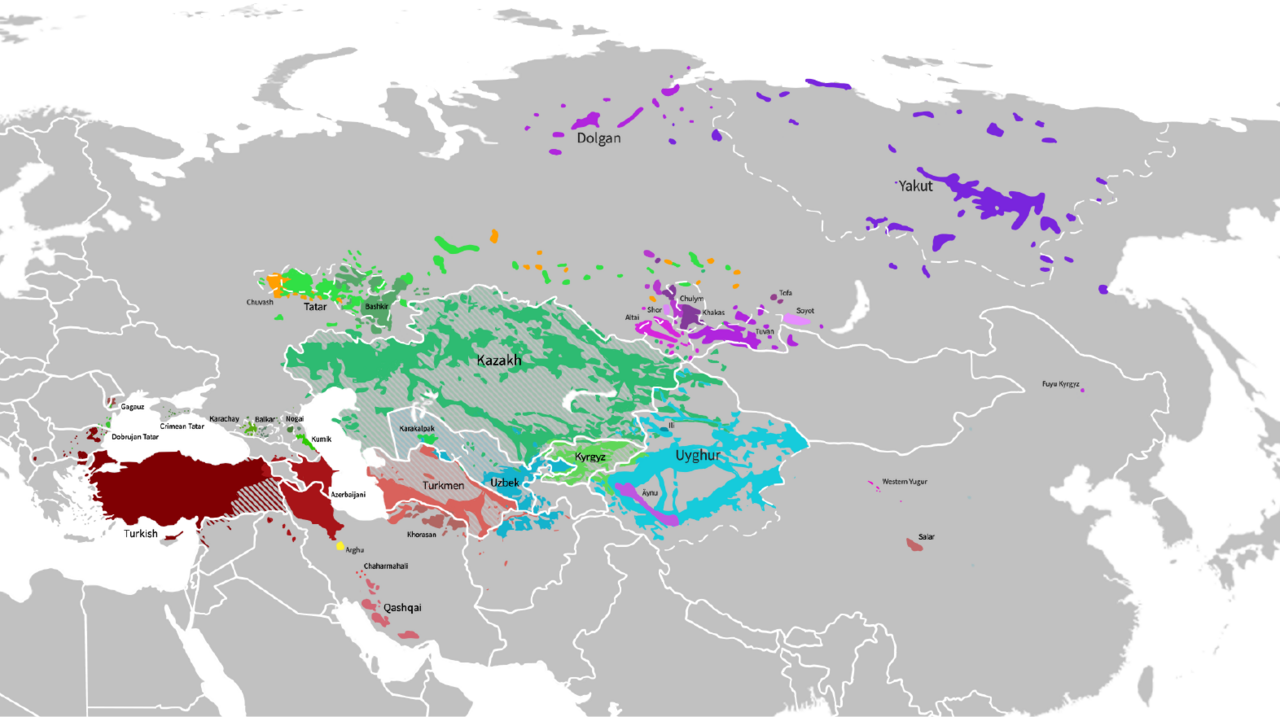
Turkmen developed from earlier Turkic stages within the Oghuz group and is closely related to Azerbaijani and Turkish, sharing a large portion of basic vocabulary and grammar while preserving its own phonetic and lexical features. Historical contacts with Persian, Russian and regional languages have left loanwords and influenced styles of expression.
Distribution and dialects
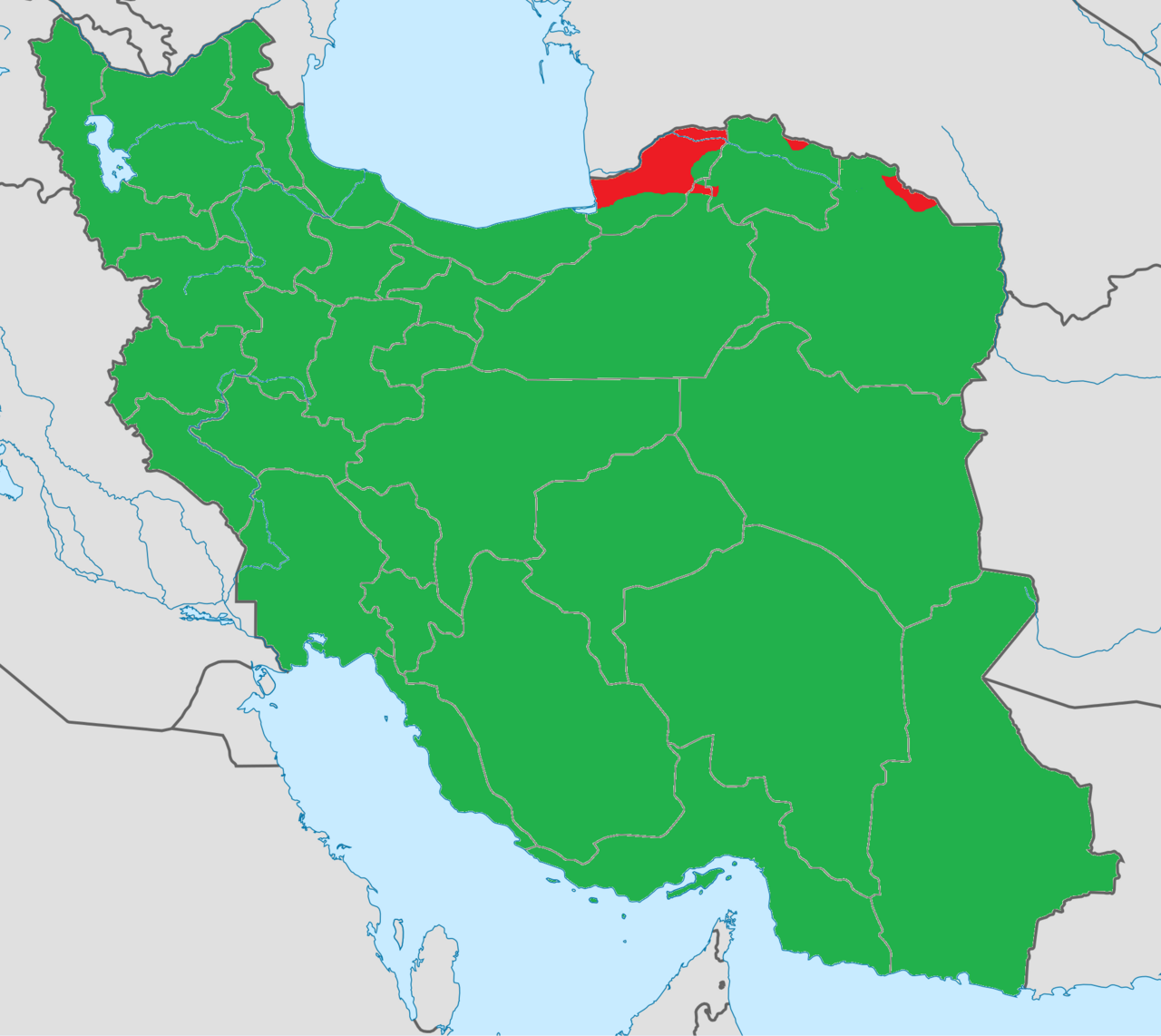
Beyond Turkmenistan, speakers live in northwestern Afghanistan, northeastern Iran and in diasporas across Central Asia, Russia and Turkey. Within the language there are regional varieties and tribal dialects; standard Turkmen used in education and broadcasting is based on urban norms but local speech can differ in pronunciation and some vocabulary.
Uses and cultural importance
Turkmen is used in government, education, print and broadcast media, literature and daily life in Turkmenistan. A growing body of modern literature, journalism and digital media is written in the official orthography, while older and community materials may appear in Cyrillic or Arabic-derived scripts. Its role as a marker of ethnic and national identity makes it central to cultural life among Turkmen speakers.
Related articles
Author
AlegsaOnline.com Turkmen language: overview, history, features and distribution Leandro Alegsa
URL: https://en.alegsaonline.com/art/102112
Sources
- wikidata.org : wikidata.org/wiki/Q9267
- id.ndl.go.jp : 00573447