
Turkmen Soviet Socialist Republic
A constituent republic of the USSR from 1925 to 1991, the Turkmen SSR occupied present-day Turkmenistan; this article summarizes its history, geography, society, economy and legacy.
Overview: The Turkmen Soviet Socialist Republic was a union republic of the Soviet Union in Central Asia between the 1920s and 1991. Often shortened to Turkmenia or Turkmenistan in contemporary sources, its official names appear in local and Russian forms, for example the Turkmen form is recorded as Türkmenistan Sowet Sotsialistik Respublikasy and the Russian form as Turkmenskaya Sovetskaya Sotsialisticheskaya Respublika. It was one of several Central Asian republics created as the Soviet state reorganized the region in the 1920s and remained an administrative and political unit until dissolution of the USSR.
Image gallery
3 Images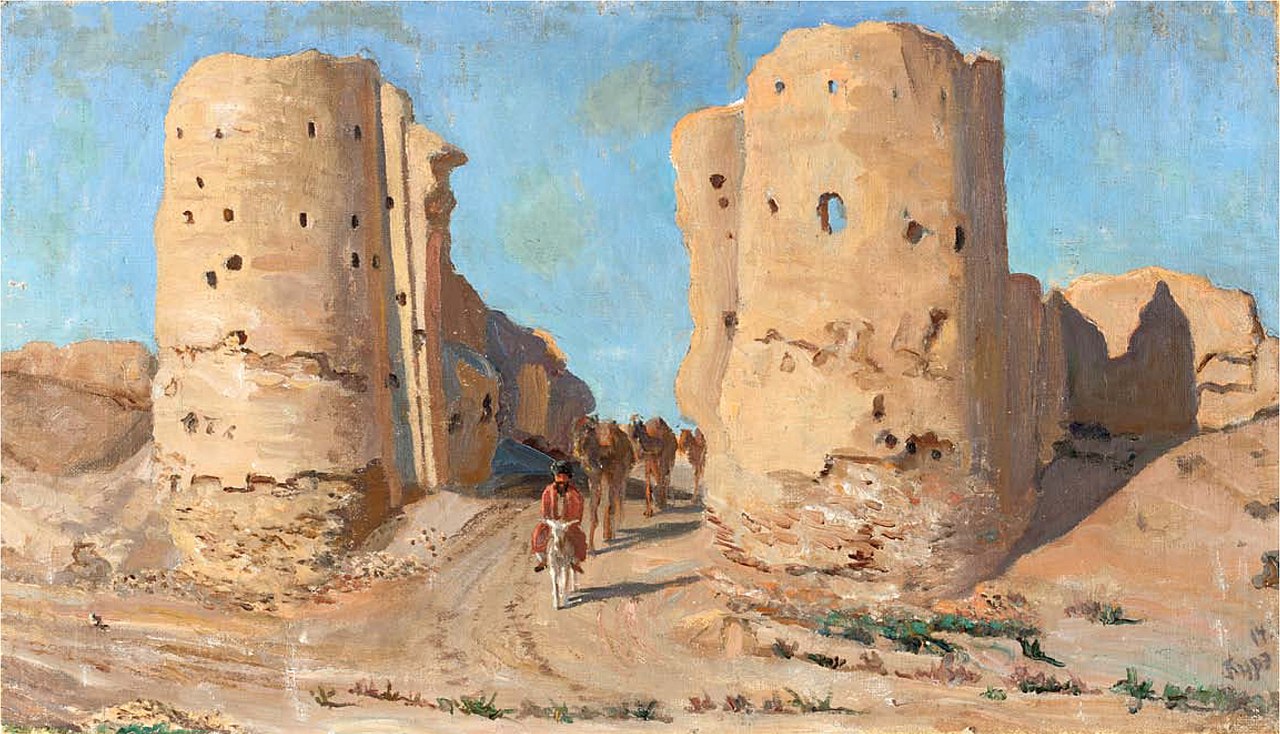


Geography and population
The republic covered the territory of modern Turkmenistan, stretching from the Caspian Sea on the west to desert and steppe in the interior. It bordered Iran and Afghanistan to the south, Kazakhstan to the north and Uzbekistan to the east, with a Caspian coastline to the west. Its population was predominantly ethnic Turkmen, with significant Russian, Uzbek and other minorities; Turkmen and Russian were the principal languages used in government and education.
Formation and political development
Administrative reorganization began after World War I and the Russian Revolution. A Turkmen administrative entity emerged in the early 1920s and, following territorial delimitations across Central Asia, the Turkmen Soviet Socialist Republic was proclaimed as a constituent republic of the USSR on 13 May 1925. Over subsequent decades Soviet institutions—party structures, local soviets and central planning bodies—shaped political life. In the late Soviet period the republic declared state sovereignty on 22 August 1990 and adopted independence on 27 October 1991, becoming the modern state of Turkmenistan.
Economy and society
Under Soviet rule the economy was reoriented toward collectivized agriculture and industrial development. Cotton cultivation became a dominant crop promoted by central planners, and large irrigation and infrastructure projects — including canals and roads — transformed traditional nomadic patterns. Natural resource extraction, particularly oil and natural gas, was developed for both local industry and export within the Soviet system. Urban centers such as the capital, Ashgabat, expanded as administration, education and industry concentrated there.
Culture and legacies
Soviet policies affected language, education and religion: secular, Russian-language institutions were promoted alongside local-language schooling. Turkmen cultural traditions—tribal identities, carpet weaving, music—persisted, often reframed within official Soviet cultural structures. The republic's legacy includes physical infrastructure, demographic changes, and environmental costs from intensive cotton irrigation. Its transition to independence reshaped political leadership and international orientation.
Notable facts and distinctions
- The Turkmen SSR was formed from earlier administrative units created in the early 1920s as the Soviet government redrew Central Asian borders.
- Its economy combined large-scale agriculture with resource extraction; Soviet planning prioritized cotton and energy production.
- The republic's territory corresponds closely to the present borders of independent Turkmenistan, and its independence date in 1991 marks the end of its Soviet era.
- For further contextual reading on Soviet republics and regional history see related entries: other Soviet republics, the Soviet Union, and a modern perspective on relations with neighboring Iran via Iran.
The period of the Turkmen SSR is a key chapter in the modern history of Central Asia, illustrating how Soviet governance reshaped societies, economies and borders; its institutions and projects continued to influence the region after 1991. For introductory resources and primary-source collections consult regional historical surveys and archival materials linked in specialist guides such as Turkmen language resources and comparative studies of Soviet nationalities policies (USSR studies).
Questions and answers
Q: What was Turkmen Soviet Socialist Republic?
A: Turkmen Soviet Socialist Republic (Turkmenistan) was one of the constituent republics of the Soviet Union in Central Asia. It existed as a republic from 1925 to 1991.
Q: What were the borders of Turkmenia?
A: Geographically, Turkmenia bordered Iran and Afghanistan to the south, Kazakhstan to the north, and Uzbekistan to the east. Additionally, Turkmenia was a landlocked country; however, it had access to the Caspian Sea in the west.
Q: When was the Turkmen ASSR promoted to a union republic of the USSR?
A: On 13 May 1925, Turkmen ASSR was promoted to a union republic of the USSR as the Turkmen SSR.
Q: When did Turkmenia declare its state sovereignty?
A: On 22 August 1990, Turkmenia declared its state sovereignty, which means that its laws have a priority over the Soviet laws.
Q: When did Turkmenia declare its independence and what was the new name given?
A: On 27 October 1991, Turkmenia declared its independence and Turkmen SSR was renamed to Turkmenistan.
Q: What were the neighboring countries of Turkmenia?
A: Turkmenia bordered Iran and Afghanistan to the south, Kazakhstan to the north, and Uzbekistan to the east.
Q: What was the significance of 7 August 1921 and 13 May 1925 in the history of Turkmenistan?
A: On 7 August 1921, Turkmen Oblast of the Turkestan ASSR was established before being made the Turkmen ASSR on 13 May 1925, which was promoted to a union republic of the USSR as the Turkmen SSR.
Related articles
Author
AlegsaOnline.com Turkmen Soviet Socialist Republic Leandro Alegsa
URL: https://en.alegsaonline.com/art/102114
Sources
- lcweb2.loc.gov : Turkmenistan: A Country Study
- worldcat.org : 45380435