
Tupolev Tu-95 — Soviet long-range turboprop strategic bomber (Bear)
The Tupolev Tu-95 (NATO: Bear) is a long-range Soviet/Russian turboprop strategic bomber and missile carrier, introduced in the 1950s and notable for its contra-rotating propellers and long service life.
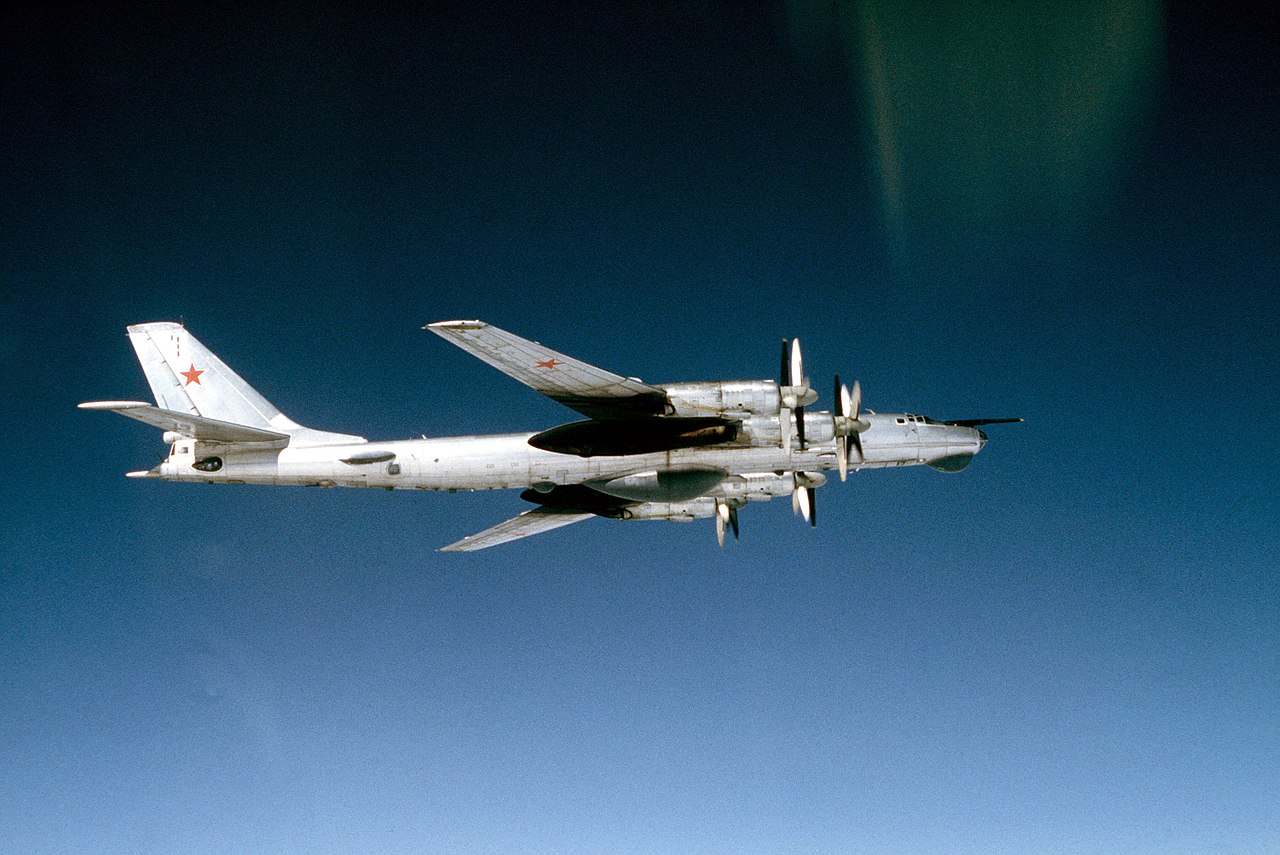
The Tupolev Tu-95 is a long-range strategic bomber developed by the Soviet Union in the early Cold War era. Known to NATO as the "Bear," the aircraft combined long endurance, intercontinental range and a distinctive propulsion arrangement of turboprop engines with contra-rotating propellers. Designed for strategic nuclear strike and later adapted for cruise missiles, maritime patrol and reconnaissance, the Tu-95 remained a visible element of Soviet and then Russian long-range aviation for decades. For a concise overview see NATO reporting name and basic profile.
Image gallery
10 Images




Design and defining characteristics
The Tu-95 features a swept wing, a large airframe optimized for long-duration flight and a tail turret in early models. Its propulsion consists of four powerful turboprop engines, each driving a pair of contra-rotating propellers; this arrangement gives the aircraft an unusual exterior noise signature and efficient cruise at medium-high subsonic speeds. Typical published figures place its cruise and top speeds in the several-hundred-mile-per-hour range and its unrefueled range as intercontinental — often cited in public sources as thousands of miles. Engineering details and performance numbers are discussed in many technical summaries and archives and summaries of Cold War-era strategic aircraft.
Payload, armament and upgrades
Originally conceived to carry free-fall nuclear weapons and conventional ordnance, the Tu-95 was subsequently adapted to carry air-launched cruise missiles, increasing its standoff strike capability. Over time the platform underwent modernization programs that replaced or upgraded avionics, defensive systems and weapon suites. Modernized variants have been configured specifically as missile carriers, maritime patrol aircraft and for electronic intelligence roles; a detailed review of variants and their armament can be found at variant and weapons summaries.
Variants and roles
- Strategic bomber versions — long-range strike and nuclear roles.
- Missile-carrier variants — adapted to deliver long-range cruise missiles.
- Maritime patrol and anti-submarine variants — developed as the Tu-142 for naval use.
- Reconnaissance and electronic intelligence versions — used for surveillance and patrol.
Descriptions of the maritime and naval derivatives, including service with naval aviation forces, are summarized in specialist references naval derivative notes and fleet records service with Russian air and naval units.
Development, service history and longevity
The Tu-95 first flew in the early 1950s and was introduced into Soviet service in the mid-1950s. It served throughout the Cold War as a principal element of Soviet long-range aviation, conducting patrols, exercises and strategic deterrence missions. Following the end of the Cold War the type was retained and modernized by the Russian Air Force and continued to operate in roles that exploit its range and payload. Open sources describe ongoing upgrades and overhauls aimed at keeping selected airframes operational; projections about how long the type will remain in service vary and some reports suggest the airframe could remain in use into the 2030s–2040s current service status and modernization programmes.
Notable facts and distinctions
The Tu-95 remains unusual among strategic bombers for its use of turboprop engines at a time when many contemporaries used turbojets or turbofans. Its contra-rotating propellers and long-range capability give it a distinctive profile and acoustic footprint. The type has been the subject of public attention both for Cold War-era patrols and for later long-range flights that prompted international intercepts and monitoring; further reading on operational incidents and broader historical context is available in operational histories and in assessments of long-range aviation policy on service life projections.
Related articles
Author
AlegsaOnline.com Tupolev Tu-95 — Soviet long-range turboprop strategic bomber (Bear) Leandro Alegsa
URL: https://en.alegsaonline.com/art/102047
Sources
- aviation.ru : aviation.ru/Tu/95/Tu-95.html
- lenta.ru : lenta.ru/articles/2007/07/19/tu95/