
Type 14 105 mm cannon (Imperial Japanese Army field gun)
A Japanese-designed 105 mm field cannon introduced in the mid-1920s. The Type 14 was the IJA's first indigenous medium-caliber gun and the first to use a split-trail carriage; it was later replaced by the Type 92.
Overview
The Type 14 105 mm cannon, often called the "10-cm" gun in contemporary sources, was a field artillery piece adopted by the Imperial Japanese Army. Designated "Type 14" under the Japanese system, it was developed as the army's first domestically produced medium-caliber gun intended for long-range fire support and counterbattery roles.
Image gallery
6 Images


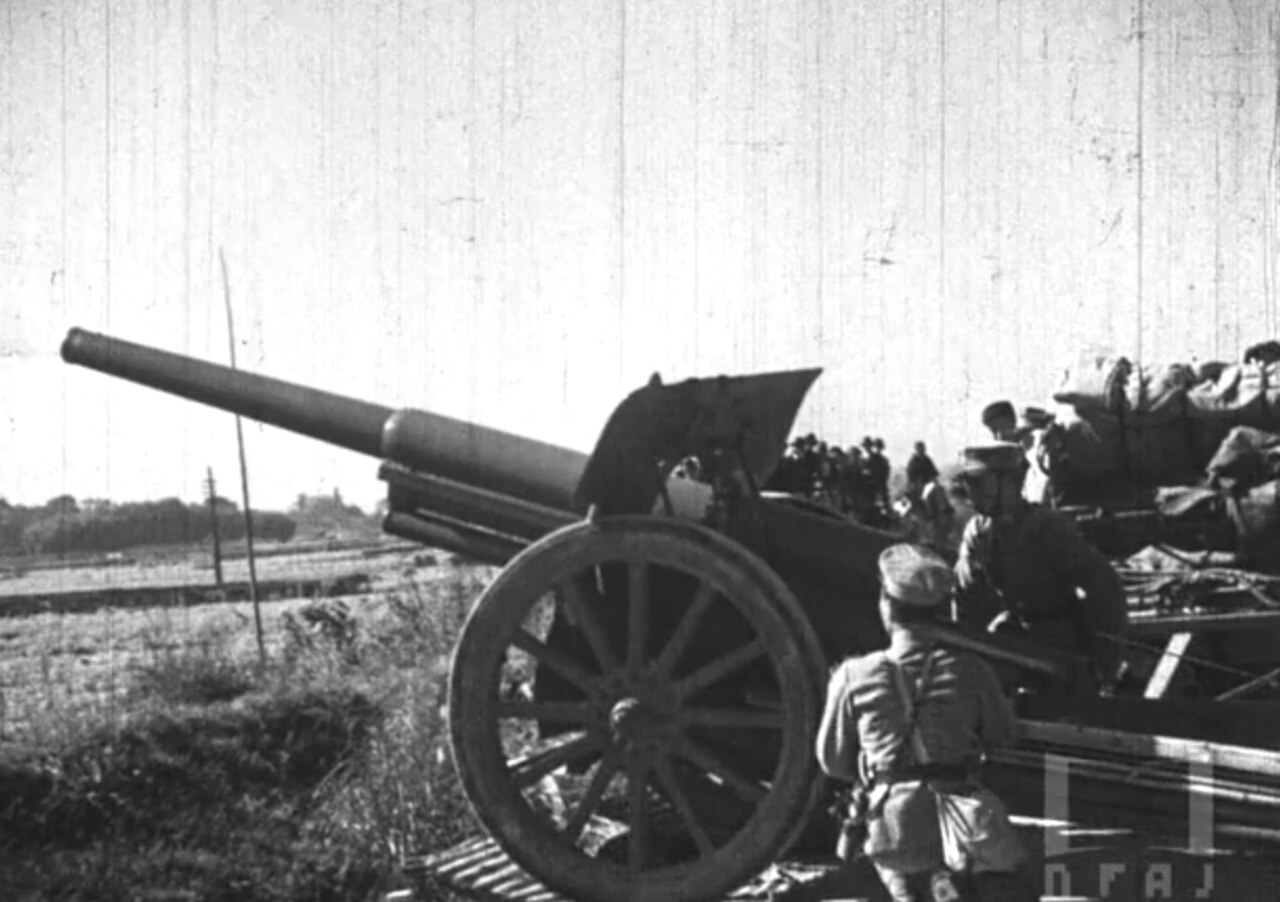

Design and characteristics
The weapon fired 105 mm projectiles and incorporated a number of features that represented advances for Japanese artillery design at the time. Notably, the Type 14 was the first medium-caliber gun produced in Japan to use a split-trail carriage, which allowed a wider angle of traverse and improved stability when firing. As with other contemporary field guns, it combined a rifled barrel, recoil mechanism, and a carriage designed for towing by horse or motor traction.
Development and historical context
Developed in the years after World War I, the Type 14 emerged from Japan's effort to modernize and domesticize its artillery inventory rather than rely solely on foreign designs. The "Type 14" designation corresponds to the fourteenth year of the Taishō era (1925) in the Japanese system of type names. The gun represented an important step toward independent artillery design and manufacturing capability.
Operational use and assessment
The Type 14 served with Japanese field units but was not universally regarded as a success. In service it did provide long-range firepower, however subsequent evaluations led the army to seek improved ballistic performance, mobility, and production suitability. Reports from the period indicate the weapon did not fully meet evolving tactical and logistical requirements, which prompted further development.
Replacement and legacy
By the early 1930s the Type 14 was largely superseded by newer designs, most notably the Type 92 105 mm cannon, which became the standard Japanese 105 mm field gun in later conflicts. The Type 14's primary legacy is its role as a transitional design: it was the first successful effort to produce a medium-caliber gun in Japan and introduced the split-trail carriage concept to Japanese artillery practice.
Notable facts and further reading
- The piece is sometimes described simply as a "10-cm" gun in period documents and unit records.
- Its development illustrates Japan's interwar shift toward indigenous arms production and modernization of the Imperial Japanese Army's artillery forces.
- For general context on artillery types and terminology see introductory resources on cannon and field pieces, or broader overviews of artillery.
Related articles
Author
AlegsaOnline.com Type 14 105 mm cannon (Imperial Japanese Army field gun) Leandro Alegsa
URL: https://en.alegsaonline.com/art/102329
Sources
- books.google.com : Japanese Army in World War II: Conquest of the Pacific 1941-42, p. 50
- simple.wiktionary.org : reign
- ibiblio.org : "Model 14 105 mm cannon,"