
Turtle ship (Geobukseon): Korean warship of the Imjin War
A covered, oared warship developed in 16th-century Korea. Noted for its protective deck, multiple cannon ports and role under Admiral Yi Sun-sin during the Japanese invasions (Imjin War).
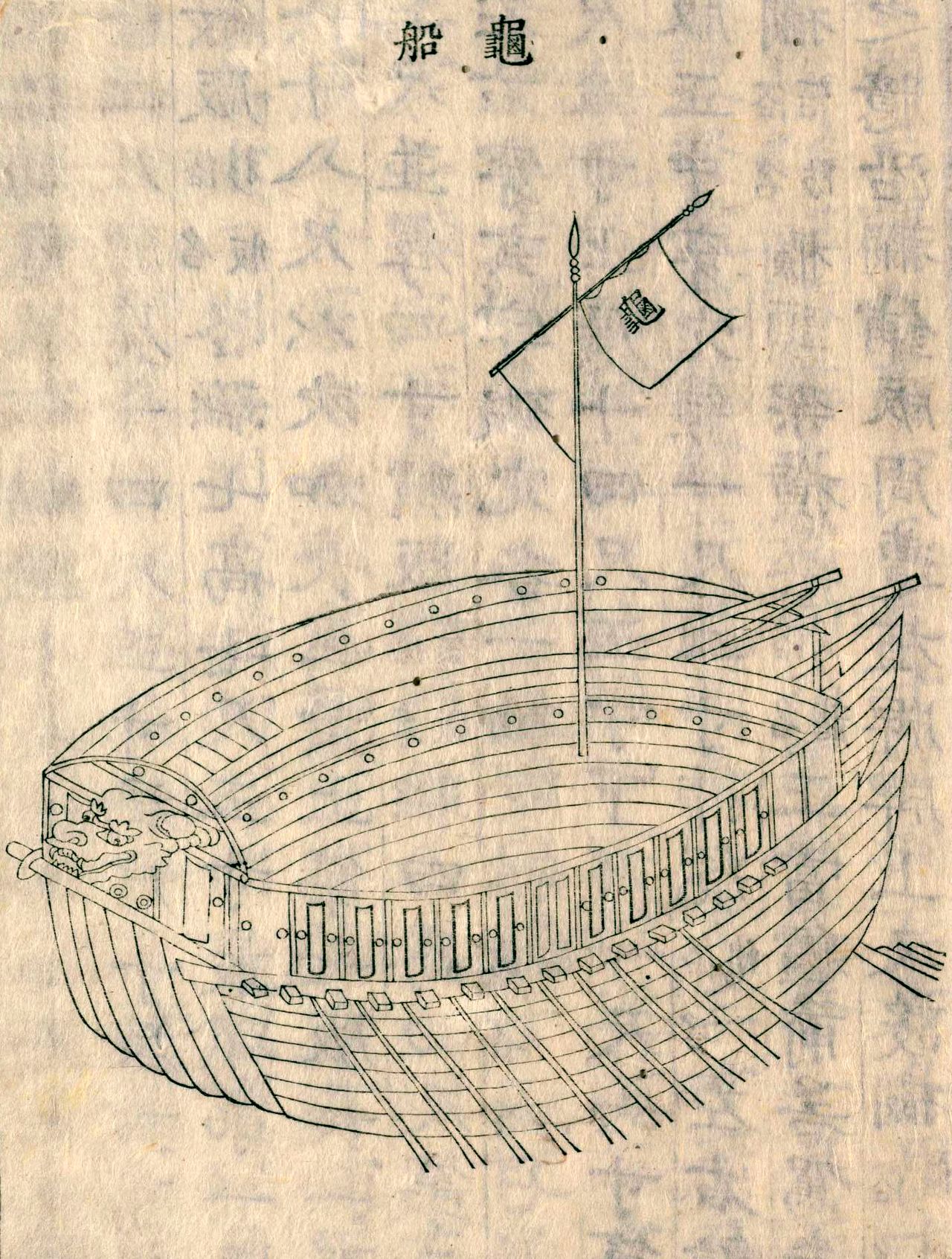
The turtle ship, known in Korean as the Geobukseon, is a distinctive type of armed vessel developed in Korea in the late 16th century. Its common English name derives from the low, rounded covered deck that resembled a turtle's shell. Built for coastal and nearshore naval warfare, the design emphasized protection against boarding, concentrated cannon fire and close manoeuvring.
Image gallery
7 Images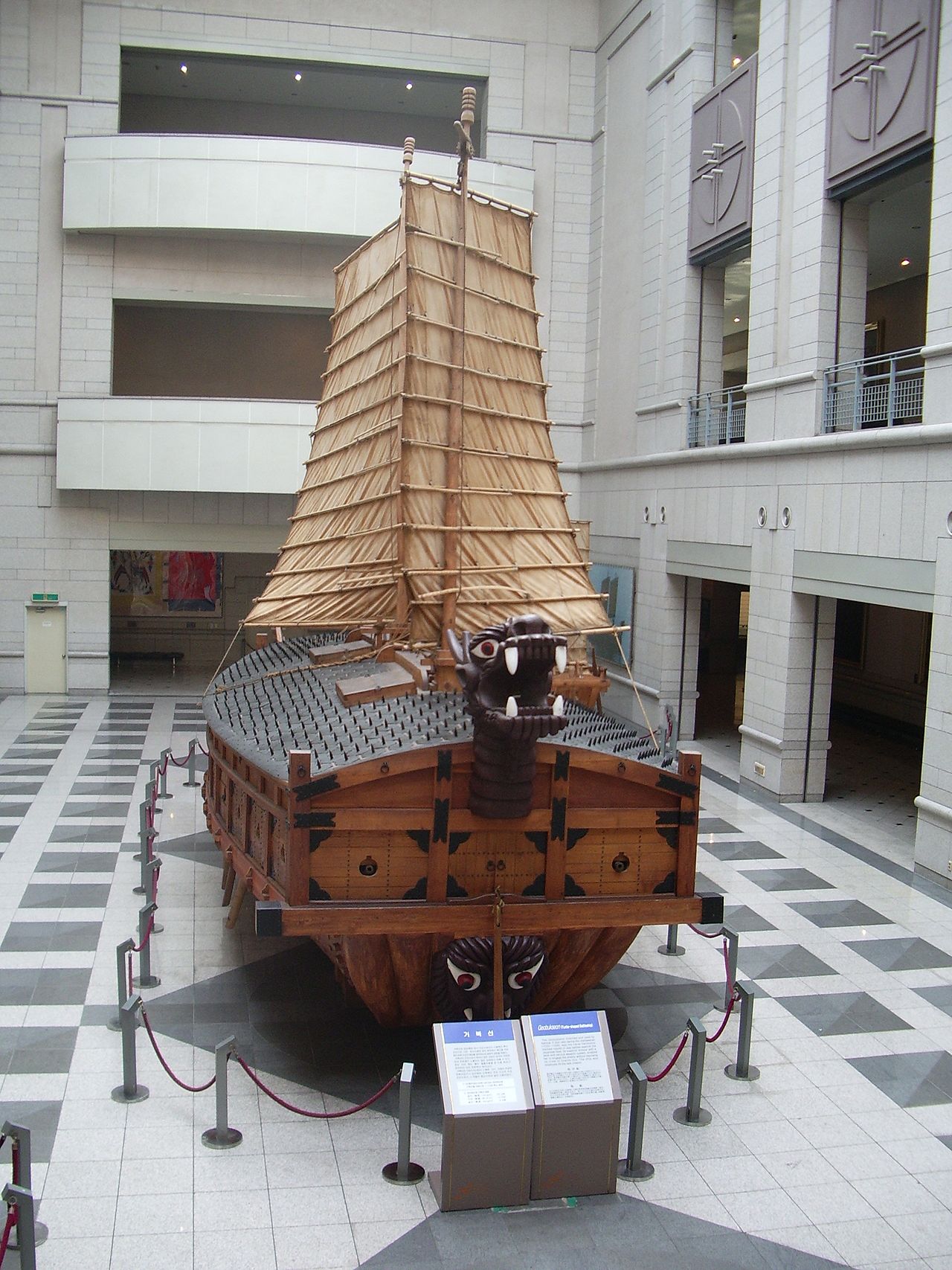




Design and characteristics
Typical features attributed to the turtle ship include:
- a covered, decked hull that sheltered crew and guns from arrows and boarding; the roof was often described as plated or reinforced;
- rows of gun ports along the sides and at the prow and stern, enabling broadside and forward fire;
- a pronounced beak or ram at the bow for striking enemy hulls and breaking oars;
- oars and sails for propulsion, giving good manoeuvrability in coastal waters;
- decorative or functional features such as a dragon-shaped head at the bow in some accounts, used to inspire crews or conceal weapons.
History and development
The Geobukseon is most closely associated with Admiral Yi Sun-sin and the naval campaigns of the Imjin War (1592–1598), when Korean forces resisted Japanese invasions. Admiral Yi and his officers adapted existing Korean shipbuilding techniques, notably the panokseon, and incorporated heavy artillery to achieve superior firepower and protection in engagements against Japanese vessels.
Historical records and later reconstructions vary on specific details. For example, some contemporary accounts mention metal fittings or plates, but modern historians debate the extent and distribution of any iron reinforcement. Archaeological evidence is limited, so careful interpretation of the written sources is necessary.
Uses, impact and legacy
Turtle ships were employed to break enemy formations, protect boarding parties and deliver devastating close-range cannon fire. They played a role in several key victories that helped maintain Korean control of coastal waters during the Imjin War and are frequently cited for their tactical and psychological effects on opponents.
In modern times the turtle ship has become a national symbol of Korean naval ingenuity and resistance. Reconstructions and models appear in museums and memorials, and the name "turtle ship" is widely used in popular histories and education. For further general information see turtle ship.
Related articles
Author
AlegsaOnline.com Turtle ship (Geobukseon): Korean warship of the Imjin War Leandro Alegsa
URL: https://en.alegsaonline.com/art/102148
Sources
- encyber.com : encyber.com/search_w/ctdetail.php?gs=ws&gd=&cd=&d=&k=&inqr=&indme=&p=1&q=%B0%C5%BA%CF%BC%…
- gbsun.com : gbsun.com