
Troubadour: medieval lyric poets and performers of Occitania
Medieval composer-performers from Occitania who wrote and sang Old Occitan lyric poetry—often about chivalry, courtly love, and satire—active chiefly in the High Middle Ages.
Overview
Troubadours were composer-performers of lyric poetry who wrote in Old Occitan and performed across courts and public settings in medieval southern France and neighbouring regions. They created monophonic songs that combined words and melody for audiences of nobles and urban listeners. A woman who performed in the same tradition is known as a trobairitz.
Image gallery
10 Images



Characteristics and common themes
Troubadour repertoire covered several thematic veins. Many pieces celebrated feudal values and the ideals of chivalry, while a large portion treated the nuances of courtly love—a stylized form of romantic longing shaped by social codes. Other works were moral or political commentaries, and some were comic or obscene satires aimed at rivals or public figures; these coexisted with more serious songs and debates.
Forms, performance and instruments
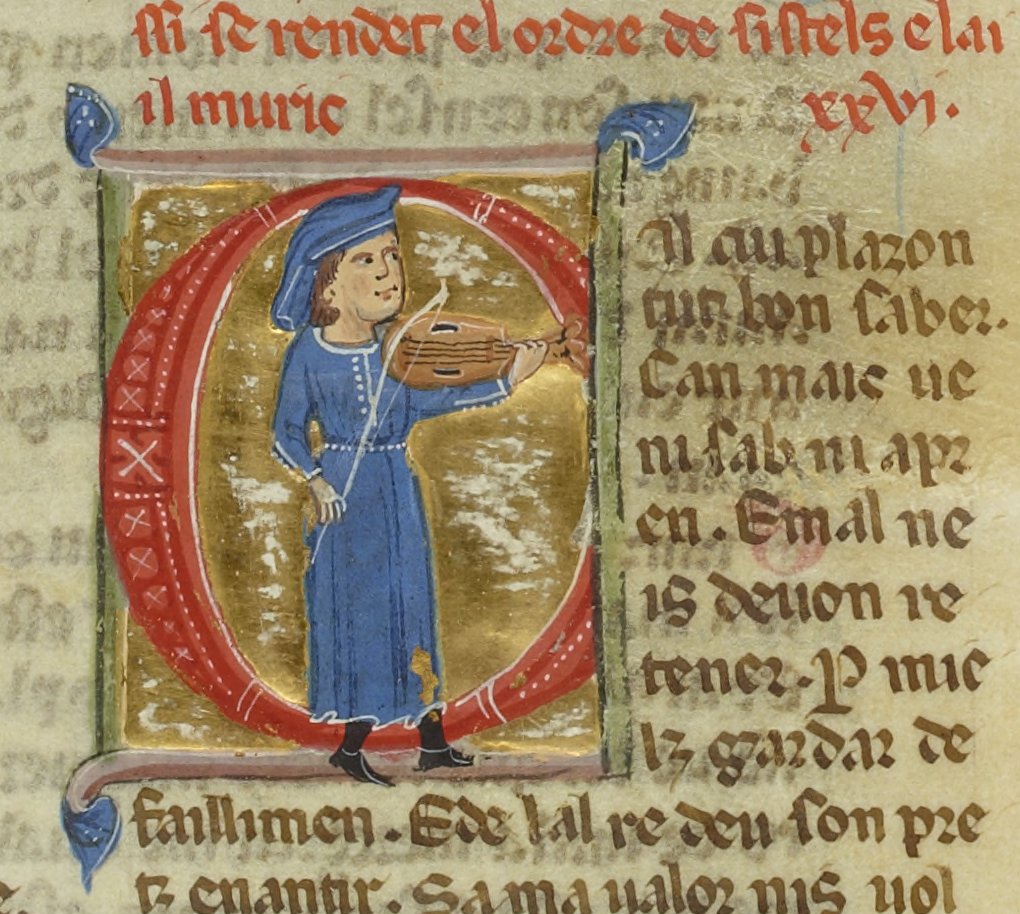
Several fixed poetic and musical forms developed in the troubadour tradition, including the canso (love song), the sirventes (political or moral poem), the tenson (a poetic debate), and the pastorela (a dialogue with a shepherdess). Performances were usually monophonic; surviving manuscripts preserve melodies for many songs. Troubadours might accompany themselves or be accompanied by instruments such as the vielle, small harp, or medieval lute.
- Typical genres: lyric songs, debate pieces, and satirical poems.
- Language: Old Occitan, the literary tongue of southern France.
- Context: active in the High Middle Ages in courtly and civic spaces.
Origins, spread and decline
The troubadour movement emerged in the 11th–12th centuries around the courts of Aquitaine, Provence and Catalonia and spread through patronage networks of nobles and clerics. Its influence reached northern France, Iberia and Italy, inspiring local traditions. The tradition waned after the 13th century due to political upheavals, changing tastes, and the impact of events such as the Albigensian Crusade, which altered the cultural landscape of Occitania.
Social role and legacy
Troubadours were often regarded as professionals with recognized prestige; they negotiated patronage, reputation and rivalry. Their lyrical concerns shaped later European notions of lyric subjectivity and romantic love. Distinct but related traditions include the trouvères in northern France and the German Minnesänger. Manuscripts that preserve troubadour songs are important sources for medieval literature and musicology, and the tradition continues to be studied for its poetic and cultural innovations.
Many surviving pieces also show playful or abrasive tones, and some works are explicitly satirical or bawdy in spirit (satire). The corpus as a whole offers a window into medieval court life, aesthetic values, and the performance culture of the High Middle Ages.
For further reading about repertoire and manuscripts, see collections and studies indexed at courtly love studies and general medieval music resources (chivalry contexts, song anthologies). Additional introductions and facsimiles are available in specialist catalogues and digital libraries.
Related articles
Author
AlegsaOnline.com Troubadour: medieval lyric poets and performers of Occitania Leandro Alegsa
URL: https://en.alegsaonline.com/art/101746
Sources
- litencyc.com : "Troubadours"